
`Contents of This Post:
- What is Pelvic Inflammatory Disease (PID)?
- Can you get PID after an abortion?
- Why is it essential to prevent PID?
- Safe Abortion Practices to Prevent PID and Other Complications
Worried about PID after an abortion? It’s understandable to be worried. But don’t let fear prevent you from taking action. Unsafe abortions can have serious consequences, including pelvic inflammatory disease (PID). PID is a bacterial infection that can cause pelvic pain, fever, and infertility.
Fortunately, PID is largely preventable through safe abortion practices. By seeking abortion services from qualified healthcare providers in registered facilities, you can significantly reduce your risk of developing PID.
Let’s explore the link between abortion and PID, discuss prevention strategies, and provide information on symptoms and treatment.
What is Pelvic Inflammatory Disease (PID)?
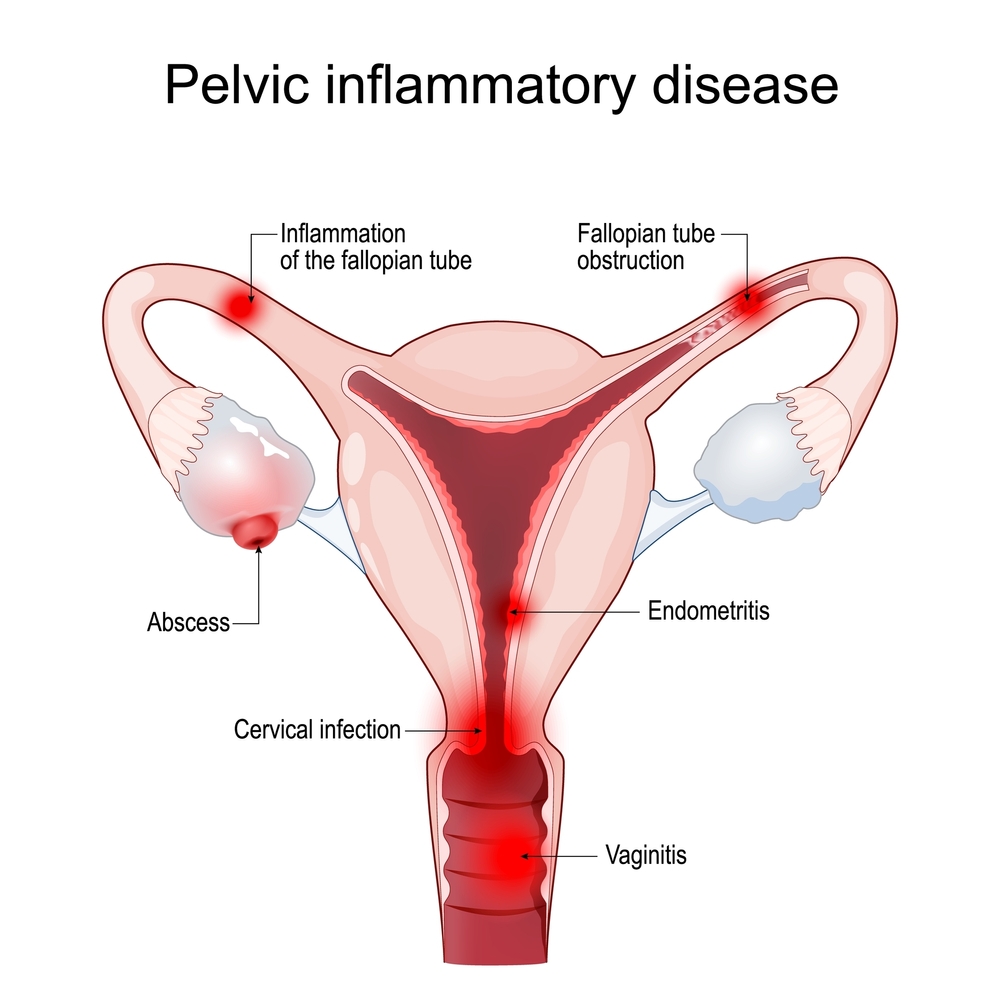
PID is a bacterial infection affecting women’s reproductive organs and can occur at any age. It can occur when bacteria, such as chlamydia or gonorrhea, travel up from the vagina and cervix into the uterus, fallopian tubes, and ovaries.
Symptoms of PID:
- Pelvic pain
- Fever
- Abnormal vaginal discharge
- Pain during sex
- Bleeding between periods
- Painful urination
- Adnexal tenderness leading to pain
If you experience any of these symptoms, it’s important to seek medical attention immediately.
Complications of PID:
The untreated consequences of PID can be severe, such as:
- Infertility: PID can damage the fallopian tubes, making it difficult to get pregnant.
- Ectopic pregnancy: Ectopic pregnancy refers to a situation where a fertilized egg attaches to a location outside the uterus, often the fallopian tube. This is a medical emergency and can be life-threatening.
- Chronic pelvic pain: PID can cause chronic pelvic pain, which can significantly impact your quality of life.
- Abscess formation: In severe cases, PID can lead to the formation of abscesses in the pelvic organs.
Prevention of PID:
Engaging in safe sex can significantly reduce the risk of PID. This includes using condoms and getting regular sexual health check-ups. If you have a history of PID or are at high risk, your healthcare provider may recommend preventive antibiotics.
Treatment for PID:
PID is treated with antibiotics. Timely diagnosis and treatment can reduce the likelihood of severe consequences. However, even with treatment, PID can sometimes cause long-term damage to the reproductive organs.
Remember, early detection and treatment can help prevent the serious consequences of PID.
Now, let’s find out the connection between abortion and PID.
Can you get PID after an abortion?
The one-word answer to this is ‘Yes’ but it is also important to know that it is preventable. It is possible to develop pelvic inflammatory disease (PID) after an abortion, especially due to heavy bleeding and incomplete abortion. So, it’s very important for an abortion to be completed. Besides, it’s crucial to maintain proper hygiene to prevent bacteria invading the reproductive system.
Unsafe abortions are a leading cause of PID:
Despite abortion in India is legal, induced abortions in our country often pose significant health risks. Contributing factors include limited contraceptive options, inadequate access to quality abortion services, and untrained healthcare providers lacking expertise in modern techniques.
Unsafe abortions are a major risk factor for PID. When an abortion is performed in an unsanitary environment by an unqualified person, there is a higher risk of introducing bacteria into the reproductive organs. This can lead to infection and inflammation. Methods involving unsterile instruments and manipulation also raise the infection risk.
PID after incomplete abortion and heavy bleeding:
Even with self-abortions like self-administration of abortion pills, there is a huge probability of incomplete abortions. And the retained products of conception in such cases keep rotting causing severe infection. This can even turn to chronic PID. Both pregnancy remnants and heavy bleeding can foster bacterial growth.
PID Risk in Anemic Patients:
Additionally, women with moderate to severe anemia are at increased risk of infection due to potential blood loss. So, abortion pills are not the best method of abortion for anemic patients. Gentle Care suction abortion is better for anemic patients because it doesn’t cause prolonged bleeding. Also, being an in-clinic method, it ensures complete removal of pregnancy within the clinic followed by slight bleeding for a day or two.
It’s important to note that safe and legal abortions performed by qualified healthcare providers in registered facilities significantly reduce the risk of PID. When an abortion is performed under sterile conditions in hygienic premises and with appropriate medical care, the risk of complications, including PID, is much lower.


Additionally, the abortion doctor at such registered facilities often advises necessary tests before performing an abortion. These tests can significantly help the doctor not only in prescribing the best abortion method but also in ensuring that the patient is infection-free before abortion. Even with any existing infection, the doctor can prescribe suitable antibiotics to make the patient infection-free and prevent any additional infection after abortion.
Why is it essential to prevent PID?
Pelvic inflammatory disease (PID) is a serious infection that can have a significant impact on a woman’s physical, emotional, and mental well-being. It can also disrupt her personal, professional, and social life.
Here’s why preventing PID is crucial:
Impact on Fertility:
PID itself doesn’t cause infertility but it makes it difficult to conceive. When bacteria enter the reproductive organs, they can cause an inflammatory response. The body’s immune system recognizes the infection as a threat and sends white blood cells to the area to fight it. The increased presence of white blood cells and other immune cells in the reproductive organs can lead to inflammation.
And inflammation can damage the tissues of the reproductive organs, including the fallopian tubes. Fallopian tubes are the connecting tubes connecting ovaries to the uterus. It is inside the fallopian tubes where the female egg meets the male sperm resulting in successful fertilization. Inflammation can narrow these tubes and prevent fertilization from happening when one may be trying to conceive in future. Also, inflammation can result in blocked fallopian tubes, again which can prevent fertilization resulting in infertility, which can be temporary or permanent.
Infertility can have a profound emotional impact on women who desire to have children. Even women who get pregnant with PID often experience recurrent miscarriages adding more to their disappointment.
Infertility in unmarried women:
Many unmarried couples often try to get rid of unexpected pregnancies by unsafe abortion methods like self-medication. They buy abortion pills illegally not knowing the risks with MTP. Usually, they do not even know if the woman is eligible for a medical abortion or not. Nor do they know the safety parameters and things worth considering with abortion pills that only a doctor can guide them through.
For example, any dose adjustment, ruling out ectopic pregnancy risk, gestation age, any interacting medicine or medical condition. These are just to start with. All of such things that are not known to laymen can increase the probability of heavy bleeding, failed abortion and incomplete abortion among other complications. These conditions can increase the chances of developing PID.
Even if such couples try seeking an abortion at unregistered, unsterile premises by unprofessionals to maintain secrecy, the risk for PID increases. And this can make it difficult for the unmarried girl to get pregnant in future after marriage. This can significantly affect her relationships and even can get worse by taking a toll on her mental health.
Increased Risk of Ectopic Pregnancy:
PID can increase the risk of ectopic pregnancy, a serious condition that occurs when a fertilized egg implants outside of the uterus. Patients with PID have inflamed fallopian tubes which can cause the embryo to implant there itself. Even the distorted tube can cause disturbance to the fertilized embryo in reaching the womb and it can therefore, stay there itself. Such a pregnancy is known as tubal pregnancy, a type of ectopic pregnancy.
Ectopic pregnancies pose a serious health risk and necessitate immediate medical intervention, either medical or surgical depending on patient specifics. Ectopic pregnancy rupture not only impacts one’s ability to conceive in future but also threatens the patient’s life.
Chronic Pelvic Pain:
PID can cause chronic pelvic pain, which can significantly reduce a woman’s quality of life. This pain not only interferes with a couple’s sexual activities but can also interfere with routine activities, relationships, and overall well-being.
Emotional and Mental Health:
Dealing with PID can be emotionally and mentally taxing. The pain, discomfort, and uncertainty associated with the condition can lead to stress, anxiety, and depression.
Impact on Personal and Professional Life:
PID can disrupt a woman’s personal and professional life. The pain, fatigue, and other symptoms associated with the condition can make it difficult to maintain relationships, work, or participate in social activities.
Preventing PID is essential for protecting your reproductive health and overall well-being. By practising safe sex, getting regular sexual health check-ups, and seeking prompt medical attention if you experience any symptoms of PID, you can significantly reduce your risk of developing this serious infection.
Safe Abortion Practices to Prevent PID and Other Complications:
If you’re concerned about PID after an abortion, it’s essential to:
Choose a safe and legal abortion provider:
Seek services from a qualified healthcare professional in a registered facility. Obtaining an abortion at a registered abortion facility can ensure that you are obtaining a legal abortion at a clinic that meets the criteria for standardised abortion procedures.
The certification ensures that the hospital has all the facilities for performing abortions as per the Medical Association’s approved abortion methods. Additionally, it ensures that the available doctors are registered medical practitioners who are well-qualified and have received training for performing abortions safely. Furthermore, the medical board that certifies an abortion facility also checks for the hygiene of the premises.
Although you can obtain an abortion at any abortion hospital near you, the available facilities and cost of abortion can vary. The facilities can vary largely and can matter a lot for a patient and her companion. For instance, the availability of single-appointment abortion procedures, private consultation and recovery rooms, and many more.
Besides, not all approved abortion clinics offer abortions by all approved methods. Most clinics have medical abortion and Dilatation & Curettage (D&C) only. But, if you are seeking an abortion in Bangalore, you can obtain an abortion by the most advanced abortion method, Gentle Care abortion, available at Bangalore Genesis Hospital (BGH).
Abortion in Bangalore:
Gentle Care suction abortion, available for terminating first-trimester pregnancies offers the benefit of being the most efficient abortion method. Unlike abortion pills, Gentle Care suction abortion offers a complete abortion in a single appointment in just a few minutes. It has a proven efficacy of nearly 100%, meaning, it completes the abortion. On the other hand, abortion pills are not more than 93% effective even under medical supervision. So, pills can result in incomplete abortion.
Moreover, pills often cause discomfort due to multiple appointments, abdominal pain, heavy bleeding for days and uncertainty of success. And if it results in incomplete abortion, an additional procedure is required to complete the abortion and remove the remnants, which can otherwise result in PID.
Abortion in India is legal for up to 20 weeks in most cases. BGH has another innovative approach, known as Gentle Care induced abortion for pregnancies above 12 weeks. It is also very different from conventional surgical abortions. The patient can naturally expel the fetus under medical supervision. Then, the doctor performs a safe Dilatation & Evacuation (D&E) to remove any remnants and complete the abortion.

D&E is advantageous over D&C as it doesn’t involve using a sharp curette. Sharp surgical instruments carry the risk of internal injury which again can cause PID. Rather, D&E involves using suction to remove any remaining pregnancy tissue after fetal expulsion. Complete cleaning of the womb not only completes the abortion but also prevents PID often caused by excessive bleeding and incomplete abortion.
Furthermore, hygiene is extremely important just like it is important to perform an abortion under sterile conditions. It can make a big difference and prevent the patient from any form of hospital-acquired infection. BGH is a boutique hospital catering to only one patient at a given slot maintaining completely hygienic conditions.
Follow post-abortion instructions:
Adhere to the care instructions provided by your healthcare provider, including taking any prescribed antibiotics. During the post-abortion consultation, the doctor discusses the Dos and Don’ts after the abortion. It is important to follow all the instructions carefully to avoid any kind of post-abortion complications, including infection.
Furthermore, discuss with your doctor what are the expected outcomes and what’s normal and what’s not. Monitor for symptoms. This will help you realize when should you see your doctor. So, this can prevent any further complications by helping the doctor manage your situation early.
By taking these steps, you can significantly reduce your risk of developing PID after an abortion. A safe abortion ensures that you do not face any short-term or long-term complications after abortion. So, should you want an abortion, make sure to get one at a safe registered abortion clinic only. Do not settle for anything less than a safe abortion. One of the much-needed guarantees of safe abortion is that it makes sure you remain PID-free after the abortion.
Schedule a safe, legal, confidential abortion appointment.
Related Posts:
- Can abortion cause PCOS? The Abortion Doctor Answers
- Can abortion cause ovarian cysts? Expert Answers
- Abortion in Bangalore: Can you ignore ectopic pregnancy risk
- How abortion bleeding look like: What abortion doctor says?
- Can Papaya Cause Abortion? How much Papaya for Abortion?
Quick Links:
- Hire a cab for the hospital
- What to do if you do not bleed after taking Unwanted Kit?
- Can you get pregnant if just the tip went in? What are abortion options?
- Want to Know the Abortion Pill Cost? We’ve Got You Covered
- Abortion Doctor for 40 yrs Explains Transition of Painful Abortions to Painless Abortions
