
Contents of This Post:
This post contains an interview with an abortion in Bangalore doctor with 40 years of experience. It is an unfiltered conversation between the interviewer and the doctor. Having read this, you can gain insight into:
- What are the different abortion methods?
- Is abortion painful?
- Can you obtain a painless abortion?
- Where can you obtain a painless abortion?
Fear is real! Yes, every fear is real for the one undergoing the experience. And so, it is for any woman who is looking forward to undergoing an abortion. Fear of pain with abortion is normal, especially for the ones who are experiencing it for the first time. Besides, the fear of pain with abortion is also seen at a height in women who have had previous traumatizing abortion experiences.
Interviewer:
Greetings Doctor! We are happy to have you here and are looking forward to valuable insights for our patients seeking abortions.
Here’s what the abortion doctor says, in her words,
“Thank you, Mrs. Anuja (Name changed for anonymity) for having me here. It would be a pleasure for me if my experience could shed some light on the topic. I am here because I really want to bring one change and that is the rate of mortality and morbidity due to unsafe abortions.
You know, every day many women pay the cost of abortion with their lost health and even life. And it is not just health, but each consequence of an unsafe abortion also results in many unseen and less talked about results like ruined relationships, lost confidence, lack of trust issues, social isolation, professional setbacks and many more.
We’ve heard it said time and again, “Be the change you wish to see in the world.” And I have seen many patients coming to us in very bad health after attempting unsafe abortions. With this interview, I want to bring a change. I will be happy if it can save even a single woman from attempting an unsafe abortion. This is just the beginning of a change.“
Interviewer:
That’s so nice of you doctor. I appreciate your opinion. Now, we would like to start with our first question. Is abortion painful?
Abortion Doctor:
A lot has changed over 40 years in abortion care. There have been significant changes from the reasons for wanting abortion to methods of abortion, pain management techniques and even the abortion laws. We have come a long way for the World Health Organization (WHO) to be able to draft Comprehensive Abortion Care (CAC) guidelines. Not only this, access to abortion care has changed significantly.
So, let me start with what used to be the scenario when I first started providing abortion care in my practice. Just stay with me, you’ll be able to picture the scenario. In the 1970s, I started my practice as a gynecologist and obstetrician. And used to see only 1 or 2 abortion patients every 2-3 days.
Back then, abortion pills were not available. Although synthesized, the medicines were under trials and no safety or efficacy studies were available. Mifepristone, one of the two abortion medicines used together received approval for use in the USA in 2000. There is no approval from Food and Drug Administration (FDA) for Misoprostol, the second abortion tablet used with Mifepristone till today. However, it finds its use off-label.
It may be shocking for you to know that the Indian Drug Authority, the Drugs Controller General of India (DCGI) approved mifepristone for use in medical abortions recently in 2021 only. But, Misoprostol use here also is off-label in abortion care.
Interviewer:
Doctor, learning this, I am shocked that most people think that abortion pills are the only means of abortion. They are longing to end their unwanted pregnancies without having a consultation with a registered medical practitioner. It’s a surprise how people are madly buying abortion pills without prescriptions only to put their lives and health at risk.
But, how’s that linked to `pain’?
Doctor for abortion:
Absolutely. Yes, I will come to how pain management has evolved according to the needs of the hour. So, my point about abortion pills here is that when I started providing abortion care, surgical abortion was the only standard procedure for terminating pregnancies.
Abortion in India as per the MTP Act 1971 was available up to 20 weeks, which is true as of today also. But at that time, one can obtain abortion with one doctor’s opinion only up to 12 weeks. With the recent advancement, now, one can obtain an abortion with one doctor’s opinion up to 20 weeks.
Surgery, a name itself brings multiple fears, one of them being the pain. We used to perform Dilatation & Curettage (D&C) to terminate all unwanted pregnancies within the permissible age regardless of how many weeks pregnant. Today, we have different abortion methods for different gestation ages, but at that time, surgical abortion was the only choice.
We used to perform it under general anesthesia. Regional anesthesia wasn’t much available and not much used. So, during the procedure, the patient goes to sleep. In consequence, the patient feels no sensation of pain.
While general anesthesia was effective in preventing pain, it also carried some risks, such as nausea, vomiting, and respiratory depression. In recent decades, there has been a shift towards using regional anesthesia, such as spinal or epidural blocks. These methods provide pain relief without putting the patient completely to sleep, reducing the risk of complications.
But, not to forget that the patients often complained of pain after gaining consciousness. And mostly, we had to use pain management for at least three days post-abortion.
Interviewer:
Ohk! So, doctor as you said that now, there are different abortion methods for different gestation ages. Can you shed some light on the available methods? I mean, can one anticipate that if she is in the current week of pregnancy, then she is most likely going to experience abortion by a particular method?
Abortion Doctor:
There are basically three important abortion methods that have been approved by the WHO as well as by the Indian Medical Association (IMA) for performing safe abortions. These are:
- Medical abortion
- Vacuum aspiration abortion or suction abortion
- Surgical abortion
Now, medical abortion is with the help of abortion pills which can be safely used for intrauterine pregnancies that are less than 8 weeks as per the recommendations. However, at our clinic, we usually avoid pills for abortion beyond 6 weeks. And that’s because the possibility of an incomplete abortion starts increasing when we use them after 6 weeks. In such cases, the patient has to face a lot of physical discomfort, and pain and also has to undergo a surgical abortion to complete what was left out.
Vacuum aspiration abortion also came into practice much later. But today, it is available throughout the first trimester. So, for any intrauterine pregnancy up to 12 weeks, one can undergo a suction abortion.
Then, surgical abortion is available for ending all pregnancies that are not possible to terminate using suction alone. Abortion in India is available up to 20 weeks usually and beyond that in special cases. Doctors perform all such late-pregnancy terminations using a surgical approach only. However, D&C has also improvised and better Dilatation & Evacuation (D&E) is now a better alternative.
However, not all registered MTP centres are equipped with all abortion methods. Usually, you can get pills and D&C at all centres. However suction and advanced abortion techniques are available only at specialized abortion centres.
Interviewer:
Thank you, Doctor. That was informational. I would like to know that you mentioned ‘intrauterine’ with abortion pills and suction also. Can you elaborate on what it means for a layman?
Abortion Doctor:
Of course! Intrauterine means ‘inside the uterus’. So, an intrauterine pregnancy is where the embryo after fertilization implants itself in the uterus and starts developing there. It is the womb that nature has designed for a baby to grow. Isn’t it?
But there are some cases of faulty pregnancy, which we call, ectopic pregnancy. See, women release an egg from an ovary every month which if happens to meet the male sperm can get a woman pregnant. This meeting happens in a small tube, called, the fallopian tube that connects the ovary with the uterus. The fertilized egg, now called, the embryo travels down this path to reach the uterus where it implants and starts developing. This happens in a normal pregnancy.
But in an ectopic pregnancy, the embryo either fails to reach the uterus and stays back within the tube or can implant somewhere else like the ovary wall or cervix lining or elsewhere. This is an emergency case because it can rupture at any time and result in internal bleeding. Without immediate help, the patient can lose her life. Also, with a rupture, she may lose her ability to conceive naturally depending on the location of the rupture and how soon she received medical help.
Now, I mentioned the abortion methods with pills and suction for intrauterine pregnancies. That’s because abortion pills do not terminate ectopic pregnancies. And suction is also applied to the uterine cavity. Ectopic pregnancy treatment follows a different approach.
Here, I want to request women not to take pills without proper consultation with the doctor. Your doctor can rule out any possibility of ectopic pregnancy and treat your condition early. It is very important to check if the patient is carrying an intrauterine pregnancy before prescribing any abortion method.
Interviewer:
Oh my God! Doctor, even I didn’t know about ectopic pregnancy. This was such an eye-opener.
Doctor:
Absolutely, I have seen women losing their lives after taking abortion pills without knowing they are carrying ectopic pregnancies. And even those who survive struggle a lot to conceive in future, especially when unmarried women take abortion pills for the sake of anonymity.
Interviewer:
Ok. Now, doctor, since we are discussing pain with abortion, can you please tell me if abortion with pills is more painful or surgical abortion? Also, I would like you to speak a little on current trends in pain management.
Abortion Doctor:
Yes, sure. Abortion pills first.
These are the pills that one has to take at intervals. Any MTP kit like Mankind Unwanted Kit contains 1 tablet of Mifepristone. This tablet can be taken early anytime after your doctor guides you. The abortion doctor first checks for the patient’s eligibility for a medical abortion. Only after that does she prescribe any MTP kit. So, this first tablet can be taken after she tells you that you can have this tablet. This doesn’t cause any pain.
Then, the kit contains four more tablets of Misoprostol. Now, these are not to be taken immediately after Mifepristone. The doctor guides it individually to a patient when and how to take them. The doctor checks for patient-specific factors and then decides how and when to take them. She also takes care of any dose adjustment, if needed.
Now, these tablets are taken at home because after taking them, the fetal expulsion will begin. This medicine causes uterine muscles to contract. Then, these contractions result in abdominal cramps and pain. Some women take this pain as slightly more than period pain. But for some women, the pain gets unbearable. They even show up in emergencies with severe pain.
Usually, when we prescribe MTP kits, we also prescribe pain management analgesics to take in case of unbearable pain. But the whole process happens in the patient’s privacy at her home or wherever she is staying for the abortion. Medical supervision is not available if the process doesn’t take place at the hospital. So, there is a lack of monitoring on how the abortion is progressing and manage the pain as and when needed.
Yes, abortion pills do cause pain but that’s how they work to induce a natural miscarriage.
Surgical abortion:
See, if there is no anesthesia, of course, D&C can be a really painful experience. Earlier, we also did not have access to advanced dilatants. So, for dilatation, the patient was admitted a day before abortion. We used to place the dilatant the night before the procedure and allow them to work overnight. The next morning, once the cervix was dilatated enough, we used to perform D&C.
During the procedure, the uterine lining is spooned using a sharp spoon-like tool. This spooning detaches all the pregnancy products and then the doctor removes them through the cervix. Under anesthesia, the patient doesn’t experience any pain. But after regaining consciousness, she may feel cramping pain and also pain like on fresh wounds. Analgesics for three days helped reduce pain.
Even today, D&C procedures are common and done in the same way but with some differences. These include no overnight stay because dilatant rods and other means are today available that can allow for instant dilatation before the procedure. Another change is in the use of anesthesia. Regional anesthesia is associated with fewer side effects than general anesthesia and hence, is the preferred choice these days although general anesthesia is also used.
Interviewer:
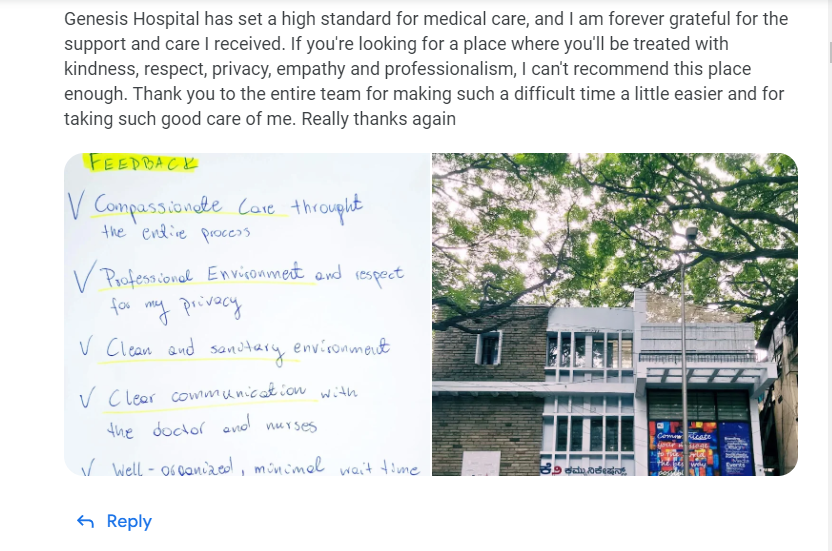
Ok Doctor. That is something one should know before taking abortion pills. Now, my last question is about your personal experience and how you have evolved abortion care at your abortion clinic. We have seen many testimonials of your patients and are also impressed by Genesis Hospital Reviews. Certainly, we would like to know how you have evolved abortion care over these 40 years of your experience as an abortion doctor.
Doctor:
Thank you for your kind words. It’s an honor for me. As I told you my journey began in the early 1970s as a gynecologist and obstetrician taking in almost all kinds of cases. Abortion cases were less at that time. But they were all surgical. So, my practice in abortion care at the beginning of my career was limited to surgical procedures. But, I gained a lot of experience and expertise in them.
Have you heard that Papayas are being used as models for performing abortions in the USA? Surprised? Yes, the cervix region shape and structure somewhat resemble Papaya at one end. And this is what drew the attention of a US doctor for training juniors on performing abortions. I used it in 1981 first. You know, we have a lot of Papayas all year round here in Bangalore. And I used to practice papaya multiple times to get the precision I have today.
At that time, mostly married women used to visit us for abortions and the most common reason used to be an already large number of families. But one day, a young girl, unmarried was brought to us in a very serious condition.
The Turning Point:
Her parents told us that they found her lying unconscious in her bed in the morning when she didn’t wake up at her usual hours. She was bleeding heavily. They thought that she was on her period, but there was too much bleeding and their daughter lying unconscious.
We examined her and found that she had an ectopic pregnancy rupture. But she was bleeding heavily due to an injury as a result of a sharp object piercing her uterine wall. We took her to immediate surgery and removed her fallopian tube, an ovary and pregnancy tissue. But the bleeding was so profuse that we had to transfuse blood.
Another problem was her rare blood group. Her father’s group didn’t match and her mother had undergone a recent surgery. The blood bank was also not able to supply the needed blood in the required quantities. We managed by arranging blood from different blood banks.
Thankfully, we managed to save that girl’s life after hours and days of treatment. We had to inform her parents of the exact situation and when they had an intense talk with their daughter, we came to know that the girl faced sexual assault from a known family member. On realizing she was pregnant, the accused gave her some pills to take but didn’t take her to any doctor.
When even after taking pills, she didn’t bleed, the accused forcefully penetrated a sharp tool inside her cervix after which she started bleeding and was in a lot of pain. On seeing her go unconscious, the accused left her in the same condition to save his life.
How it changed my life?
This case turned my life and I decided to dedicate my services to women seeking abortions. I wanted to give timely and safe access to all women seeking abortions so that they can obtain risk-free abortion care. We may have saved this girl’s life, but her life ahead wasn’t easy either for her or her family.
After she was discharged, I kept thinking about her only for days and weeks. She lost her one ovary and fallopian tube which can make it difficult for her to conceive in future. She also had a uterine injury, which would heal over time but it can take weeks and months. For infections, we gave her antibiotics for a longer period. I couldn’t let go of my thoughts of the pain and agony she may have faced both before and after the abortion.
Her family will find it very difficult to find a suitable match for him. Besides everything, the mental anguish and trauma she may have faced, how difficult it can make her living and how miserable she may be finding her life. All these thoughts kept me waking at nights. At times, I would even get up in between the sleep only to find myself crying.
This incident shook me from within but I too could not spend all my life with this trauma. I decided to take a step and I am happy about it today. That day, I decided that I would dedicate my services to women seeking abortion care so that no woman or any couple tries unsafe abortion methods. I chose to practice only abortion care and gain expertise in CAC.
What did I do?
I started seeing abortion patients on a routine basis. Gradually, more women started opting for safe abortions rather than trying old traditional methods, one of which was consuming a lot of raw papaya to cause uterine bleeding and abortion.
Initially, we used D&C only at that time. But I also wanted to do something to make the abortion experience a positive one and as painless as possible. So, when the suction abortion technique came into practice, it was not available in Indian MTP centres. I took its training internationally and brought it to our hospital.
But that wasn’t enough. The suction technique also advanced over the years. Today, we have both Manual Vacuum Aspiration (MVA) and Electric Vacuum Aspiration (EVA), both differing only in how the suction is created for sucking out the pregnancy from the womb.
Initially, we used regional anesthesia to make the abortion painless. But, with advancing equipment, we have eliminated anesthesia and limited it only to a few specific circumstances. Otherwise, patients can undergo a Gentle Care suction at our abortion in Bangalore clinic under mild sedation.

Our Gentle Care suction abortion:
We pioneered Gentle Care abortions at our clinic to make abortion a comfortable experience. Gentle Care suction abortion at our clinic is absolutely painless. We take only 10-15 minutes for the entire procedure. No overnight stay. Safe, legal and confidential abortion by a caring, compassionate and non-judgmental abortion team.
And the biggest advantage of this abortion method is that it is a complete abortion. Abortion pills can fail and result in incomplete or failed abortions. But Gentle Care abortion is nearly 100% successful. No pregnancy remnants, no heavy bleeding, complete abortion in a single-appointment.

With single-appointment and same-day discharge abortion care, we have managed many patients and saved them from opting for unsafe abortions. When they came to know that abortion is possible safely, legally, confidentially and painlessly without overnight stay and the need for anyone else’s consent, we started seeing many women coming forward for safe abortions.
When we started campaigning about the reproductive rights of women, including unmarried women, many women started taking charge of their abortions. Even if their partners would say that they can get them pills, women today ask them to take them to a safe abortion clinic near them and not take abortion pills without consultation.
This is the change I wanted to see and I still know many women are struggling out there with unwanted pregnancies and putting their health at risk due to lack of information. I hope through this interview, I could have saved another few to many lives. Thank you for having me here.
Interviewer:
Really, doctor, the story you shared gave me goosebumps. But yes, how it helped you in transforming abortion care is wonderful. I hope your message spreads wide across and many lives are saved with safe abortions. Thank you for being our guest. We would love to have you again with some more deep and meaningful conversation. Thank you once again.
Schedule a painless abortion appointment.
Related Posts:
- The news on Preganews: Surprise or Shock? What To Do?
- Negative pregnancy test? No periods yet? What to do?
- Abortion Pill Cost at Safe Abortion Clinic near you
- Can abortion cause ovarian cysts? Expert Answers
- Abortion for Unmarried: The Law is on Your Side!
Quick Links:
- Abortion can be done in 2nd month: What you should know?
- Can abortion cause infertility: What experts have to say?
- Abortion can be done in 2nd month: What you should know?
- Can abortion cause infertility: What experts have to say?
- Abortion in Bangalore: How to obtain a Positive Experience?
