

Contents of This Post:
- Understanding Unplanned Pregnancy
- Making Informed Decisions About Unintended Pregnancy
- Seeking Safe Abortion Services
- Prioritize Your Health with a Safe, Legal & Confidential Abortion
Dual Income No Kids (DINK) couples, with their unique lifestyle choices and career aspirations, are increasingly choosing to delay or avoid parenthood. However, unplanned pregnancies can still occur, even for the most careful planners.
The population of DINKs in India has been growing at a significant rate. According to the Gitnux Market Data Report 2024, this demographic has increased by 30% annually. Moreover, the 2011 census revealed that the DINK lifestyle is prevalent in nearly 42% of two-member rural families and 22% of urban families. Mumbai, Bengaluru and Gurgaon top the chart numbers when speaking of the number of DINK couples in Indian cities.
While the DINK lifestyle offers numerous advantages, it’s important to remember that unexpected pregnancies can happen. In such situations, it’s crucial to have access to knowledge about your options. This post can serve as a guide for DINK couples while they find themselves in a dilemma with an unexpected pregnancy.
Understanding Unplanned Pregnancy
Unplanned pregnancies can happen to anyone, regardless of their lifestyle or relationship status. For DINK couples, an unexpected pregnancy can disrupt their carefully planned lifestyle and career goals. It’s important to understand that unplanned pregnancies are common and that there are safe and effective options available.
Why Unplanned Pregnancies Happen?
Even with careful planning, accidents can happen. Some common reasons for unplanned pregnancies include:
- Contraceptive Failure: No contraceptive method is 100% effective. Condoms can break, pills can be missed, and IUDs can slip out of place. Luckily, abortion in Bangalore is legal for contraceptive failure just as it is throughout India.
- Miscalculation of Ovulation: Miscalculating the fertile window can lead to unintended pregnancy.
- Lack of Consistent Use: Inconsistent use of contraception can increase the risk of pregnancy.
The Emotional Impact of Unplanned Pregnancy for a DINK Couple:
An unplanned pregnancy can be emotionally overwhelming for anyone, whether you are a married couple, unmarried couple, live-in partners or a DINK couple. Upon realizing that you were pregnant when you didn’t want to be, you may experience a range of emotions. These may include shock, fear, anxiety, and sadness. It’s important to acknowledge and process these emotions. Talking to a trusted friend, family member, or therapist can help you cope with the situation.
Talking to a trusted partner can help you navigate your emotions without any fear or prejudice. They can help you not only learn your available options but also show you the right path. Sometimes, some decisions are hard to make alone. In such situations, your loved ones can help you take a step ahead while respecting your choices and your decisions. At the same time, they can acknowledge what you are going through, how you are feeling, what you may be wanting in the time ahead and what you can do.
Whether you consider changing your lifestyle from DINK to a single-child couple or consider adoptions or even abortion, your companion and your family or friends can be your strength. If you are unable to discuss your emotions with family or friends, you can consider getting counselling. It can help you get a neutral opinion from a neutral person’s perspective.
Sadness, anxiety, grief, guilt, confusion and all sorts of emotions can show up. While one woman may take these emotions very easily and overcome the situation, any other woman may not be able to do so. She may find herself lost at sea. She may not be able to process her emotions. A counsellor may help her walk through the available options while helping her cope with any emotional twists and turns along the way.
Making Informed Decisions About Unplanned Pregnancies:
Knowing your options, getting information about them, considering the pros and cons and also where you see yourself five or ten years down the line can help you make informed decisions.
Consider the following factors:
Your personal circumstances:
Your age, relationship status, financial situation, health goals and career goals can all influence your decision. Also, if you would like to embrace motherhood sometime later, it’s important to be aware of your health status and your likelihood of getting pregnant in future.
Your partner’s feelings:
Discuss your options with your partner and consider their feelings and desires. If you plan to have a kid, it’s a shared responsibility and hence the decision should also be shared. Let him share what he feels about having a kid at this time or not. Remember, you have options, but it will always be you who will have to make the choice and take the first step. Rest all shall follow.
Your future plans:
Think about how a child might impact your long-term goals and lifestyle. Moreover, consider how having a kid can influence your life, personally as well as professionally. Having a kid is not a 9-month journey, it’s a life you will have to choose. And for that, you may need to make multiple choices, sacrifices and compromises.
Don’t hesitate to seek support from healthcare professionals, counsellors, or support groups. They can provide you with accurate information, emotional support, and guidance as you navigate this challenging time.
Seeking Safe Abortion Services
If you decide to terminate your pregnancy, it’s crucial to seek safe and legal abortion services. Here’s what you need to know:
Your abortion in India rights:
The first thing you should be aware of while seeking an abortion is whether it is legal to do so in your country. All countries have different sets of rules governing abortions. India offers legal abortions to all women seeking them up to 20 weeks under normal circumstances. In some special cases, pregnancy termination permission can be sought even beyond this ceiling age.
So, if you were to buy abortion pills, Unwanted kit or MTP kit in a hurry, please wait until you have a prescription from the doctor. A doctor for abortion can check if you are even eligible for abortion pills or not. And even if you are not eligible due to any medical condition or you prefer a better abortion method, the doctor can recommend another better procedure for safe pregnancy termination.
Furthermore, abortion in India is legal for both married as well unmarried women alike. Being a DINK couple, you too have a safe and legal abortion in India option available for you.
Why should you not self-medicate or opt for unsafe abortion?
Women in many countries like the UAE, Philippines, Kuwait, Qatar, Oman, Maldives, Sri Lanka and others opt for illegal abortion by procuring abortion pills from the black market due to restricted abortion rules in these countries. However, when abortion in India is legal, you do not have any reason to fear the law or prejudice while seeking a safe abortion. Even women from these countries visit India for a safe and legal abortion.
The biggest reason why you shouldn’t self-diagnose or attempt a self-abortion is the consequences it can have on your health and even life. Even the World Health Organization (WHO) affirms that self-medicating with abortion pills or resorting to unsafe abortion methods can have severe consequences for your health, some of which are given below:
Incomplete Abortion:
Self-administered abortion pills may not be effective, leading to incomplete abortion. This can cause heavy bleeding, infection, and other complications. And in some cases, they can fail leading to a failed abortion or a missed abortion. The fetus may die within the womb but not expel.
Infection:
Unsafe abortion procedures performed by untrained individuals can introduce bacteria into the reproductive tract, leading to infections like Pelvic Inflammatory Disease (PID). Some infections can be acute while others can get chronic. Women of reproductive age are at great risk of recurrent Urinary Tract Infections (UTIs) as well as reproductive tract infections. Unsafe abortion procedures can increase this risk.
Even with incomplete abortion, the remaining products of gestation can rot and cause infections. Untreated infection due to any cause can take a fatal turn if it leads to sepsis.
Infertility:
Severe infections and complications from unsafe abortions can damage the reproductive organs, increasing the risk of infertility. Women with chronic PID often face difficulty in conception. Also, due to inflammation in the fallopian tubes, the probability of ectopic pregnancy increases in women with such conditions.
With unsafe tools under unhygienic conditions in premises with poor sanitation, the risk of internal injury and infection both are high. Internal injury to reproductive organs by untrained people can also cause hemorrhage and even infertility.
Hemorrhage:
Excessive bleeding can be a life-threatening complication of unsafe abortions. An abortion doctor diagnoses the medical condition of the patient before prescribing her with the best abortion method. She accounts for multiple factors, including the possibility of heavy bleeding. Not only this but at a registered abortion centre, you can expect the doctor and the team to be fully equipped and prepared for handling such emergencies.
Emotional Trauma:
The physical and emotional trauma of an unsafe abortion can have a lasting impact on your mental health. Feelings may come not only with an unplanned pregnancy but also after an unsafe abortion.
The kind of care you receive, the behavior you get to see from healthcare professionals and others along your journey and many other things make up for an abortion experience. Any negative feelings, emotions, judgments, or harsh comments can turn your abortion experience into a negative one impacting your mental and emotional well-being.
For some women, it can be just for the short-term but for some others, it can be an unforgettable nightmare for life.
Prioritize Your Health with a Safe, Legal & Confidential Abortion:
To ensure a safe and successful abortion, it’s crucial to seek professional medical care. A qualified healthcare provider can assess your individual needs, recommend the most appropriate method, and provide necessary support. Abortion support does not mean support during your stay at the hospital but lasts through recovery after the abortion. A safe abortion ensures that you do not suffer any long-term repercussions that can negatively impact your health or life in any arena.
By choosing a safe and legal abortion, you can protect your health and well-being. Remember, your health is worth prioritizing, not only for yourself but also for your loved ones. So, when you decide on getting a safe abortion, here’s how you can proceed.
Choosing a Reputable Healthcare Provider:
Now, you have to first look for the best abortion clinic near you where you can get the care you deserve and expect. So,
Check Credentials:
Ensure the provider is licensed and registered with the appropriate medical board. Visiting a certified MTP centre can ensure that your abortion will be carried out following the guidelines for safe pregnancy termination procedures. Additionally, the performing professionals will not only be qualified but also well-trained and experienced in varied abortion methods. It will ensure a safe procedure.
However, there are other things like privacy, availability of appointment, waiting time, availability of different abortion methods, requirement of hospitalization, etc. considering which you can shortlist the best hospital from among the list of certified abortion centres near you.
Research:
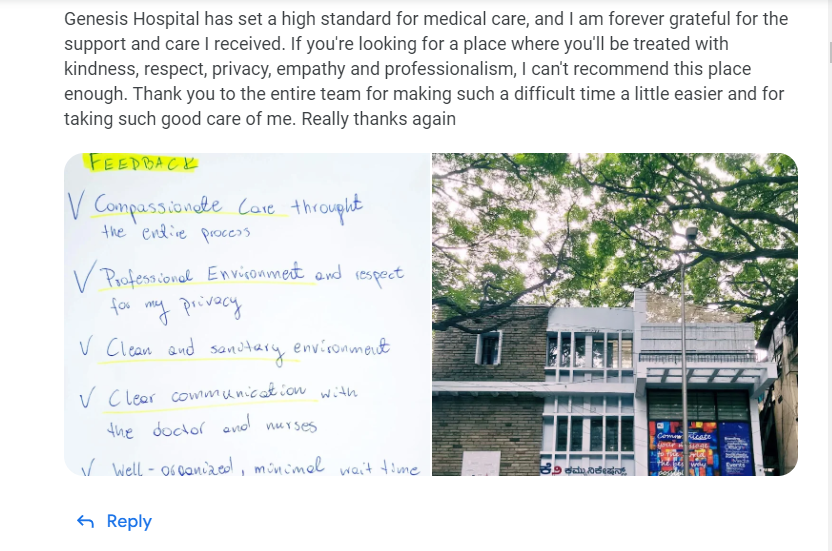
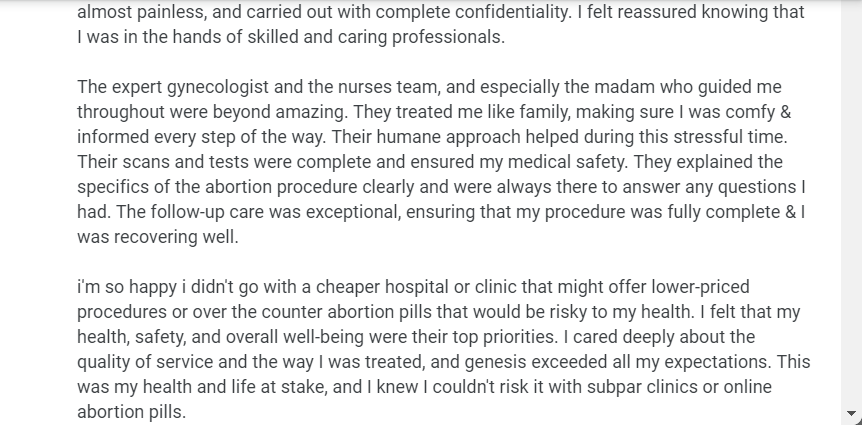
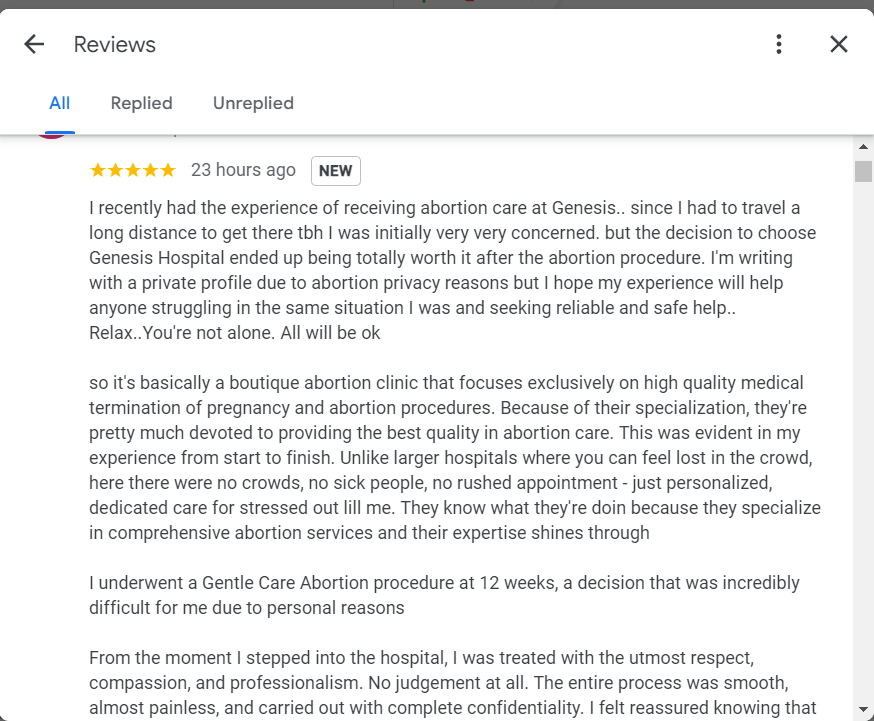
Look for a qualified healthcare provider with experience in providing abortion services. Consider factors such as their qualifications, experience, and patient reviews. It is better to have an overview of what you are likely to experience before you experience it. And there’s no better way to give you insights than previous patient reviews. You can check for Bangalore Genesis Hospital reviews.
Specialized Abortion Clinic:
Better go for a hospital that specializes in providing abortion services rather than opting for any gynecologist who caters to patient needs for varied conditions. Although any gynecologist will be able to provide abortion services, visiting a specialized abortion clinic has some advantages.
When you choose a specialized abortion clinic, you’re choosing a personalized and empathetic approach to your healthcare needs. Unlike general hospitals, these clinics are specifically designed to cater to women seeking abortion services. This means you’ll benefit from:
- Specialized Expertise & Personalized Care: The doctors and staff at these clinics are experienced in providing abortion care. They understand your unique situation and can offer tailored advice and support. So, ou’ll receive individualized attention and care
- A Supportive Environment: You won’t feel judged or stigmatized. The clinic’s staff is trained to create a compassionate and non-judgmental atmosphere, ensuring you feel comfortable and respected. You will not feel judged even by other patients seeking medical attention for different conditions.
- Privacy and Confidentiality: Your privacy is paramount. The clinic will maintain strict confidentiality and ensure your personal information is protected.
- Efficient and Discreet Services: The clinic’s streamlined processes and dedicated staff ensure a smooth and efficient experience.
- Less Waiting Time: With a limited number of patients, you may not have to get multiple appointments or wait for your turn for a long time. You can get pre-abortion consultation, diagnostic tests, abortion and post-abortion counselling all in a single appointment. This will not only save you time but also cut the cost of abortion in terms of multiple appointments, the hassle of follow-ups and repeat procedures.
Ask Questions:
While looking for an abortion centre for your procedure, don’t hesitate to ask questions about the procedure, potential risks, aftercare and cost of abortion. A good healthcare provider will be happy to answer your questions and address your concerns.
When you have finalized the abortion clinic, you can schedule an early appointment.
What to expect from your abortion procedure, you are likely to undergo?
Well, when you arrive by appointment, you may not have to see any crowd or have to wait for your turn. You will likely get to see the doctor soon upon arrival in a private examination room, provided it’s a private abortion clinic. At a general hospital, the experience may vary entirely. Here, we are giving you an anticipation according to patient experiences in Genesis Hospital Reviews.
Pre-abortion consultation:
During the pre-abortion consultation, the doctor shall evaluate your medical condition and check for your vitals. She may ask you medically relevant details about any existing medical condition and any medicine(s) you may be taking.
Based on the conversation, the doctor shall advise you to undergo some routine diagnostic tests like an ultrasound and any special test, if required. You can take these tests at the nearby lab and be ready with the reports shortly after.
You can take these reports to the doctor at the same time. She shall evaluate them and include other details to prescribe you the best abortion method. The things that go into deciding the best abortion method are your pregnancy age, your age, pregnancy location, your blood test reports and also your priorities, choices and preferences.
The doctor will explain to you about the abortion procedure before actually undergoing it. If you have any doubts or queries, you can ask them openly. The doctor shall strive to make the entire procedure as comfortable for you as possible. So, please freely discuss your concerns or fears.
Contraception advice before abortion:
Although, you will get contraception advice during the post-abortion consultation to avoid future unplanned pregnancies, here’s something you can discuss beforehand. Being a DINK partner, if you are not looking forward to getting pregnant in future too, you can opt for reliable long-term contraceptives. While the doctor can help you decide the best contraception for you based on your specific lifestyle and long-term goals, you can also opt for an Intrauterine Contraceptive Device (IUCD), commonly known as Copper-T.
It can provide long-term contraception (up to 10 years) without disrupting your normal routine. There’s no hassle of remembering to take your pills or emergency contraception pills in case of unprotected intimacy. You can discuss this during the pre-abortion consultation itself so that the doctor can implant it just after the procedure. Having a Copper-T after abortion can save you time and hassle. Trust us. Or feel free to ask anyone you know who has undergone a similar experience.
Understanding the Abortion Process:
Usually, abortion hospitals have three different abortion methods. However, not all clinics or hospitals are always in a position to be able to provide abortion with all the approved methods. Here’s a brief introduction just to help you know the available choices.
Medical Abortion:
This involves taking medication to terminate the pregnancy. It’s typically suitable for early pregnancies. Usually, doctors recommend it only for pregnancies less than 6 weeks after confirming it is an intrauterine pregnancy and the patient is comfortable with it.
Here, the patient’s comfort factor plays a big role. Abortion pills are the least effective of all approved abortion methods because of their possibility of resulting in a failed or incomplete abortion. Although failed abortion is rare, incomplete abortion is the most common complication with abortion pills.
Patients who do not want the trouble of abdominal cramps, pain, fatigue, or waiting for abortion to complete up to days and weeks often opt for alternatives that can give them the security of having obtained a successful abortion. Usually, women who are eligible for abortion pills also opt for Gentle Care suction abortion to get past an unwanted pregnancy in a single go.
Here is a briefing on the differences between the two methods for a quick insight.

Suction abortion:
This approved abortion method, again for intrauterine pregnancies is available for up to 12 weeks into pregnancy. Here, the termination can be completed in just a few minutes using a hand-held aspirator. The experienced abortion doctor gently removes the pregnancy tissue by sucking it with the help of suction pressure. This results in a complete abortion, unlike abortion pills.
Surgical Abortion:
This procedure is performed in a clinical setting and involves removing the pregnancy tissue from the uterus. It is necessary for later-stage pregnancies, i.e., up to 20 weeks. Also, to complete incomplete abortions, either Dilatation & Curettage (D&C) is performed or Dilatation & Evacuation (D&E). Both are different in some aspects with D&E being more advanced and safer.
Post-abortion consultation:
After the abortion, you can rest as per the hospital’s provisions. At Bangalore Genesis Hospital, patients can rest in their private rooms and take discharge once they feel comfortable returning home. During the post-abortion consultation, the doctor can advise you on your post-abortion prescription and other guidelines to follow for early recovery.
Next, you can comfortably return home knowing that you have had a safe, legal, confidential and successful abortion in Bangalore. Allow your body time to heal and avoid strenuous activities. Seek emotional support from friends, family, or a therapist. Talking about your feelings can help you cope with any emotional challenges.
Remember, seeking safe and legal abortion services is a personal decision. You have the right to make choices about your own body. By choosing a reputable healthcare provider and following their guidance, you can ensure a safe and positive experience.
Schedule an abortion in Bangalore appointment.
Related Posts:
- What to do if you do not bleed after taking Unwanted Kit?
- Can you get pregnant if just the tip went in? What are abortion options?
- Want to Know the Abortion Pill Cost? We’ve Got You Covered
- MTP Procedure Cost: How to Choose Cost-effective Abortion
- The news on Preganews: Surprise or Shock? What To Do?
Quick Links:
- Negative pregnancy test? No periods yet? What to do?
- Abortion Pill Cost at Safe Abortion Clinic near you
- Which Abortion is Better? Medical abortion or Suction in-clinic abortion?
- Can abortion cause ovarian cysts? Expert Answers
- Can Papaya Cause Abortion? How much Papaya for Abortion?
