
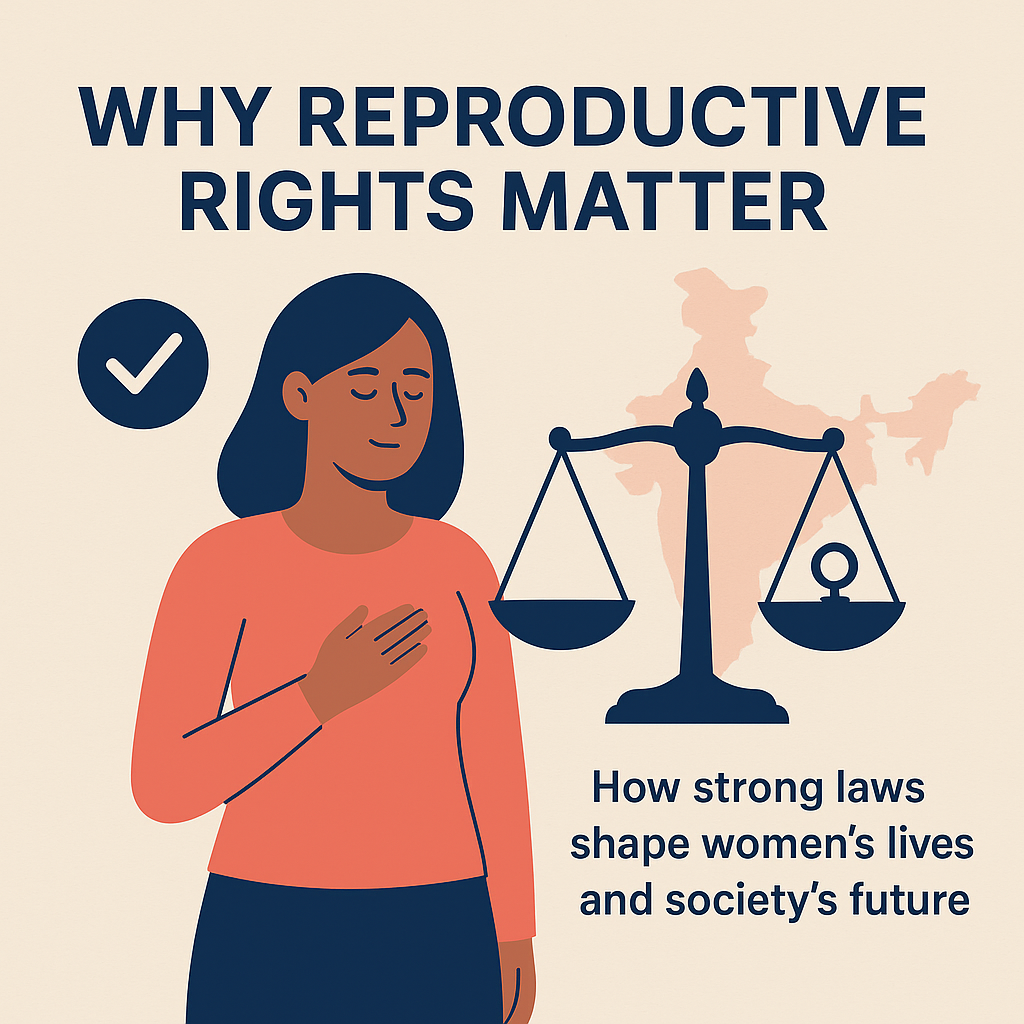
Contents of This Post:
- Motherhood begins with a conscious choice.
- Why does respecting reproductive choices matters?
- Reasons women choose differently than motherhood, even abortion for an unplanned pregnancy— the real-life context
- Abortion today does not erase motherhood tomorrow
- Contraception: the best plan for family planning — and how we help
- Safe, Legal, Compassionate, Confidential & Non-judgmental abortion in Bangalore for women who need support
Motherhood deserves the same respect we give any major life decision: careful thought, honest conversation, and full ownership. Some women decide to welcome children; others choose a childfree life. Both choices reflect a woman’s values, circumstances, and hopes. Neither choice defines her worth, and neither invites judgement.
Motherhood begins with a conscious choice.
Motherhood carries deep meaning. It shapes lives, families, and futures. Yet at its heart, motherhood begins with one simple but powerful principle: choice.
Every woman deserves the freedom to decide whether she wants to become a mother, when she wants to take that step, and how she wants to shape her life. For some women, the desire to nurture a child arrives early and clearly. On the flip side, for others, different dreams, responsibilities, or circumstances guide their path. Whatever be a woman’s choice, both decisions deserve equal respect. Listen, how nicely a woman has shared her perspective in this video: Why more women are choosing a childfree life?
Choosing motherhood reflects love, readiness, and commitment. Choosing not to become a mother—or choosing to delay motherhood—also reflects thoughtful consideration of one’s life, health, career, relationships, finances, future and identity. Neither decision reduces a woman’s value, character, or compassion.
Unfortunately, many women still face judgement around these deeply personal decisions. Some hear that motherhood defines womanhood. Others hear criticism when they decide to continue a pregnancy despite challenges. These pressures can make an already complex decision even more difficult.
In reality, no one understands a woman’s circumstances better than the woman herself. She alone knows her health, her aspirations, her financial responsibilities, her emotional readiness, and the support systems around her.
When society respects that reality, women gain the confidence to make decisions that align with their lives and their wellbeing. Respect for choice does not weaken families or communities. Instead, it strengthens them by ensuring that parenthood begins with readiness, care, and genuine desire.
Motherhood, after all, demands far more than nine months of pregnancy.
It calls for time, emotional energy, stability, and lifelong commitment. Recognizing this truth helps us understand why the decision to become a mother must always belong to the woman herself. Read this BBC report exploring why some women feel that motherhood may not have been part of their life plan—and why this feeling does not reflect their capacity to love children.
Why does respecting reproductive choices matters?
When society respects a woman’s reproductive choices, it creates space for honesty, safety, and responsible decision-making. Women can evaluate their circumstances openly and decide what feels right for their lives. They do not need to hide their concerns or rush into decisions because of pressure from others.
Every pregnancy brings emotional, physical, and practical considerations. A woman may think about her health, her financial stability, her relationships, her career, and the support available to her. These factors shape whether she feels ready to welcome a child at that moment in her life.
Respecting choice means recognizing that readiness for motherhood looks different for every woman. Some women choose to embrace pregnancy and begin their journey as mothers. Others may decide that the timing does not align with their life circumstances. In both cases, thoughtful decision-making reflects responsibility, not selfishness.
When communities replace judgement with understanding, women feel safer seeking medical advice and emotional support. Doctors can guide them honestly about their options. Families can stand beside them instead of pushing them toward decisions they may not feel prepared for.
This kind of environment benefits everyone. Children grow up in families that feel prepared and supported. Women maintain their health and wellbeing. Relationships grow stronger when partners and families respect personal decisions instead of questioning them.
Respect for reproductive choice also recognizes an important truth: a woman’s decision today does not define her entire future. Someone who decides against pregnancy now may choose motherhood later in life. Another woman may already be a loving mother and still decide that another pregnancy does not fit her family’s needs.
A judgement-free society lets women choose freely.
When we stop labelling and start listening, we create space for honest decisions. Judgement shuts down conversation. Compassion opens it. Every person giving advice — partners, family, friends, employers, medical professionals — carries power. Use that power to support, not to shame. That change alone helps women choose what’s best for them.
Life changes. Circumstances evolve. Dreams shift. When society accepts this reality, women gain the freedom to make decisions that protect both their present and their future.
Reasons women choose differently — the real-life context:
Every woman’s life unfolds in its own rhythm. Decisions around pregnancy rarely come from a single reason. Instead, they grow from a careful reflection on health, family responsibilities, financial stability, and personal goals. When we look beyond assumptions, we begin to see that many women who seek abortion care do so after thoughtful consideration of what will serve their lives and families best at that moment.
Below are some of the real-life circumstances that often shape such decisions.
The need for healthy spacing between children
Pregnancy and childbirth place significant physical and nutritional demands on the body. After giving birth, a woman’s body needs time to recover, rebuild nutritional reserves, and regain strength to be able to go through childbearing soon. So, doctors often advise spacing pregnancies to support both maternal health and the healthy development of the next child.
When pregnancies occur too close together, mothers may face higher risks of complications such as anaemia, fatigue, and other health challenges. Babies born too soon after a previous pregnancy may also face higher risks related to low birth weight or premature birth.
Many mothers, therefore, make a thoughtful decision to delay another pregnancy until the family feels physically and emotionally ready. Choosing to wait can help parents provide better attention, care, and stability for each child.
Financial or economic realities
To talk practically, raising a child requires far more than love and intention. Families must plan for healthcare, nutrition, education, housing, and everyday expenses that continue for many years.
Some women recognize that welcoming a child at a particular time could strain the family’s ability to meet these responsibilities. A pregnancy during financial instability—such as job transitions, debt, or economic hardship—can create significant stress for parents and children alike.
Choosing to postpone or avoid a pregnancy in such circumstances often reflects a desire to ensure that when a child does arrive, the family can provide a stable and supportive environment.
Social or safety concerns
Life circumstances sometimes place women in environments that do not feel safe or supportive for raising a child. A woman may face relationship instability, lack of partner support, or difficult family dynamics. In other situations, she may live far from reliable support systems that new parents often need.
For some women, continuing a pregnancy under these circumstances could deepen emotional stress or create challenging conditions for both mother and child.
When women consider these realities and make decisions accordingly, they often do so with the intention of protecting their wellbeing and avoiding situations that may bring hardship to a future child.
When a family already feels complete
Many women who seek abortion services already have children. They understand the depth of responsibility that parenting involves. For these mothers, the decision may arise from a genuine recognition that their family has reached the size they can responsibly support.
A surprise pregnancy in such situations does not mean the woman values motherhood any less. In fact, the decision may stem from a desire to give the best possible care, attention, and resources to the children she already raises.
Choosing not to expand the family further can reflect thoughtful planning rather than rejection of motherhood.
Unplanned pregnancy during important life transitions
Life often presents moments of intense growth and change. A woman may pursue higher education, begin a new career, relocate for work, or build financial independence. These stages often require focus, time, and emotional energy.
An unexpected pregnancy during such transitions can create difficult choices. Some women decide that pausing their plans for motherhood makes sense at that stage of life, while others choose to continue the pregnancy.
Neither path reflects selfishness or irresponsibility. Instead, these decisions often show a woman carefully weighing how best to balance her aspirations, stability, and future opportunities.
Health and medical considerations
Health concerns sometimes play a critical role in pregnancy decisions. Certain medical conditions may place a woman at risk if a pregnancy continues. In other situations, doctors may identify complications that could threaten long-term health or fertility.
In such circumstances, medical guidance helps women make decisions that protect their health and their ability to plan future pregnancies safely.
Seeking abortion care for health reasons reflects a responsible approach to safeguarding one’s wellbeing and preserving the possibility of a healthy pregnancy in the future.
Across all these situations, one truth remains clear: women rarely make these decisions lightly. Most reflect deeply on their responsibilities, their families, and their future before choosing the path that feels right for them.
Understanding the real-life context behind these choices helps shift the conversation from judgement to empathy. When society listens with compassion, women gain the space to make decisions that protect their health, their families, and their futures.
Abortion today does not erase motherhood tomorrow.
One important truth often gets lost in public conversations: a woman who chooses abortion today may still choose motherhood tomorrow.
Life rarely follows a straight line. A woman may decide that the present moment does not allow her to welcome a child. Yet a few years later, when her circumstances change, she may happily begin a new chapter as a mother. Many women who seek abortion care later go on to build families when the timing feels right.
A very common and valid question that arises after a surprise pregnancy is whether abortion now may impact the woman’s future fertility. Can she get pregnant naturally after an abortion, or may she face complications in conception or even carrying the pregnancy to full term?
This reality
highlights why safe medical abortion for unplanned pregnancy matters so deeply. When a trained healthcare professional provides abortion in a proper clinical setting, the procedure protects a woman’s reproductive health. Safe abortion helps preserve her ability to conceive and carry a pregnancy in the future if she decides that motherhood fits her life later on.
In contrast
Unsafe or unregulated abortion practices can threaten a woman’s health and fertility. Fear, stigma, and lack of accurate information sometimes push women toward unsafe methods. These risks make compassionate, professional healthcare even more important.
Quality abortion care focuses not only on the present decision but also on the woman’s long-term wellbeing. Doctors evaluate medical history, provide proper guidance, and ensure that the procedure supports both safety and recovery.
Understanding this perspective helps shift the conversation. Choosing abortion does not mean rejecting motherhood forever. In many cases, it simply means choosing the right time for motherhood.
By protecting a woman’s health today, safe abortion care also protects her ability to build the future she wants—whether that future includes children later, focuses on raising the family she already has, or follows a different path altogether.
Contraception: the best plan for family planning — and how we help
Quality abortion care looks beyond the procedure. We help women protect their long-term health and plan their futures. That care starts with clear, non-judgmental counselling about contraception so a woman can choose the method that fits her body, life, and goals.
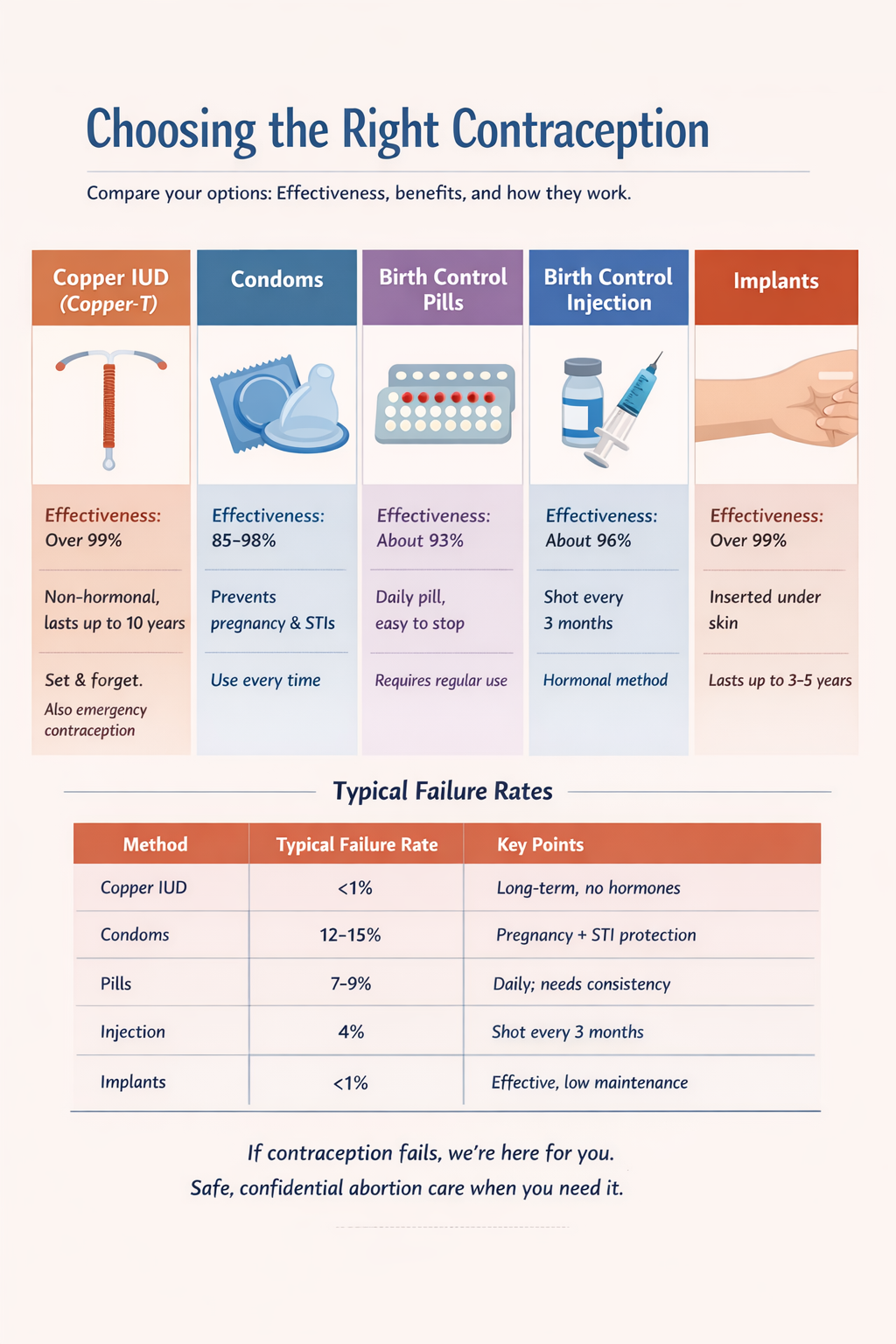
Long-acting reversible contraception (LARC):
This gives the strongest protection because it removes day-to-day user error. The copper intrauterine device (Copper-T) is a non-hormonal LARC that works immediately after insertion, lasts for years, and shows failure rates well below 1% in normal use — which makes it one of the most reliable, cost-effective options for many women.
If you want a reliable method that costs less over time than daily pills or ongoing hormonal treatments, an IUCD often makes financial as well as practical sense. Health systems and economic studies consistently find LARC methods more cost-effective than short-term methods because you pay once for years of protection rather than buying a regular supply.
Barrier Contraception:
Barrier methods like condoms matter for two reasons: they offer pregnancy prevention and they protect against sexually transmitted infections (STIs). When people use condoms perfectly every time, they approach 98% effectiveness for pregnancy prevention; with typical real-world use they prevent pregnancy about 87% of the time. Condoms remain the only widely available method that also reduces STI risk.
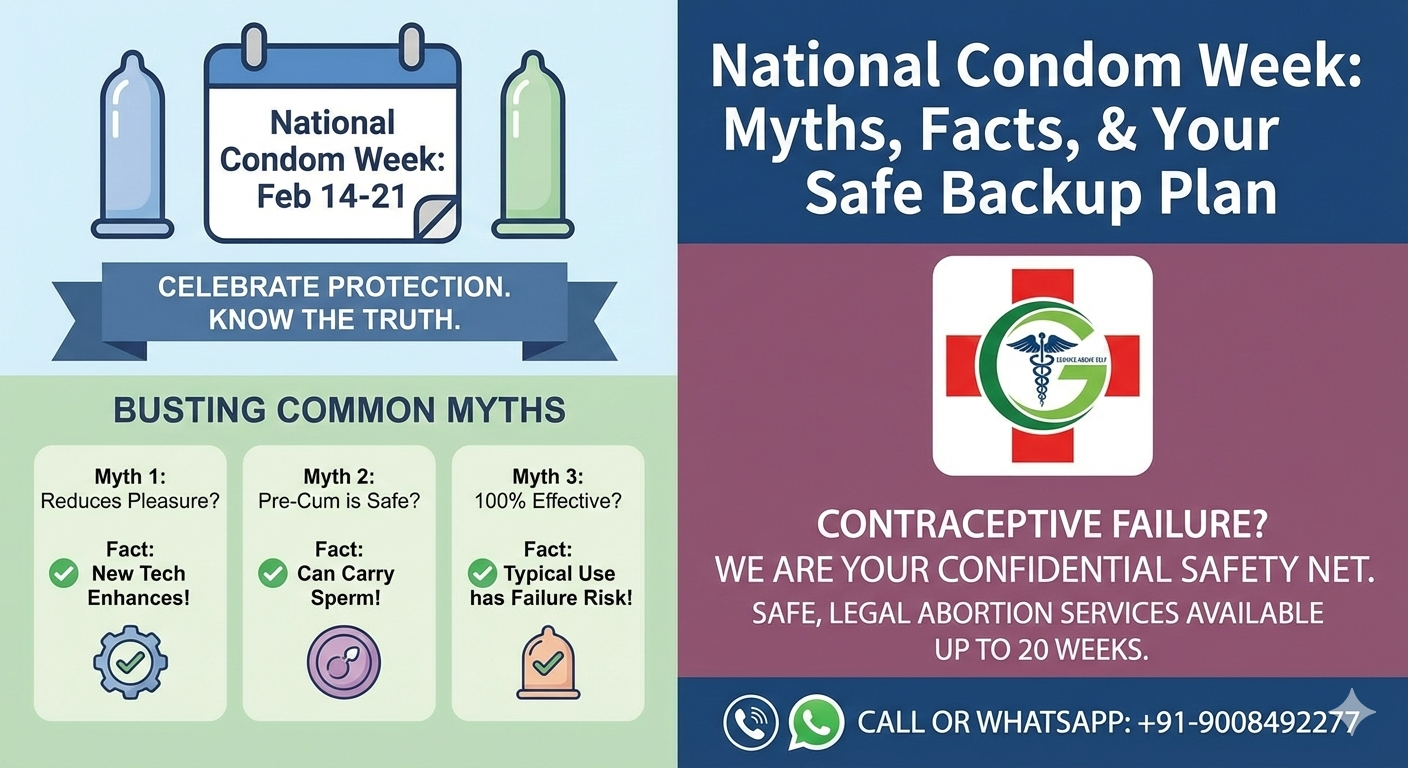
Short-acting hormonal methods:
These include pills, patches, and rings — work very well when used correctly, but typical use carries a higher chance of unintended pregnancy (roughly 7% per year for many combined hormonal methods). Injectable methods and progestin-only pills have their own advantages and trade-offs; implants and IUDs typically perform best because they do not rely on daily or per-act user steps.
A few practical points we discuss with every patient:
- Firstly, the choice is if you want non-hormonal protection that you “set and forget,” Copper-T is a strong option — immediate protection, long duration, and very low failure rates.
- Secondly, if you need STI protection, always use condoms (and consider combining condoms with another method for extra pregnancy protection). While Copper-T can prevent an unwanted pregnancy, pairing it with a barrier offers protection from sexually transmitted diseases, including HPV as well.
- Next, if you worry about daily pills, implants or IUDs remove the burden of daily adherence and reduce the chance of user-error pregnancies.
- Also, in emergencies, a Copper IUD can also serve as very effective emergency contraception when inserted within the recommended window after unprotected sex.
No method is absolutely perfect, so we also review typical-use failure rates openly so you can weigh risk against convenience, side effects, and future fertility goals. If contraception fails or a pregnancy is unwanted now, know that Bangalore Genesis Hospital stands ready as a confidential, non-judgmental Plan B: we provide timely medical guidance, emergency contraception where appropriate, and safe, legal abortion in Bangalore to protect a woman’s health and future fertility.
Safe, Legal, Compassionate, Confidential & Non-Judgmental abortion in Bangalore
At Bangalore Genesis Hospital, we recognize that every woman’s story is unique. Some patients arrive certain about their decision. Others seek information and guidance before deciding what feels right for them.
Our role is not to judge. Rather, our role is to provide safe, legal, and confidential medical care along with clear information and respectful support.
Our experienced medical team focuses on patient safety, privacy, and dignity at every step. We follow established medical protocols and ensure that each patient receives care suited to her stage of pregnancy and overall health. We also guide women about recovery, future reproductive health, and contraception so they can plan their next steps with confidence.
Whether a woman hopes to become a mother later or simply wants to protect her health and wellbeing today, we believe she deserves care that respects her autonomy and her future.
A society that respects choice
When we step back from judgement and listen with empathy, we create a healthier environment for everyone. Firstly, women gain the confidence to make responsible decisions. Then, families grow stronger because parenthood begins with readiness and care. Finally, communities benefit when healthcare supports women rather than shaming them.
Motherhood carries immense beauty and responsibility. For that very reason, it must always begin with choice.
When society respects that choice—whether a woman decides to welcome a child, wait for the right time, or live a different life path—we affirm something fundamental: every woman deserves dignity, understanding, and control over her own future.
Schedule an abortion in Bangalore appointment today.
Related Posts:
- 6 Condom Myths That Lead to Surprise Pregnancies
- Respecting Your Choice: Confidential Abortion for DINK Couples
- The ₹1.06 Lakh Protection: What Happens When Plan Goes Wrong
- Can the pull-out method prevent an unwanted pregnancy?
- How Much Rest is Necessary After an Abortion?
Quick Links:
- If You Want a Same-Day Abortion, Unwanted Kit is Not For You
- Reproductive Rights Shape Futures: Why Every Woman’s Choice Matters?
- How Soon Can You Resume Your Routine After an Abortion?
- What’s in a Name? Exploring Different Abortion Pill Names
- Abortion for Unmarried Without Parental Consent: What You Need to Know?
