
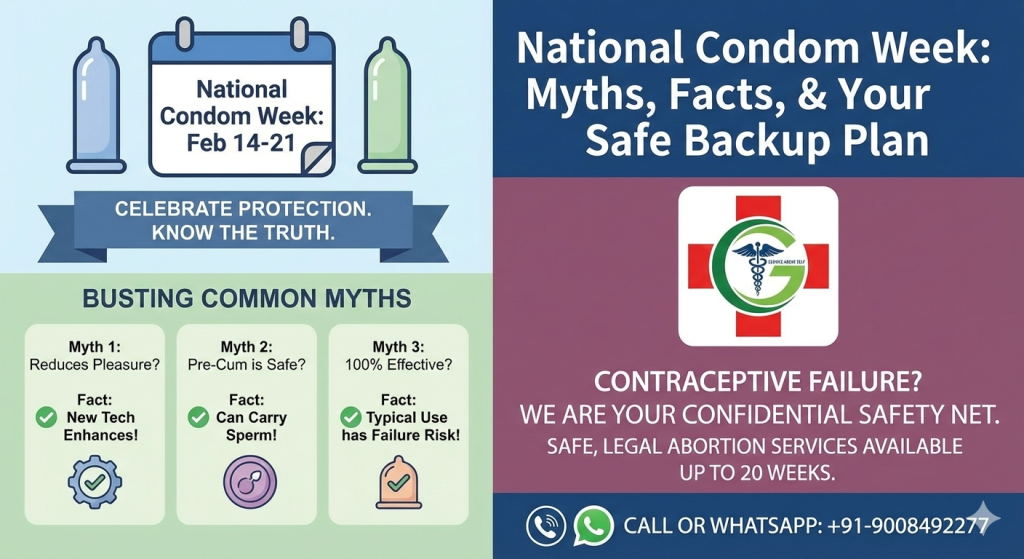
The PCOS Trap: Why Irregular Periods Aren’t a Natural Contraceptive
Contents of This Post:
- The False Sense of Security: Why Couples Misunderstand PCOS?
- The Biological Wildcard: Understanding Unpredictable Ovulation
- Beyond the Surface: Why “Pull-Out” and Partial Penetration Fail?
- The Reality Check: Spontaneous Pregnancy Statistics
- Taking Control: Moving from Myths to Reliable Protection
- Compassionate Care at Bangalore Genesis Hospital: Your Next Steps
- Post-Abortion Care With PCOS
Navigating life with Polycystic Ovary Syndrome (PCOS) often feels like an endless game of biological guesswork. Between the irregular cycles and the frustrating symptoms, many women and couples begin to view the condition through a lens of permanent infertility. While we understand how overwhelming this diagnosis can be, it often creates a dangerous misunderstanding regarding your reproductive safety. This post aims to replace fear and confusion with clear, medical facts, helping you make informed decisions about your body and your future.
The False Sense of Security: Why Couples Misunderstand PCOS?
Living with PCOS frequently means experiencing months without a period. It is a symptom that many couples—perhaps even you—mistakenly equate with a “natural” form of birth control. When the monthly cycle disappears, it is easy to assume that the risk of pregnancy has vanished along with it. Consequently, many partners choose to abandon reliable protection. They discontinue or never start using condoms or hormonal contraceptives or others believing their bodies have provided a built-in shield against conception.
This assumption creates a “false sense of security” that often leads to a life-changing surprise. Many people view PCOS as a binary state: either you are fertile, or you are not. In reality, the medical community classifies PCOS as a condition of subfertility, not sterility. This means that while your body may not follow a predictable 28-day rhythm, your reproductive system remains active and capable of releasing an egg at any moment.
Surprisingly, the data reinforces just how active these systems can be. Research indicates that nearly 20% to 30% of women with PCOS conceive spontaneously without any medical intervention or fertility treatments (Source).
This statistic serves as a vital reality check. If you are not using protection, you are essentially gambling with your reproductive health on an unpredictable timeline.
Furthermore, lifestyle shifts—such as a week of better sleep, reduced stress, or a slight change in diet—can unexpectedly trigger a “silent” ovulation. Because you aren’t tracking a regular period, you likely won’t notice this fertile window until a pregnancy has already occurred. By understanding that PCOS is a hormonal “volume knob” rather than an “off switch,” you can protect yourself from the emotional and physical shock of an unplanned pregnancy.
The Biological Wildcard: Understanding Unpredictable Ovulation
To understand why pregnancy occurs despite PCOS, you must first look at how the condition alters your internal clock. In a typical menstrual cycle, your hormones work like a finely tuned orchestra. Your brain sends signals to your ovaries to mature an egg, and once that egg reaches peak maturity, a surge of Luteinizing Hormone (LH) triggers its release. This is ovulation.
However, PCOS disrupts this harmony. Instead of a single clear signal, your body often maintains a steady, elevated level of LH and higher-than-average androgens (male-type hormones). This hormonal “noise” prevents follicles from maturing at a predictable pace. Consequently, your body may attempt to ovulate multiple times in a single month without success, or it might suddenly release an egg after weeks of inactivity.
Medical professionals refer to this as “Random Ovulation.” Because your body does not follow a 28-day script, you cannot use calendar-based tracking or “period apps” to determine your fertile window. In fact, a study published in Human Reproduction (Source) suggests that even women with highly irregular cycles can experience “spontaneous follicular activity” at any time.
Essentially, your ovaries are not “broken”; they are simply operating on a chaotic schedule. If you engage in unprotected intimacy during one of these surprise hormonal surges, the risk of conception is just as high as it would be for someone with a regular cycle. This unpredictability makes PCOS a “biological wildcard”—one that often leads to an unplanned pregnancy because the “safety net” of an irregular period was never actually there.
Beyond the Surface: Why “Pull-Out” and Partial Penetration Fail?
Many couples rely on the “pull-out” method (withdrawal) or assume that partial penetration—without full ejaculation—will protect them. We often receive queries that mention, “It was just the tip. Can pregnancy still happen?” When you combine these behaviours with the belief that PCOS reduces your fertility, you create a perfect storm for contraceptive failure. To stay safe, you must understand the mechanical and biological reasons why these methods fall short.
Withdrawal Method to Prevent an Unwanted Pregnancy:
First, let’s address the withdrawal method. While it may seem logical in theory, it relies entirely on perfect timing and self-control, which is difficult to achieve in the heat of the moment. According to data from the Centres for Disease Control and Prevention (CDC), the withdrawal method has a “typical use” failure rate of 20% to 22% (Source: CDC / Contraceptive Effectiveness Table). This means that out of every 100 couples using this method for a year, roughly 22 will face an unplanned pregnancy.
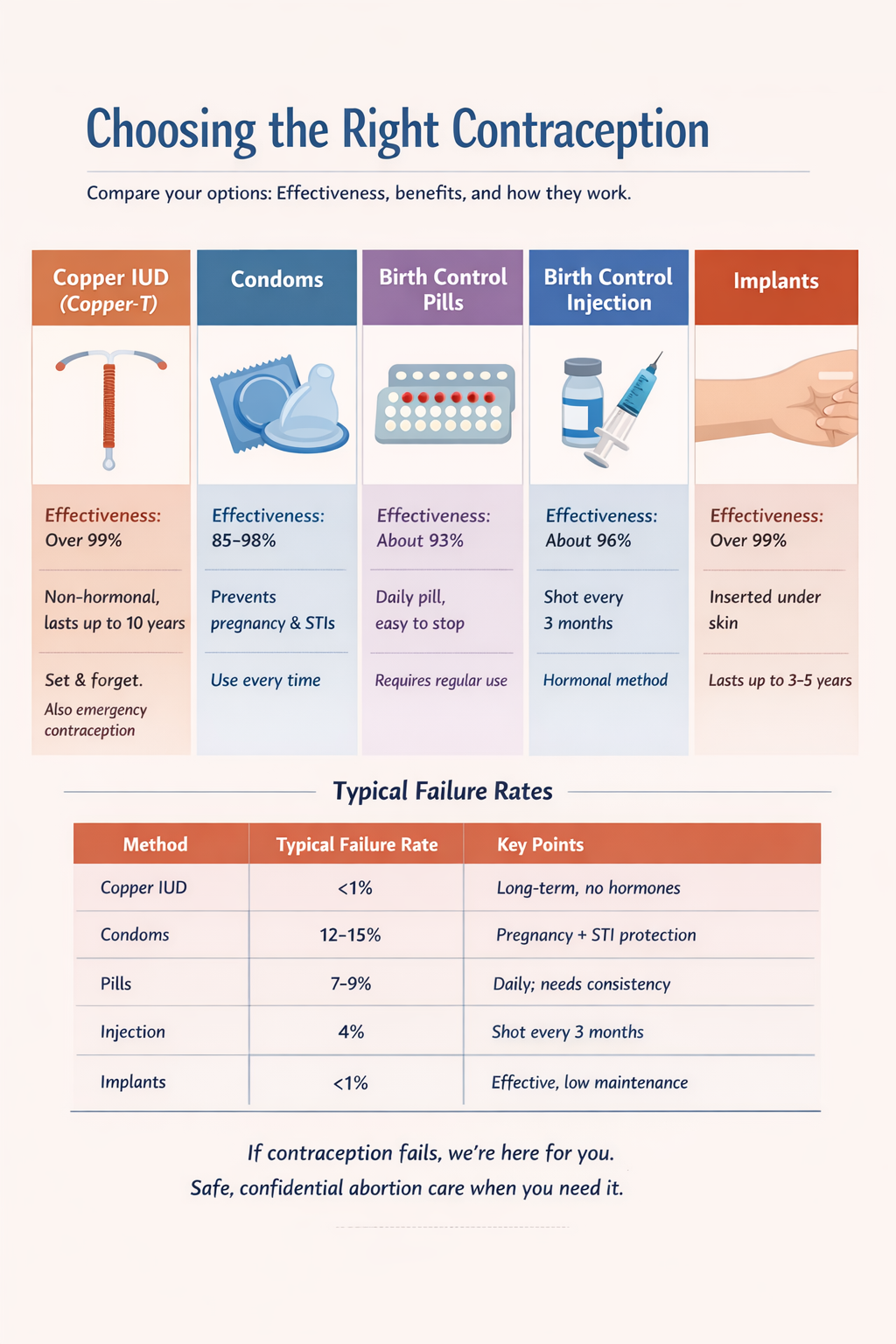
Pre-cum can contain sperm.
Furthermore, the “pre-ejaculate” or “pre-cum” fluid poses a significant, often overlooked risk. Many people believe this fluid is sterile, but research tells a different story. A study published in Human Fertility (Source) found that active, motile sperm were present in the pre-ejaculatory fluid of 41% of participants. Even if a partner pulls out perfectly, these early-arriving sperm can still reach an egg if ovulation has occurred.
Partial Penetration:
Partial penetration, also known as “outercourse,” carries similar risks. Sperm are highly resilient and capable of travelling through vaginal moisture to reach the cervix. If there is any contact between genital fluids, the possibility of pregnancy remains. When you layer these high-risk behaviours on top of the unpredictable ovulation cycles of PCOS, you aren’t just taking a small chance. Rather, you are navigating a high-stakes situation without a map.
Therefore, relying on “half-measures” for protection while managing PCOS is like driving a car with unreliable brakes. It might work for a while, but eventually, the lack of a primary safety system may lead to an accident. Transitioning to reliable, barrier-based, or hormonal protection is the only way to ensure your reproductive choices remain in your hands.
The Reality Check: Spontaneous Pregnancy Statistics
If you have been told that PCOS makes you “infertile,” it is time for a reality check. In medical terms, infertility is defined as the inability to conceive after one year of regular, unprotected intercourse. For many women with PCOS, this diagnosis is accurate—but it is rarely permanent. The “trap” lies in the fact that while you may struggle to get pregnant when you want to, your body can still surprise you when you don’t.
To illustrate the risk, consider this: medical research shows that 20% to 30% of women with PCOS conceive spontaneously, meaning they get pregnant naturally without any fertility drugs or medical help (Source).
The Surprise Element: The “Slow-Aging” Ovary
Here is a fact that surprises many: women with PCOS often have a higher egg reserve (Ovarian Reserve) than women without the condition. Because PCOS prevents you from releasing an egg every month, your “stockpile” of eggs remains higher for longer.
Consequently, as women without PCOS see their fertility decline in their 30s and 40s, women with PCOS may actually experience a “fertility peak” later in life. A study published in Human Reproduction (Source) found that women with PCOS often maintain their fertility longer than their peers. This means that if you rely on PCOS as “natural contraception,” you are dealing with a reproductive system that may be more “youthful” and capable of a surprise pregnancy than you realise.
Relying on an irregular period as a safety net is, therefore, one of the most common ways couples find themselves facing an unplanned pregnancy.
Taking Control: Moving from Myths to Reliable Protection
If you are not currently planning to start a family, you must treat your reproductive health with the same proactive care you use to manage your PCOS symptoms. Rather than hoping your condition will act as a barrier, you can use modern contraception to actually help your PCOS while ensuring you stay protected.
For many women, hormonal contraceptives are the “gold standard” because they serve a dual purpose. They don’t just prevent pregnancy with a 99% success rate when used correctly; they also help regulate the very symptoms that make PCOS so frustrating.
- Combined Oral Contraceptives (COCs): These pills provide a steady dose of estrogen and progestin. This “silences” the hormonal noise of PCOS, clearing up acne, reducing excess hair growth (hirsutism), and ensuring you have a predictable withdrawal bleed every month.
- Hormonal IUDs: These small devices are placed in the uterus and can last for 3 to 5 years. They provide high-level protection and often significantly reduce heavy, painful periods—another common PCOS struggle.
- Non-Hormonal Options: If you prefer to avoid hormones, barrier methods like condoms remain essential. Not only do they prevent pregnancy, but they also offer the only protection against STIs.
- Intrauterine Contraceptive Device (Copper-T): This is one of the most efficient and cost-friendly options, which uses a T-shaped small device made of copper that prevents the released egg from meeting the sperm. Besides, it prevents lasting contraception, for up to 5-10 years, depending on the type and preference.
By choosing a reliable method, you remove the “guesswork” from your life. You no longer have to wonder if a late period is due to a PCOS flare-up or a surprise pregnancy. You regain the power to decide when—and if—you want to become a parent.
Compassionate Care at Bangalore Genesis Hospital: Your Next Steps
We understand that even with the best intentions, myths can be convincing and accidents can happen. If you find yourself facing an unplanned pregnancy after relying on these common misconceptions, you deserve a safe space to explore your options without judgment.
Bangalore Genesis Hospital is a Registered MTP (Medical Termination of Pregnancy) Centre in Bangalore, specifically designed to support women through these difficult moments. We provide legal, safe, and strictly confidential abortion services for those who need to terminate an unwanted pregnancy for up to 20 weeks.
At our facility, we prioritise your dignity and your health:
- A Legal & Safe Environment: As a government-registered centre, we follow the strictest medical protocols under the MTP Act.
- Confidentiality as a Priority: We understand the sensitive nature of your visit. All records and consultations are handled with the highest level of privacy.
- Expert Medical Guidance: Our gynaecologists are experts in both PCOS management and reproductive healthcare. We don’t just provide a service; we provide a pathway back to health and peace of mind.
Post-Abortion Care With PCOS:
Once you address the immediate situation, your focus must shift toward healing and reclaiming control over your hormonal health. At Bangalore Genesis Hospital, we believe that medical care should not end when you leave the clinic; it should extend into a long-term plan for your well-being.
The Physical Healing Process
After an MTP, your body undergoes a significant hormonal shift. For someone with PCOS, whose hormones are already in a delicate balance, this transition requires expert monitoring. We provide detailed post-procedure care to ensure your body recovers smoothly, focusing on:
- Hormonal Stabilisation: Helping your endocrine system return to its baseline.
- Nutritional Guidance: Offering advice on anti-inflammatory diets that support recovery and manage PCOS symptoms simultaneously.
- Cycle Regulation: Discussing how to jumpstart a more predictable cycle through medication or lifestyle adjustments.
Emotional Recovery and Support
The myth that “PCOS means infertility” can lead to a specific type of surprise or shock when a pregnancy occurs. If the unplanned pregnancy is also an unwanted one, you might feel frustrated with your body or overwhelmed by the sudden need to make a difficult decision. We provide a compassionate, non-judgmental environment where your mental health is treated with the same importance as your physical health.
Our team is here to help you process the experience and transition back into a routine where you feel empowered. By integrating reproductive protection with a comprehensive PCOS management plan, you can move forward with the confidence that a “biological wildcard” will never catch you off guard again. Taking this step isn’t just about resolving a crisis; it is about setting a foundation for a healthier, more informed future.
Do not let a hormonal imbalance dictate the course of your life. While PCOS makes the journey of womanhood more complex, it does not take away your right to choose your own path. Whether you need guidance on contraception that works with your PCOS or you require safe, legal, and confidential MTP services, Bangalore Genesis Hospital is here to support you every step of the way with open doors and welcoming hearts.
Contact Bangalore Genesis Hospital today to speak with a specialist who understands your journey.
Related Posts:
- Morning After Pill vs. Unwanted Kit: Knowing Your Timeline and Your Rights
- Motherhood Is a Choice: Respecting Every Woman’s Right to Choose
- The ₹1.06 Lakh Protection: What Happens When Plan Goes Wrong
- How Much Rest is Necessary After an Abortion?
- If You Want a Same-Day Abortion, Unwanted Kit is Not For You
Quick Links:
- Reproductive Rights Shape Futures: Why Every Woman’s Choice Matters?
- How Soon Can You Resume Your Routine After an Abortion?
- Abortion for Unmarried Without Parental Consent: What You Need to Know?
- When do Abortion Pills Start Working? Abortion Doctor Answers
- 7 Things to Know Before You Buy an Unwanted Kit for Abortion
