
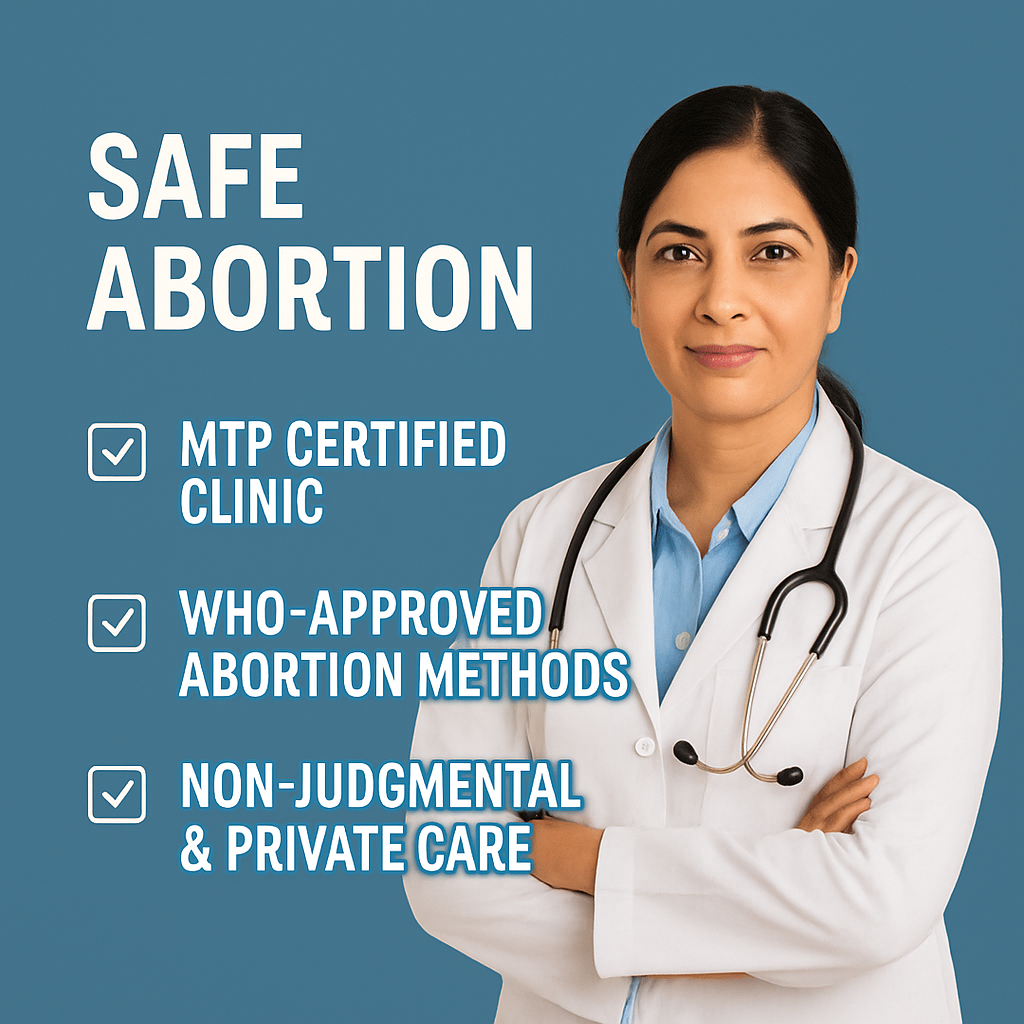
Contents of This Post:
- The Hard Truth: Why This Conversation Can’t Wait if you are planning to get a pregnancy termination?
- What Exactly Is a “Safe Abortion”?
- Unsafe Abortion: The Silent Killer
- Your Safety Checklist: 5 Non-Negotiables: Who, where, how, and when – decoded.
The hard truth is that “Every 9 minutes, a woman dies from an unsafe abortion.”
Let this figure sink into your mind. And this is the major reason why this conversation can’t wait if you are planning to obtain an abortion, regardless of the reason for your decision and also the number of weeks pregnant you are.
Approximately 47,000 women pay the cost of abortion with their lives yearly when they die from abortion complications. Most are preventable. Furthermore, 7 million women end up in hospitals with abortion complications, including heavy bleeding, infection, ruptured ectopic pregnancy, and incomplete abortions, after unsafe procedures, including self-administration of abortion pills, consuming traditional herbal teas to induce miscarriage, eating lots of papaya or pineapple for abortion, etc.
This isn’t about “choice.” It’s about life or death. We all have choices, and what matters most in this case is that abortion is a reproductive right, at least in India if not in UAE, Maldives, Mauritius, Philippines, Sri Lanka, Qatar, Kuwait, Oman, Bahrain, USA and many others. We are always responsible for the choices we make, as each one comes with consequences. It may be challenging for us to make the right choice, but it can be significant and life-altering.
Maria, 24, Philippines, shares her story with grief and sobs:
“I used a clothes hanger because I had no money to go to the abortion hospital. No one to ask. The following day, I was lying in an emergency room of a nearby hospital. I was told a neighbour who visited me last evening found me lying unconscious and with some help managed to bring me to the hospital. The doctor removed my uterus to stop the infection. I survived. But I’ll never be a mother.”
Why isn’t safety “optional”?
Unsafe abortion is a top-3 cause of maternal death globally. On the other hand, Safe abortion? Near-zero risk.
Beyond Legality: What Truly Makes an Abortion Safe?
Abortion in Bangalore is legal, and this is very good to learn about. Furthermore, other abortion laws in India are also very liberal, making safe abortions accessible to all women, married or unmarried alike. And do you know you can get an abortion here with your consent only. Adding another layer of liberality, the law allows any woman, Indian or expat or NRI or foreigner, to obtain a safe abortion in India legally.
The law is trying its best to touch the safety parameters and prevent as many unsafe abortions as possible. But, at the same time, it is important to understand that legality alone doesn’t save lives. However, safety does. A truly safe abortion isn’t just about surviving the procedure. It’s about walking away whole – in body, mind, and spirit.
The Physical Safeguards: Your Body’s Non-Negotiables
Trust Trained Providers And Not a “friend who knows a clinic.”
We often trust our friends when they say abortion pills worked for them. Why don’t you also use an MTP Kit or Unwanted Kit? You can get it easily at any pharmacy with just a little more cost than its MRP. After all, if someone is giving you abortion pills without a prescription, they might charge a little to add to their pocket. But it did work for me. And probably, it will work for you too. So, nothing to worry about.
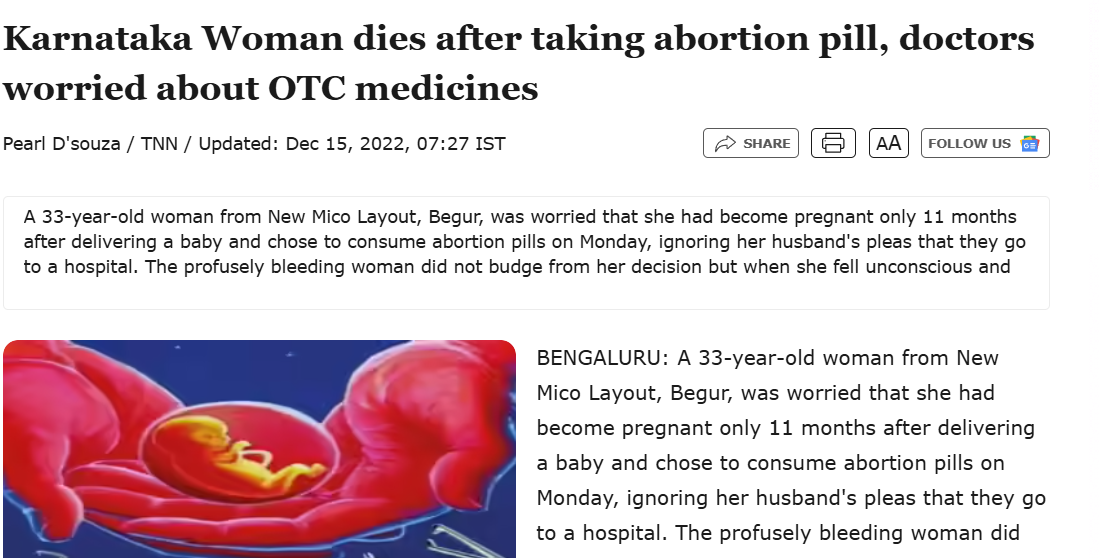
But, is that the truth? Then, why do doctors often attend to patients after botched abortions in emergency rooms? Why do women die after taking abortion pills? You don’t believe us? Did you see this news article where a woman lost her life after taking abortion pills without a prescription in Bangalore, Karnataka? Here’s the headline from the newspaper.
Doctors and nurses skilled in WHO-approved abortion methods.
They screen for pregnancy stage, anaemia, allergies and other conditions as they do not rely on any guesswork. So, they complete all the essential diagnostic tests before they perform the abortion. This ensures your safety and that you do not suffer any long-term consequences after the abortion. The numbers tell the doctor which abortion method may be the best for you and how to make any adjustments to make the procedure safe for you.
Approved Abortion Medications, Procedures at Registered Facilities:
Abortion pills Mifepristone and Misoprostol:
This is the medical abortion, and the same one that you might hear from a friend. The method is safe and 92% effective when used correctly under medical guidance. But an unsafe with random pills from a pharmacy without prescription. And do you know abortion pills do not work to terminate an ectopic pregnancy, which used to be a rare condition earlier, but nowadays, is quite common.
Surgical Abortion {Suction Abortion and Dilatation & Evacuation (D&E)}:
For a surgical abortion, sterile tools, emergency blood supply, and pain management should be available. So, do not trust rusty instruments in dark rooms like illegal clinics.
Firstly, suction abortion is safe and nearly 100% efficient when done properly by a trained professional using a safe suction device and other sterile tools. It is the approved abortion method for ending pregnancies that are less than 12 weeks.
Secondly, D&E is also a safe procedure, but again it depends on the abortion centre, the available facilities, training and experience of the abortion doctor. Since abortion in India is legal for up to 20 weeks in casual cases, abortion doctors recommend this method for ending pregnancies after 12 weeks.
Aftercare That Follows You Home:
Availability of the knowledge of expected abortion bleeding timelines, infection red flags, and 24-hour helplines guides a safe abortion because your safety is not worth a compromise. So, a safe abortion embraces post-abortion consultation and lasts till your recovery.

The Emotional Armour: Dignity Over Shame
Now, let’s have a little talk about emotional well-being as a parameter for a safe abortion. Safe abortion care never looks like this:
❌ A provider asking, “Are you sure?” with judgmental eyes.
Instead, a warm and welcoming smile gives you comfort and displays confidence in your decision and your choice.
❌ Nurses whispering about your “life choices” in the hallway.
Rather, they create a compassionate and comfortable ambience with friendly behaviour, even behind your back. A good nursing staff makes the abortion clinic your home away from home with comfort, care, compassion, friendliness and the warmth you deserve in your trying times. You know, we address our nursing staff with the word ‘Sister’ because when you hear sister, comfort and care follow.
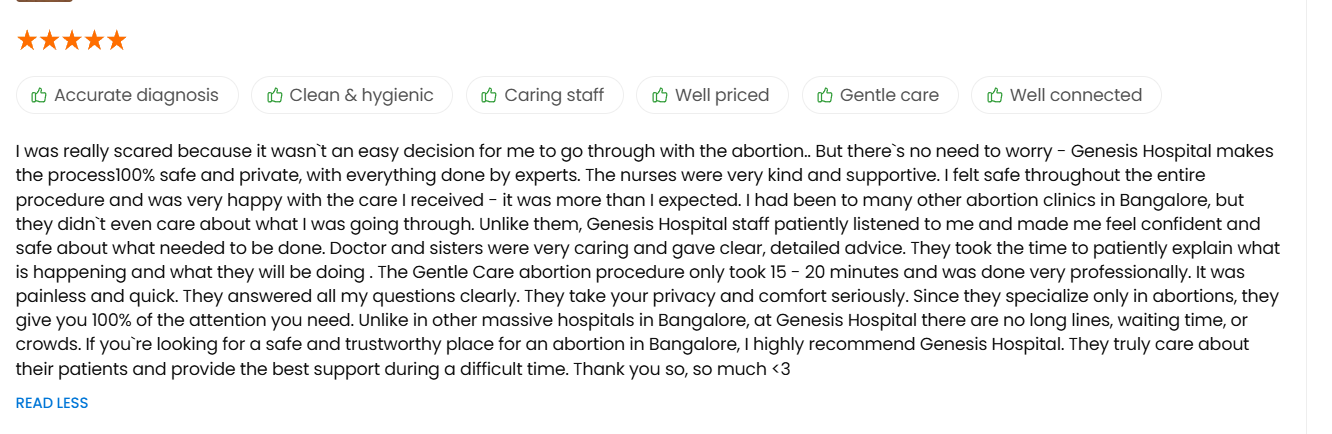
❌ Waiting room full of anxious and judgmental faces.
Safe abortion isn’t about walking into a crowded clinic where silence feels heavy, eyes feel sharp, and fear weighs more than the decision itself. It does not involve navigating a waiting room where judgment lingers in every glance. Rather, a truly safe abortion respects your privacy, your comfort, and your emotional space. Also, it means receiving care in a place that feels calm, discreet, and supportive—where your choice is honoured, not questioned. You deserve care that’s free from shame and full of compassion.
❌ Being rushed out the door without any post-abortion consultation.
Instead, the doctor will ensure you are comfortable and are recovering well before you are discharged. Additionally, you will receive guidance and tips for post-abortion care and future contraception to avoid unwanted pregnancies. And when you are comfortable, you can confidently return home knowing that you have obtained a safe and successful abortion.
So, a safe abortion looks like this:
🛡️ Pre-procedure counselling:
A safe abortion begins with clear, compassionate, and judgment-free counselling. Before anything else, you have the right to understand your options, the steps involved, and what to expect—physically and emotionally. All your medical history relevant to the abortion is noted, and diagnostic tests are performed. Then, your options are explained without pressure. Finally, your choices receive preference with respect and discretion.
Pre-procedure counselling is not a formality; it’s a vital part of care where your questions are answered honestly, your concerns are addressed with empathy, and your choices are fully respected. It’s a space where you’re seen as a person, not just a patient, so you can make informed decisions with confidence and calm.
🛡️ Zero stigma language: Words like “patient,” not “sinner.”
In a safe abortion environment, language is never used as a weapon. Instead, it’s used to support, affirm, and respect. You are addressed as a patient seeking medical care, not judged, labelled, or shamed. Words matter. They shape how you feel, how you’re treated, and how you heal. So, a truly safe space uses language that’s compassionate and professional, free from bias, blame, or moral judgment. Because your health decision isn’t a sin. It’s right.
🛡️ Mental health support: Therapists trained in reproductive trauma.
Safe abortion care doesn’t end with the procedure—it includes your emotional well-being too. That’s why access to therapists trained in reproductive trauma is essential. These professionals understand the complex feelings that can come with abortion—relief, grief, confusion, or even guilt—and provide a safe, non-judgmental space to process them. Mental health support in this context isn’t about pathologizing your choice; it’s about helping you feel heard, understood, and emotionally cared for at every step of your journey.
Do you know that *Women denied emotional care post-abortion are more likely to develop PTSD*?
The Mental Lifeline: Healing the Invisible Wounds
“I felt relief. Then guilt for feeling relief. Nobody told me that was normal.”
– Lena, 29, Frazer Town
An abortion is never truly “safe” if it leaves you:
- Isolated with secret grief.
- Or terrified of future pregnancies.
- Or Haunted by cultural/religious shame.
Bodies heal in weeks. But minds can ache for years. Safe abortion care is for both and ensures complete well-being of the patient.
The Stark Contrast: Safe vs. Unsafe in Real Life:
| Aspect | Safe Abortion | Unsafe Abortion |
| Provider | Gynecologist in a licensed clinic | Unlicensed “healer” in an unregistered centre or any dark and hidden room |
| Pain | Managed with anesthesia and safe medicines | Raw agony; no painkillers |
| Infection Risk | 0.23% (with antibiotics) [BMJ, 2023] | 33% (sepsis, infertility) [WHO]
|
| Emotional Care | “Your feelings are valid.” | “You did this to yourself.” |
The Hidden War: How Unsafe Abortion Shatters Lives?
Unsafe abortion isn’t just a procedure gone wrong. It’s also a systemic betrayal of women’s bodies and souls. Every year, 7 million women survive unsafe abortions but walk away broken. They bleed in silence. They grieve in shadows. And their stories scream a truth we must confront: Unsafe abortion doesn’t just risk lives—it ravages them forever.
Do you know what the unsafe abortion’s #1 killer of unsafe abortions is?
Sepsis. Sepsis happens when a person gets an infection (which is likely after an unsafe abortion) and doesn’t receive timely treatment. The infection spreads to multiple organs, leading to death.
And do you know that with abortion pills, there is a significant risk of incomplete abortion. It also stands true with unsafe abortions, like visiting unregistered clinics and quacks or midwives to get manual abortions. They may use unsterile tools and may also have compromised hygiene of the facility and the equipment in use. Still, pregnancy products may remain in the womb, rotting and spreading infection, silently but surely.

And do you know that a safe abortion can prevent sepsis?
Safe abortion reduces this risk by nearly 95%.
For the matter of fact and a safe abortion, sepsis is preventable in the first place. Then, incomplete abortions can be completed using better techniques like D&E and by experienced doctors. Furthermore, with treatment both during and after the procedure with antibiotics, infections are preventable.
An early diagnosis with indicators like fever for more than 24 hours, abortion bleeding that does not stop, and pain that does not go away is worth checking for. When you visit a registered abortion centre near you, you will receive a post-abortion consultation with a prescription including medicines to take for a few days. Taking medicines as advised by the doctor can prevent infections and also their progression to sepsis.
Also, an experienced doctor can perform a complete abortion in a single visit, like a suction abortion at Bangalore Genesis Hospital (BGH). So, with no pregnancy remnants, no chance of infection. Besides, with sterile tools and proper hygiene care, again, there is no chance of infection. And finally, with antibiotics as a part of your post-abortion care treatment regime, any infection that sets in will also go away soon enough.
Therefore, physical safety isn’t a luxury. Rather, it’s the absolute baseline.
A patient in Oman:
A 19-year-old in Muscat, Oman—we’ll call her Ada—scared and alone. Abortion is illegal there. So, she finds a “doctor” in a cramped apartment. He uses dirty tools. Besides, he offers no pain relief. Three days later, Ada wakes in a pool of blood. Her fever hits 40°C. At the hospital, doctors find uterine perforations and raging sepsis. They save her life… but remove her womb. Ada survives. Her dreams of motherhood do not.
This isn’t fiction. It’s the fate of many women daily, weekly, monthly, and yearly. It’s time we educate women about their reproductive rights and guide them about their safe abortion options. With knowledge and a stark difference between safety and unsafe, they will empower them to make better and safer decisions for their health and life.
The physical toll is visceral:
Unsafe abortion leaves carnage. Think fistulas tunnelling through tissue. Or think bladders ripped open by unsterilized instruments. You can also think septic shock rotting organs from within. Globally, millions of women suffer severe abortion risks and complications annually—haemorrhage, organ failure, infertility, sepsis. In India’s back-alley clinics, tetanus from rusty tools kills nearly 1 in 200 women (Source). These wounds scar bodies. But deeper wounds fester beneath.
Now, meet Elena from Sri Lanka:
After an unsafe pill abortion (bought from an illegal supplier she found online), she bled for weeks. But the real agony began later.
“I’d wake screaming, smelling that clinic’s mildew,” she shares. “I’d see the nurse’s scornful eyes.”
Firstly, no counselling. Secondly, no compassion. Elena finally developed PTSD—haunted by shame, her society branded onto her. Her story exposes a brutal reality: Emotional violence is woven into unsafe abortion. When providers judge you, when systems abandon you, trauma roots deep. Women denied post-abortion mental care face higher depression rates.
This is the silent epidemic:
Imagine the girl who can’t bond with future children because her botched abortion left chronic pain.
Now, picture the woman ostracised by her village for “killing a child” she never wanted.
Imagine the future of the student who drops out, consumed by guilt. Unsafe abortion steals futures. It isolates. It punishes. And it happens every 9 minutes somewhere on this planet.
But here’s what burns brightest in this darkness:
None of this is inevitable. Ada didn’t need to lose her uterus. Elena didn’t need to battle PTSD. Safe abortion care exists, even if you have to cross the borders for safety due to legal restrictions in your country. A safe abortion heals bodies gently. It guards minds fiercely. And it refuses to let women bleed—physically or emotionally—alone.
Your Safety Checklist: Demanding More Than Survival
Safe abortion care isn’t a privilege. It’s your right. But rights only matter when you know how to claim them. Let’s break down exactly what to demand – physically, emotionally, and mentally – to walk away whole with confidence and satisfaction.
Physical Safety: Your Body’s Non-Negotiables.
- Start with the licensed provider at a registered abortion centre near you. If abortion in your country is illegal, you can start by looking for the best abortion centre in Bangalore, India. A good hospital proudly displays its proof of being a certified MTP clinic on its website as well as within the hospital.
- Feel free to ask for the provider’s qualifications and experience. It is a good start for the conversation, too. A truly safe abortion requires a licensed gynaecologist trained in WHO protocols, not a “traditional healer” or unlicensed pharmacist. They must screen you thoroughly: confirming pregnancy stage with ultrasound, ruling out ectopic pregnancy, checking blood type for Rh compatibility, and testing for infections that could turn deadly.
- The setting matters. Insist on a clean, equipped facility: sterile instruments, emergency preparations at the clinic, oxygen tanks, and pain management options (local anaesthesia or sedation). If you’re offered abortion pills (mifepristone + misoprostol), they must come in sealed, pharmacy-dispensed packaging – never lose tablets from a bag.
- Aftercare is non-negotiable: clear instructions on bleeding timelines (soaking >2 pads/hour for 2+ hours = emergency), signs of infection (fever >38°C, chills, foul discharge), and a 24-hour helpline staffed by medical professionals.
Emotional Safety: Shielding Your Dignity
Your care must be free of judgment. From the first consultation to the final follow-up, you deserve zero stigma. That means:
- Counsellors who say “How do you see yourself with your decision? Are you comfortable talking? Can you help me learn your concerns and expectations, and if something worries or bothers you”, instead of “Are you sure?”
- Providers who use medical terms (“pregnancy tissue,” not “baby”).
- Privacy guarantees – no discussing your case in hallways or with unapproved family.
- Demand trauma-informed care. Staff should recognise anxiety attacks, dissociation, or shame spirals. They must offer non-directive counselling: exploring your feelings without pushing regret or relief. If you freeze when asked about your decision, a skilled provider pauses and says: *”It’s okay. Take your time. I’m here.” Emotional safety isn’t soft, it prevents PTSD.
“I felt broken until my therapist said: ‘Relief doesn’t make you a monster. Grief doesn’t make you weak.’ That saved me.”
– Priya, 27, New Delhi
When Safety Fails: Real Stories, Real Lessons
Maria’s Story (Mauritius):
“I went to a ‘doctor’ in a market stall. He used dirty scissors. No painkillers. When I screamed, he said: ‘You deserve this for killing your child.’
I almost died from sepsis. Now I can’t have children.
I wish I knew: Real doctors don’t shame you. They save you.”
Maria’s Missed Safeguards:
- Unlicensed provider (no medical degree displayed).
- Unsterile environment (clinic was a curtained stall).
- Emotional abuse (deliberate shaming during procedure).
- Zero aftercare (no warning signs for sepsis).
This didn’t have to happen. Your Life Is Non-Negotiable
Demand these 5 pillars at any clinic:
- Firstly, credentials: Licensed MD/NP + displayed certifications.
- Second, Screening: Ultrasound + blood tests + Rh factor check + any other diagnostic tests relevant to your health.
- Third, Pain Management: Anaesthesia options discussed upfront.
- Fourth, Language: Medical terms only (“pregnancy,” not “baby”).
- Finally, Aftercare Plan: Written instructions + 24-hour hotline.
Choose life. Choose wholeness. Every unsafe abortion is a preventable tragedy—a body broken, a spirit scarred, a future stolen. But you hold power: Demand providers who guard your body and your dignity. Seek clinics that heal without judgment. Walk away from whispers of shame. You deserve care that protects not just your survival, but your humanity. Because safe abortion isn’t just about ending a pregnancy—it’s about honouring your right to walk away physically unharmed, emotionally unbroken, and forever free from the shadows of regret. When you choose safety, you choose to live fully. And that choice? It reshapes the world.
Get an appointment for a safe, legal, confidential, non-judgmental abortion in Bangalore.
Disclaimer: Names of the patients sharing their stories have been changed for privacy. All the testimonial patients consented to use their stories as examples as a part of advocacy for reproductive rights of women.
Related Posts:
- How to Use MTP Kit Unwanted Kit for a Safe Abortion?
- Can Abortion Cause Endometriosis? Facts& Risks; Why Safe Abortion Matters?
- Abortion in Bangalore: Your Right to Safe & Accessible Care
- 100% Safe and affordable abortion in Bangalore
- What is the cost of having a safe abortion in Bangalore?
Quick Links:
- What’s in a Name? Exploring Different Abortion Pill Names
- “Is Same-Day Abortion Possible Without Hospital Stay?”
- Can Abortion Cause Adenomyosis? Truth Between the Lines
- Your Body, Your Health: Are You HPV Aware?
- “Can Abortion Cause Death? Examining the Evidence”
