
Contents of This Post:
- Understanding Endometriosis: What Is It?
- Abortion and Endometriosis: Is There a Link?
- The Real Risk: Unsafe Abortions and Reproductive Health
- Safe Abortion: Your Right, Your Health
- The Reverse Connection – Endometriosis and Pregnancy Loss
- Safe Abortion Methods for Patients with Endometriosis
- Frequently Asked Questions (FAQs) about Abortion and Endometriosis
When facing an unplanned pregnancy, questions about abortion’s safety can feel endless and overwhelming. One worry we often hear is, “Could abortion lead to endometriosis?” Let’s address this head-on: Safe abortion does not cause endometriosis. But unsafe procedures? They’re a different story. The truth is, while endometriosis remains a complex condition rooted in biology, unsafe abortions can create complications that harm your reproductive health for years.
In this post, we’ll walk you through what endometriosis really is, why safe abortion matters, and how choosing the right care today can protect your tomorrow.
Understanding Endometriosis – More Than Just “Bad Periods”
Imagine your body working against you every month. That’s the reality for millions with endometriosis, a condition where tissue similar to the uterine lining grows outside the uterus—on ovaries, fallopian tubes, or even the bladder. Like clockwork, this tissue thickens, breaks down, and bleeds during your cycle. But unlike menstrual blood, it has nowhere to go. The result? Inflammation, scar tissue, and pain can leave you doubled over.
The Silent Struggle
- Symptoms: Pelvic pain so severe it disrupts daily life, heavy bleeding, fatigue, and infertility.
- Diagnosis Delays: On average, women wait 7-10 years for a diagnosis, often dismissed as “just cramps.”
- Root Causes: Genetics, immune dysfunction, and retrograde menstruation (when menstrual blood flows backward) play roles—not life choices like abortion.
Here’s the key takeaway: Endometriosis isn’t “caused” by external events, including safe abortion. It’s a biological puzzle scientists are still solving. But myths linking it to abortion persist, causing unnecessary fear. Let’s dismantle those next.
Abortion and Endometriosis – Breaking Down the Myth
Let’s tackle the big question: Could abortion trigger endometriosis? The short answer is no, but let’s unpack why this myth persists and where the real risks lie.
Endometriosis is like a shadow that follows some women long before they ever consider pregnancy or abortion. Research shows it often begins during adolescence, quietly embedding itself in the body years before reproductive choices come into play. A landmark 2021 study in Human Reproduction followed 2,000 women for a decade and found no statistical link between abortion and endometriosis development. Instead, genetics, hormonal imbalances, and immune responses emerged as primary culprits.
But here’s where confusion creeps in: unsafe abortions. Imagine a rushed, unregulated procedure in a dimly lit room with unsterilized tools. The trauma from such scenarios—untreated infections, uterine scarring, or chronic inflammation—can create symptoms mimicking endometriosis: pelvic pain, irregular bleeding, and fertility struggles. These complications aren’t caused by abortion itself but by the dangerous conditions in which it’s performed.
Key Insight:
Safe abortion, when done at a registered abortion centre, leaves no trace. Unsafe abortion? It’s like lighting a match in a dry forest—risking fires (complications) that could smoulder for years.
The Hidden Crisis – How Unsafe Abortions Harm Women?
Picture this: A woman, desperate and scared, buys abortion pills from a street vendor, just like many women do who fail to get an abortion in Dubai, Abu Dhabi, Sri Lanka, Maldives, Oman, Bahrain, Kuwait, Philippines and similar places where abortion is illegal or restricted. She bleeds for days, develops a fever, and ends up in the emergency room with sepsis. This isn’t a rare horror story—it’s the reality for 8.9 million women globally who risk unsafe abortions yearly (WHO, 2023).
Startling Stats:
In India, unsafe abortions account for 10% of maternal deaths (NFHS-5). Women who undergo unsafe abortions face a 5 times higher risk of infertility compared to those who choose safe clinics. Read More: Can abortion cause infertility?
Abortion Risks and Future Reproductive Health: Understanding the Concerns About Endometriosis
When considering abortion, many women naturally worry about how the procedure might affect their future reproductive health—especially if they already have conditions like endometriosis or fear developing it afterwards.
Let’s set the record straight:
Abortion itself does not cause endometriosis. Endometriosis is a medical condition typically linked to hormonal and genetic factors, not to abortion procedures. However, certain risks associated with abortion—especially when performed unsafely—can impact reproductive health. Here’s how:
Infection:
If an abortion is done without proper hygiene or medical care, it can lead to pelvic infections. Infections that spread to the reproductive organs can cause pelvic inflammatory disease (PID), which may later contribute to fertility issues. For women with endometriosis, any additional pelvic infection can worsen symptoms or complicate future treatment.
Uterine Damage:
Rarely, surgical abortion methods (if not performed carefully) can cause injury to the uterus or cervix. Scarring inside the uterus, known as Asherman’s syndrome, may interfere with future pregnancies. While this isn’t directly linked to endometriosis, uterine scarring can add another layer of complexity for someone already managing reproductive health challenges.
Inflammation and Adhesions:
Unsafe abortion attempts can cause internal inflammation, potentially leading to adhesions (bands of scar tissue). These adhesions can mimic or worsen pelvic pain similar to that seen in endometriosis.
Hormonal Imbalance:
Some women fear that abortion may disrupt hormones. A safe, medically supervised abortion typically does not cause long-term hormonal issues. But repeated trauma or infection could, in rare cases, disturb the natural hormonal environment — something women with endometriosis are often already sensitive to.
If you have endometriosis or are worried about your reproductive future, choosing a safe, legal, and medically supervised abortion is critical.
Procedures like the Gentle Care abortion available at certified hospitals prioritize not only your immediate health but also your long-term well-being. The techniques are gentle, recovery is swift, and utmost care is taken to prevent infections or complications.
Your body deserves compassion, precision, and expert care. Always make informed decisions and never compromise your reproductive health by seeking unsafe methods.
Safe Abortion – Your Shield Against Long-Term Risks
Safe abortion isn’t just a medical procedure—it can be a lifeline if you are seeking one. At a registered MTP centre, you’re not a number. You’re a person with abortion rights. Yes, abortion in Bangalore is legal and you can safely obtain it at a registered abortion centre near you.
- Ultrasound-Guided Precision: Clinicians use imaging to ensure the uterus is empty, slashing incomplete abortion risks.
- Antibiotics & Pain Management: Preventing infections and easing discomfort isn’t optional—it’s standard.
- Counselling & Aftercare: Emotional support and follow-up visits ensure your body and mind heal.

The DIY Danger Zone
Self-managed abortions using unregulated pills or herbs or things like raw papaya for abortion might seem empowering, but they’re a gamble. Without ultrasound confirmation, you won’t know if the pregnancy was ectopic (outside the uterus) or if tissue remains—both ticking time bombs for emergencies.
Real Talk:
- 78% of women who took abortion pills without supervision needed emergency care for complications (BMJ, 2022).
- Safe clinics reduce complication rates to less than 1% (Guttmacher Institute).
Why Choose Bangalore Genesis Hospital for Abortion in Bangalore?
At Bangalore Genesis Hospital, we’ve seen the fallout of unsafe abortions—women arriving scared, injured, and ashamed. We’re here to rewrite that story.
Our Promise
- No Judgment, Just Care: We treat every woman with dignity, from unmarried girls to mothers of multiple kids.
- Same-Day Appointments: Urgency matters. We prioritize your health over bureaucracy.
- Transparency: Clear pricing with affordable abortion costs, detailed aftercare instructions, and 24/7 helplines.
Our Services
- Medical Abortion: Medical board approved abortion pills for pregnancies up to 6 weeks, with follow-up scans.
- Suction Abortion: Pain-free MVA (Manual Vacuum Aspiration) for up to 12 weeks.
- Surgical Abortion: Induced abortion followed by gentle Dilation & Evacuation (D&E) to ensure a complete abortion for up to 20 weeks.
- Post-Abortion Support: Free counselling and fertility-preserving care for future planning.
Your Body, Your Future – Choose Wisely
Endometriosis isn’t a punishment and if abortion is a choice, a safe abortion doesn’t cause it. But unsafe practices can steal your health, fertility, and peace of mind. At Bangalore Genesis Hospital, we’re not just providers; we’re partners in your care. If you’re in Bangalore, walk into safety. Contact us for a safe abortion in Bangalore because your tomorrow deserves protection today.
The Reverse Connection – Endometriosis and Pregnancy Loss
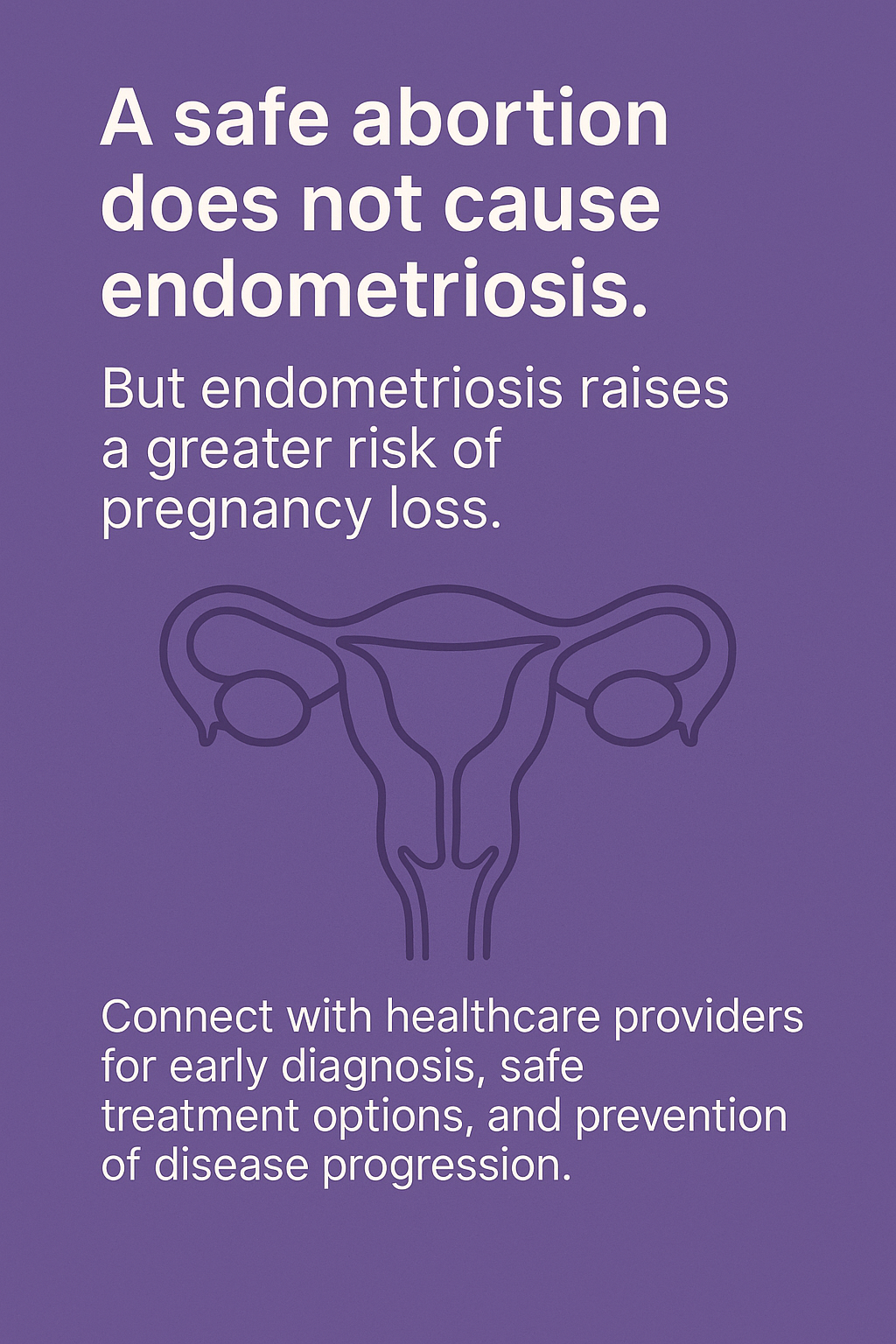
When discussing endometriosis and abortion, it’s crucial to clarify a misunderstood relationship: endometriosis does not result from abortion, but it may influence pregnancy outcomes. Emerging research highlights a reverse association—women with endometriosis face a higher risk of spontaneous abortion (miscarriage), underscoring the importance of holistic reproductive care.
Endometriosis and Miscarriage: What the Science Says?
Studies reveal that endometriosis creates a challenging environment for early pregnancy. A 2021 meta-analysis in Fertility and Sterility found that women with endometriosis have a 40% higher risk of miscarriage compared to those without the condition. Why?
- Inflammation Overload: Endometriosis triggers chronic pelvic inflammation, which can disrupt embryo implantation and placental development.
- Hormonal Imbalances: Elevated estrogen levels and progesterone resistance—common in endometriosis—may prevent the uterine lining from supporting a pregnancy.
- Structural Challenges: Scar tissue (adhesions) or endometriomas (ovarian cysts) can distort pelvic anatomy, complicating fetal growth.
What This Means for You?
If you have endometriosis:
- Preconception Planning: Work with a specialist to optimize uterine health before pregnancy.
- Early Monitoring: Seek prenatal care immediately after a positive test to address risks proactively.
Importantly, this link does not mean abortion causes endometriosis. Rather, it highlights how underlying conditions like endometriosis require tailored care—whether you’re planning a pregnancy or considering abortion.
While endometriosis may affect pregnancy outcomes, safe abortion remains unrelated to the condition. Safe abortion protects your future fertility by avoiding the catastrophic complications of unsafe procedures (e.g., infections, and scarring).
Key Takeaway:
Endometriosis ≠ Caused by abortion
Endometriosis → May increase miscarriage risk
Your Next Steps:
- Consult a Specialist: If you have endometriosis, connect with a gynaecologist to discuss reproductive goals.
- Choose Safe Care: For abortion services, trust registered clinics like Bangalore Genesis Hospital, where protocols prioritize uterine health and safety.
Remember: Knowledge empowers. By addressing endometriosis and opting for safe abortion care, you take control of your reproductive journey.
Living with endometriosis? Planning a pregnancy or considering abortion? Reach out to Bangalore Genesis Hospital for compassionate, expert care.
Safe Abortion Methods for Patients with Endometriosis:
Women with endometriosis need special care when considering an abortion. Bangalore Genesis Hospital provides comprehensive abortion in Bangalore services tailored to these patients. Endometriosis often causes heavier menstrual bleeding and severe cramps, so it’s important to choose an abortion method that minimizes pain and bleeding.
Below we will explain the options: medical abortion with abortion pills like Unwanted Kit, Gentle Care suction (vacuum) abortion for up to 12 weeks, and induced abortion with Dilation and Evacuation (D&E) for up to 20 weeks. We’ll compare these methods to help you discover which abortion method is safer and more comfortable for women with endometriosis.
Medical Abortion with Abortion Pills:
Medical abortion uses two medications – mifepristone followed by misoprostol – to terminate the pregnancy. First, mifepristone is taken to stop pregnancy hormones; then, 24–48 hours later, misoprostol is taken to make the uterus contract and expel the pregnancy tissue. The process usually completes at home over several hours.
After the second pill, most patients begin to bleed and cramp within 1–4 hours. The bleeding can be heavy and may include large blood clots for several hours. You can expect strong cramping and high pain levels during this time. Although a woman may expel the fetus in the first few hours of taking Misoprostol, some women bleed and cramp for longer. The long here means up to a few days and even weeks.
Effect of medical abortion on endometriosis:
Endometriosis often heightens pain perception and causes strong cramps during menstrual cycle and hence it can be worse during abortion. In practice, many women with endometriosis report that medical abortion pain can feel as bad as (or worse than) their worst menstrual cramps or flare-ups. For women with endometriosis, the already intense cramping caused by misoprostol can be especially severe. Clinics note that while medical abortion is generally safe for women with endometriosis, “she may suffer more because of her situation”
So, the heavy bleeding and contractions of a medical abortion tend to amplify the discomfort and pain that endometriosis patients already experience.
Risks and side effects:
Heavy bleeding is common with medical abortion regardless of her endometriosis condition. In fact, the World Health Organization reports that medical abortion usually causes heavier bleeding (on average 9 days) than surgical abortion, which causes only light bleeding or spotting.
Medical abortion also carries a risk (about 5-8%) of requiring a follow-up surgical procedure if bleeding continues for longer than expected or incomplete abortion. Other side effects of the medications can include nausea, vomiting, fever, and diarrhea.
Gentle Care Suction (Vacuum Aspiration) Abortion (Up to 12 Weeks)
For pregnancies up to about 12 weeks, Gentle Care suction abortion (often called vacuum aspiration) is an excellent option. Qualified, experienced and registered medical practitioners perform this in-clinic procedure under local anesthesia or light sedation, making it nearly painless.
The doctor first numbs the cervix (with a local anaesthetic) before gently dilating it enough to allow a small tube insertion into the uterus. Then, gentle suction (with either a handheld syringe or an electric vacuum) removes the pregnancy tissue. The whole procedure usually takes only 5–10 minutes.
During the procedure, you are awake but feel only mild pressure and cramping. Because local anaesthetic and pain medications are used, most patients report minimal discomfort during and after the procedure.
Advantages for endometriosis:
Gentle suction has several clear benefits compared to pills: it is faster, more controlled, and causes far less bleeding and pain. A surgical (suction) abortion is almost always complete in one visit. The success rate is about nearly 100%. By contrast, medical abortion succeeds 92–95% of the time, meaning up to 5–8% of patients still need a surgical procedure later due to incomplete expulsion.
Because suction removes all tissue immediately, there is little prolonged bleeding afterwards. Most patients have only light bleeding or spotting for a day or two. Uterine aspiration causes “light bleeding or spotting,” whereas medical abortion causes heavier bleeding lasting over a week on average. Clinics note that with suction abortion, “people don’t typically experience heavy bleeding at home”.
This is a major advantage for women with endometriosis, who want to avoid the heavy, prolonged bleeding of pills. Additionally, the procedure is quick – often just a few minutes in the exam room– so the stressful part of “having an abortion” is very brief. You go home the same day and are essentially done. This rapid completion is emotionally easier for many patients. Due to the use of anaesthesia and pain relief, the cramps after suction abortion are usually mild and short-lived.
So, suction abortion provides a faster, simpler, and less painful experience, which is especially valuable for someone already coping with endometriosis pain.
Where?
Bangalore Genesis Hospital offers gentle vacuum aspiration in the first trimester (up to 12 weeks). Experienced, caring and compassionate abortion doctors perform the procedure with attention to comfort and safety.
Induced Abortion with Dilation & Evacuation (Up to 20 Weeks)
For pregnancies beyond the first trimester (typically beyond 12 weeks and up to around 20 weeks), a combination of medication and surgical technique may be essential. This is known as Dilation and Evacuation (D&E) and is available only in hospitals or specialized abortion clinics.
What it involves?
D&E is a two-step process usually requiring one or two visits. First, the doctor prepares the cervix using medications and/or placing osmotic dilators in the cervix to soften and open it.
The medications cause mild contractions that slowly open the cervix. On the second visit (often the next day), the surgical D&E is performed: the doctor uses gentle suction and surgical instruments to remove the pregnancy tissue from the uterus.
Timeline: At our hospital, a D&E is generally done up to 20 weeks of gestation. We perform it on the same day and patients usually do not require an overnight hospital stay. The procedure is done under sedation or anesthesia, so you will not feel pain.
For endometriosis: D&E is safe for women with endometriosis. It is similar in setting and comfort to other major procedures and done under pain control. Because it is a surgical removal, it also allows for a quick resolution of the pregnancy. Again, using anaesthesia and pain medication ensures minimal discomfort.
Why Gentle Suction (Vacuum) Abortion Is Often Safer for Endometriosis?
Compared to medical (pill) abortion, gentle suction abortion (vacuum aspiration) has several advantages for women with endometriosis:
Less bleeding:
Medical abortion causes heavier and longer bleeding than surgical abortion. WHO guidelines note that surgical abortion typically results in light bleeding, whereas medical abortion leads to heavier bleeding averaging nine days (and sometimes much longer).
In contrast, suction abortion usually causes only brief light bleeding. Women with endometriosis often struggle with heavy periods; avoiding prolonged heavy bleeding can prevent extra pain and anaemia.
Faster completion:
A suction abortion is usually done in one quick clinic visit and completed immediately. Medical abortion can take several hours at home (or even up to two days) to complete, which can be gruelling when you’re already prone to severe cramps.
Medication abortion has more chances of incomplete abortion. So, some women (especially with larger gestational age) will still require surgical follow-up due to retained tissue.
Less unpredictability:
Surgical abortion’s outcome is immediate and certain. After a suction abortion, you know the abortion is complete when you leave the clinic. With pills, you must wait and confirm completion with follow-up tests, which can be emotionally taxing.
Comfort with pain control:
During a suction abortion, you are in a clinical setting with anesthesia. We use local numbing and often mild sedation so that you feel minimal pain. (Guidelines recommend a paracervical block and pain medications for vacuum aspiration procedures to maximize comfort.)
Afterwards, any cramping is usually less intense and short-lived. By contrast, medical abortion relies on your body’s contractions to expel tissue, so you feel strong cramps at home for hours.
In short, gentle suction abortion is safer, quicker, and generally less stressful for patients with endometriosis. It reduces the heavy bleeding and extreme cramping that pills cause. Patients typically recover faster and feel physically and emotionally better after a suction abortion than after a prolonged medication abortion.
Frequently Asked Questions (FAQs) about Abortion and Endometriosis
Can abortion worsen endometriosis symptoms?
No. An abortion does not make the underlying endometriosis disease worse or spread it further. The procedure itself (whether medical or surgical) does not cause additional endometriosis. However, women with endometriosis may feel more pain during and immediately after an abortion.
For example, the heavy bleeding and uterine contractions of a medical abortion can amplify menstrual-like cramps. It’s important to plan good pain management (NSAIDs, muscle relaxants, or gentle anesthesia) during the abortion process. It is possible to keep any temporary increase in discomfort under control with proper choice of abortion method and care. And symptoms usually return to baseline afterwards.
Is suction abortion safe for women with endometriosis?
Yes. Suction (vacuum) abortion is very safe for women with endometriosis. Studies and clinical experience show that suction abortions do not increase complications in endometriosis patients.
Many providers recommend suction aspiration in these cases because it allows for easy pain management with anaesthesia and is less likely to cause heavy bleeding.
Bangalore Genesis Hospital’s team has been helping endometriosis patients with gentle suction procedures. During the procedure, we use local anesthesia (and sedation if needed) so that you feel little to no pain. Afterwards, recovery is usually straightforward, and most women do fine.
What is the recovery like after suction abortion for patients with endometriosis?
Recovery from a vacuum aspiration is generally quick and easy, even with endometriosis. You should plan to rest for a day after the procedure, but most women can return to normal activities within 24–48 hours. Common experiences include:
- Bleeding: You’ll have light spotting or mild bleeding for a few days up to about two weeks. This is normal. Unlike medical abortion, you shouldn’t have prolonged heavy bleeding. If you do soak more than 2 pads per hour for two hours, you should contact the clinic.
- Cramping: Mild cramping is normal as the uterus contracts back to its non-pregnant state. These cramps are usually much milder than menstrual cramps and last only a day or so. Over-the-counter pain relievers (NSAIDs) help significantly.
- Other symptoms: You may feel tired or emotional for a day, which is common. There should be no fever or foul-smelling discharge. Most endometriosis-related symptoms (pelvic pain, nausea) will quickly return to your normal baseline once the abortion is complete.
- Follow-up: We recommend a quick follow-up visit or call to ensure you are healing well, especially since patients with endometriosis may benefit from confirming everything went smoothly. We’ll also discuss contraception and any next steps for managing your endometriosis.
How do I choose the best abortion method if I have endometriosis?
Choosing the right method involves several factors, and the most important step is to talk with your doctor. Here are some considerations specific to endometriosis:
- Gestational age: Medical abortion is generally available up to about 6 weeks of pregnancy. Gentle suction aspiration is commonly offered for up to 12 weeks. If your pregnancy is beyond 12 weeks (up to 20 weeks), you would need a D&E procedure. Timing will partly determine your options.
- The severity of endometriosis: If you have severe endometriosis with very painful cycles, you may prefer surgical methods because they allow you to manage pain actively (with anaesthesia and stronger medications).
- Pain tolerance and support: Medical abortion requires enduring several hours of intense cramping and bleeding. If you fear or cannot handle that pain at home, a suction abortion (which is short and done under anaesthesia) may be better. Think about your support system too – surgical abortion is done quickly at the hospital, so you’ll need someone to drive you home but can then rest; a medication abortion is done at home, so you may need someone with you during the process.
- Medical history and contraindications: Discuss any other health conditions (bleeding disorders, anaemia, etc.) with your provider. Some conditions may make one method safer than another.
- Personal comfort: Some women feel more in control with medication (because you do it yourself at home), while others prefer the finality of surgery. Given endometriosis, most doctors will lean toward recommending suction abortion for quick relief.
Get in Touch!
Bangalore Genesis Hospital’s team will review your medical history, perform any needed exams (like ultrasound), and counsel you on the safest choice. Our goal is to tailor the method to your needs: we can offer medication abortion when appropriate, but we often guide endometriosis patients toward gentle suction for the best comfort and outcome. Ultimately, the best method is the one that ensures your safety, minimizes pain, and gives you peace of mind, and we’ll help you decide with personalized care.
Schedule an appointment with our abortion team.
Related Posts:
- “Can Abortion Cause Death? Examining the Evidence”
- Can Abortion Cause Uterine Fibroids: Ask the Doctor
- How to Take Care of Yourself After an Abortion?
- Can abortion cause PCOS? The Abortion Doctor Answers
- Your Body, Your Health: Are You HPV Aware?
Quick Links:
- Abortion and Relationships: How to Discuss Your Decision with Partners, Family, and Friends?
- Abortion Pill Name and Options: Which One Is Best for You?
- Increasing E-consults for Reproductive Health: Addressing Unplanned Pregnancy, Abortion and Beyond
- Bangalore Genesis Hospital Reviews: Some Abortion Stories
- FAQs About Abortion at 2 Months: Everything You Need to Know
