
Contents of This Post:
- What is Adenomyosis: Symptoms, Diagnosis, Causes & Risk Factors
- Adenomyosis and Abortion: Is there a Connection?
- Abortion Methods: Types and Implications
- Can Abortion Really Trigger Adenomyosis? What Does the Research Say?
Welcome dear reader! We have seen many patients coming with concerns regarding what abortion can lead to in the long term. In today’s era, we all use the internet to search for medical issues ranging from trivial to grave. However, navigating the world of online health information can be overwhelming, especially when faced with conflicting opinions and worst-case scenarios.
Many of us turn to Google for answers, only to find ourselves lost in a sea of articles, forums, and websites. It becomes difficult to filter out what the information means to us. Given the sources ranging from high-end hospitals to unreliable clickbaits, it becomes further confusing. Above that, confusion often triggers anxiety and raises other concerns.
Similarly, we have seen patients coming up with queries like, “Can abortion cause endometriosis”; “Can abortion result in death”, or “Can it lead to PCOS or ovarian cysts”. And the list is already long. Trust us, it’s always best to consult the concerned doctor. A doctor’s knowledge and experience are much better than your internet search.
This post addresses a similar concern about abortion and adenomyosis sharing a connection and how to prevent the risk of adenomyosis with a safe abortion. Knowing different abortion options and their risks can help you identify which abortion method is the safest choice for you. So, let’s tune in!
What is Adenomyosis?
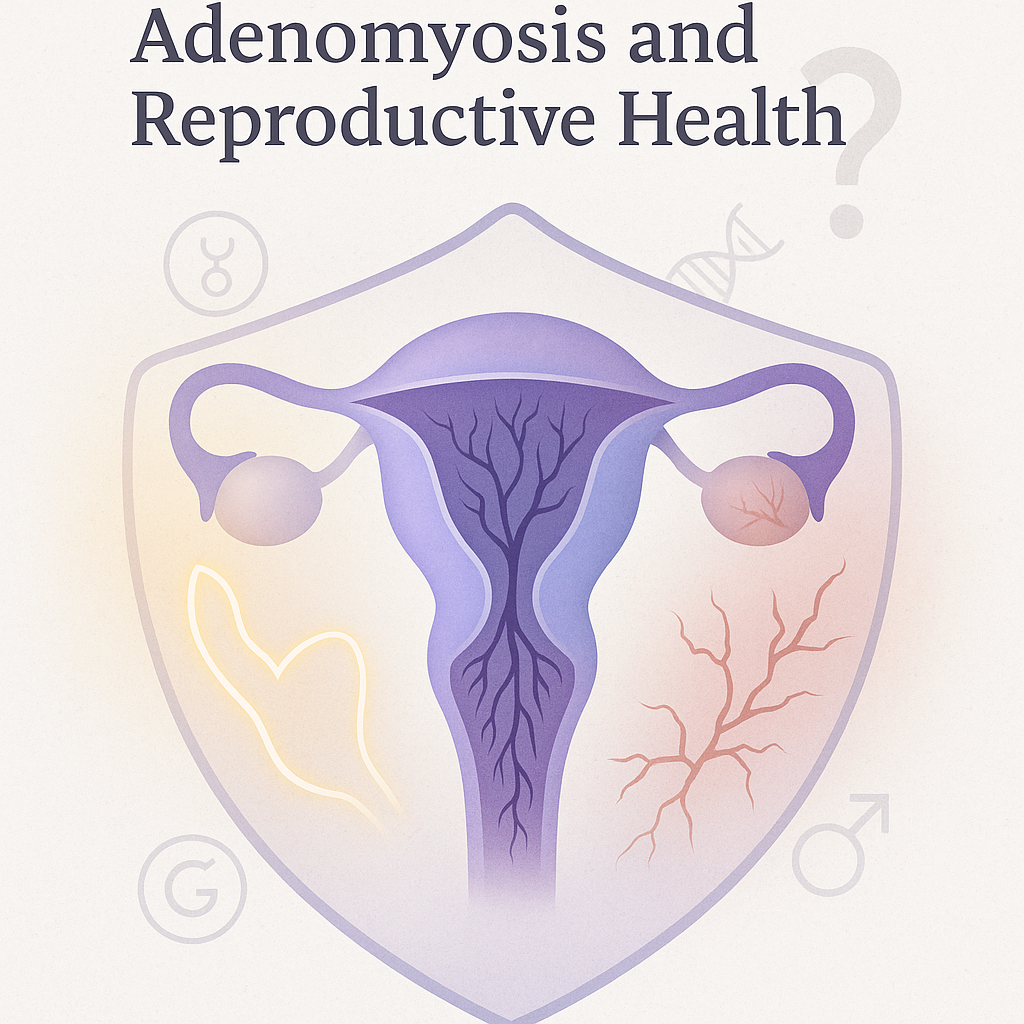
Adenomyosis is a medical condition of the uterus and therefore, it is natural to have this concern when you are considering to undergo an abortion. At first, adenomyosis is not cancer. It is a benign uterine condition where the uterine lining, medically known as endometrium, the layer that sheds during menstruation, grows into the muscle wall, often causing heavy, painful periods and an enlarged uterus.
Often noticed, many people haven’t heard of adenomyosis until it disrupts their lives. Imagine your uterus as a layered fortress, designed to protect and nurture life. But in adenomyosis, the inner lining of the uterus doesn’t stay where it should be. Instead, it burrows into the muscular wall of the uterus, triggering inflammation, swelling, and often debilitating symptoms.
Think of it like tree roots growing where they shouldn’t: invasive, persistent, and painfully disruptive. So, the wrong things going on at the wrong place at the wrong time…. Getting it?
Symptoms of Adenomyosis:
It typically affects women in their late 30s–40s, often after pregnancy but can affect any woman at any age. While more prevalent in older demographics, it isn’t exclusive to older women. Even younger individuals, including those trying for their first baby, can be affected. In rare instances, even teenagers may develop it.
For those living with adenomyosis, the body sends loud, unmistakable signals:
- Firstly, one with adenomyosis may experience heavy, prolonged periods that soak through pads or tampons hourly, leaving you drained and anxious.
- Secondly, bleeding is accompanied by severe cramps and knife-like pelvic pain that radiates through your lower back or thighs, often worsening during menstruation.
- Third, the uterus that feels tender, swollen, or “heavy,” as if it’s carrying an invisible weight.
- Besides, it can impact the quality of life at several fronts including pain during sex, bowel movements, or even while sitting—moments that should feel normal but instead become sources of dread.
Wait… isn’t this endometriosis?
Great question! Most women do not know about endometriosis as well. However, the symptoms experienced by women having these conditions are very similar. One may often confuse these symptoms with those of uterine fibroids because severe cramps and heavy bleeding are often the common experiences of women with uterine conditions. So, it is difficult to identify with your Internet extracted information as to which medical condition is working behind the scenes to cause these symptoms.
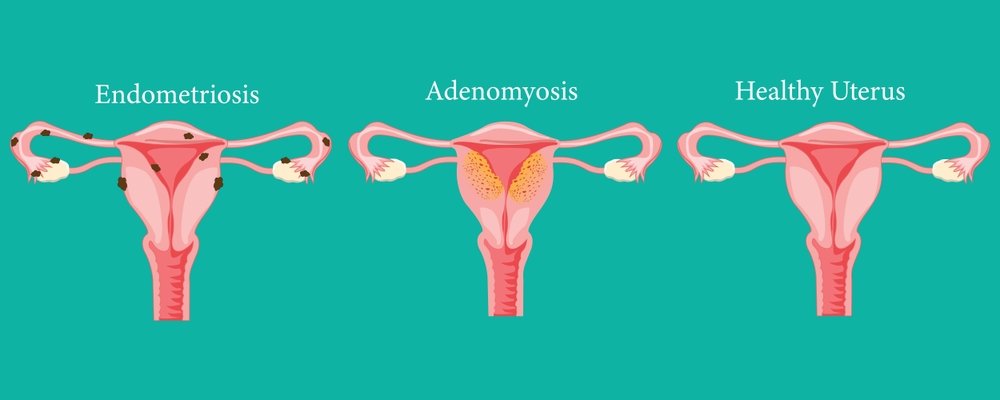
Here is the difference. While both conditions involve misplaced endometrial tissue, adenomyosis keeps its chaos confined to the uterus. Endometriosis, on the other hand, spreads rogue tissue outside the uterus—like on the ovaries, bladder, or intestines. In addition, the two can coexist, but they’re distinct battles in the same war on your body.
Adenomyosis often flies under the radar. Even the doctors might dismiss symptoms as “bad cramps” or “normal period struggles,” leaving you feeling unheard unless a proper diagnosis sets in. But if you are in pain, it is valid and worth a concern. Understanding this condition is the first step toward reclaiming control because diagnosis is the stepping stone for a successful treatment.
If this resonates with you—if you’ve ever curled into a ball from period pain or cancelled plans because of unpredictable bleeding—you’re not alone. Now, let’s dig deeper into what science knows (and doesn’t know) about why adenomyosis happens… and whether procedures like abortion could play a role.
Diagnosis of Adenomyosis:
Diagnosing adenomyosis can be challenging because its symptoms often mimic other gynaecological conditions like fibroids or endometriosis. Typically, a doctor will begin by reviewing your symptoms and medical history, followed by a pelvic examination to check for an enlarged or tender uterus.
Furthermore, imaging tests like transvaginal ultrasound or MRI (Magnetic Resonance Imaging) can help detect signs of adenomyosis, such as a thickened uterine wall or changes in tissue texture. However, a definitive diagnosis is often only confirmed after examining the uterus tissue—usually after a hysterectomy. That said, most cases are diagnosed clinically and managed based on symptoms, especially when imaging and history strongly suggest the condition.
What Causes Adenomyosis? Is there a Connection with Abortion?
Let’s tackle the million-dollar question: Why does adenomyosis happen? While science hasn’t pinned down a single culprit, researchers have identified key players that might turn your uterus into a battlefield. So, think of it like solving a puzzle—some pieces fit neatly, others leave gaps, but together, they paint a clearer picture.
1. Hormonal Chaos: Estrogen’s Double-Edged Sword
Your hormones aren’t just mood regulators—they’re conductors of your reproductive system. Estrogen, the hormone that thickens your uterine lining each month, might also fuel adenomyosis. Researchers believe excess estrogen (or estrogen dominance) could encourage endometrial tissue to invade the uterine muscle, sparking inflammation and pain.
Additionally, conditions like Polycystic Ovary Syndrome (PCOS) or perimenopause, which disrupt estrogen levels, often overlap with adenomyosis.
The twist: Progesterone, estrogen’s “balancing” counterpart, sometimes fails to rein in this chaos, letting the misplaced tissue thrive.
2. Uterine Trauma: When the Body Fights Back?
Imagine scraping your knee—the skin heals, but sometimes leaves a scar. Now picture that happening inside your uterus. Trauma from surgeries (like C-sections or fibroid removal) or even childbirth might create tiny “entry points” for endometrial tissue to invade the muscle wall.
The abortion connection?
Some speculate that procedures like Dilation and Curettage (D&C) could potentially cause similar micro-trauma. But here’s the catch: No large-scale studies confirm this link and many people undergo D&Cs without developing adenomyosis.
The bigger truth:
Your uterus has an incredible capacity to heal. Trauma alone likely isn’t enough—it’s probably a mix of genetic, hormonal, and environmental factors.
3. Genetic Roulette: Is It in Your DNA?
Ever heard a relative say, “We just have bad periods in this family”? There might be truth to that. Also, studies suggest genetic mutations or a family history of endometriosis/adenomyosis could predispose you to the condition.
The mystery gene:
Researchers are hunting for specific genes linked to abnormal tissue growth, but for now, it’s like searching for a needle in a haystack.
Your takeaway:
If your mom or sister or a close relative struggled with severe pelvic pain, it is worth mentioning to your doctor because family history matters.
4. The Immune System’s Blind Spot
Your immune system is your body’s bouncer, kicking out harmful invaders. But in adenomyosis, it might ignore misplaced endometrial cells, letting them settle into the uterine wall.
Autoimmune overlap:
Some experts wonder if adenomyosis shares roots with autoimmune disorders, where the body attacks itself.
The inflammation cycle:
Once those cells nestle in, they trigger chronic inflammation—a vicious loop of pain and tissue damage.
5. Childbirth: A Surprising Catalyst
Paradoxically, pregnancy and childbirth—events that celebrate the uterus—might also strain it. So, the uterine stretching and healing postpartum could (in rare cases) create opportunities for endometrial tissue to migrate.
But wait: Many with adenomyosis haven’t had children, so this isn’t a standalone cause.
What does it mean for you?
So, it’s right to say that adenomyosis doesn’t discriminate—it can strike whether you’ve had abortions, pregnancies, or neither. While theories abound, no single factor explains why it develops. What we do know: Your pain isn’t “all in your head,” and you deserve answers and even the treatment which is possible only after a diagnosis.
Additionally, the exact cause isn’t fully understood and various clinicians and research teams are working in close association to figure out the underlying causes so that better prevention and treatment outcomes can be reached at.
However, the research so far indicates that adenomyosis tends to occur in women who have had pregnancies, suggesting that uterine changes (like childbirth or surgery) play a role. Additionally, known risk factors include older maternal age, multiple births, and any prior uterine surgery (e.g. C section or fibroid removal). Furthermore, experiencing a miscarriage or abortion could potentially increase a woman’s susceptibility to this condition.
It is important to note that safe abortions are not identified as a direct cause. Moreover, abortions carried out by trained professionals do not insert tissue into the uterine wall and hence do not directly result in adenomyosis. So, focus on getting a safe abortion rather than an unsafe practice which can result in internal injury and trauma that can possibly be linked to many complications, including adenomyosis.
Abortion Methods: Types and Implications
Now, abortion is a topic shrouded in stigma, myths, and urgent questions. Whether you’re considering an abortion in Bangalore, have had one, or simply want to understand how it works, this section is for you. We’ll break down the facts, demystify the process, and address the real physical impacts on the uterus—because knowledge is power, and power belongs to you.
Medical Abortion: The “Abortion Pill”
Imagine your body guiding the process, much like a natural miscarriage. Medical abortion uses two medications—mifepristone and misoprostol—to safely end a pregnancy in the first few weeks (usually 6 weeks). Here’s how it works:
Firstly, mifepristone blocks progesterone, the hormone that sustains pregnancy. Following that, Misoprostol taken 24-48 hours later, triggers uterine contractions to expel the pregnancy.
What to expect?
Firstly, cramping and bleeding are heavier than a period, often lasting hours to days. Secondly, emotional and physical support is key—think heating pads, pain relievers, and a trusted friend nearby.
The upside: No surgery, no anaesthesia, and privacy in your own space.
The downside: Incomplete abortion, heavy bleeding or infection

Surgical Abortion: Quick, Safe, and Precise
For later pregnancies (or personal preference), surgical abortion is a 10-15 minute in-clinic procedure. Let’s dismantle the fearmongering:
First-trimester options:
A gentle suction removes pregnancy tissue through vacuum aspiration. Local anaesthesia numbs the cervix, and most people resume normal activities within a day. This can be the least linked abortion method with adenomyosis because the doctor gently removes the pregnancy controlling the pressure using a hand-held device. No scraping, no incision and hence, no chances to leave scars where endometrial tissue can find its way in. So, it’s a reliable abortion method not likely causing conditions like endometriosis or adenomyosis.
Second-trimester options:
Dilation and Evacuation (D&E):
The cervix is gently dilated to make the way in and a combination of suction and medical tools then remove the pregnancy. Sedation or general anesthesia keeps you comfortable.
The D&C Debate:
You’ve probably heard of Dilation and Curettage (D&C)—a procedure that scrapes the uterine lining. While sometimes used for abortion, it’s more common for treating miscarriages or abnormal bleeding. Critics speculate that D&Cs might cause uterine scarring or micro-trauma, but modern techniques like induced abortion with D&E available at Bangalore Genesis Hospital (BGH) minimize these risks.
Physical Impacts: What Happens to the Uterus?
Your uterus is a resilient organ. After any abortion—medical or surgical—it works hard to return to its pre-pregnancy state.
Healing timeline: Bleeding typically stops within 2-6 weeks. Want to know more about what abortion bleeding looks like and what to expect from Unwanted Kit bleeding time? You can go through the following links and get your answers right from healthcare experts:
- How abortion bleeding look like: What abortion doctor says?
- Unwanted kit bleeding time: What you should know?
After the abortion, the cervix closes, the lining regenerates, and hormonal shifts stabilize. It takes time depending on the abortion method, how far you were along in the pregnancy, certain medical conditions like diabetes, hypertension, etc. and the medicines you may be taking for any such medical conditions.
Rare complications: Less than 1% of abortions lead to infection, heavy bleeding, or uterine injury. These risks are similar to childbirth or IUD insertion.
The adenomyosis question:
Could abortion procedures cause adenomyosis? Some worry that uterine instruments (like during D&C) might disrupt the endometrial lining, allowing it to burrow into the muscle. But here’s the truth:
No conclusive evidence ties abortion to adenomyosis. Most people who’ve had abortions don’t develop the condition.
Context matters: Trauma alone rarely explains adenomyosis—it’s likely a perfect storm of genetics, hormones, and other triggers.
Beyond the Procedure: Emotional and Social Realities:
Abortion isn’t just a physical experience. It’s wrapped in societal judgment, personal grief, or relief, and sometimes isolation. If you’ve had an abortion, your feelings are valid, whether you’re at peace, conflicted, or somewhere in between. You’re not “damaged”. Your uterus isn’t “broken,” and your future fertility isn’t doomed. Studies confirm abortion doesn’t increase long-term infertility risks.
Abortion is safer than childbirth, with a 99% safety rating when done legally and professionally. The uterus heals remarkably well—trust its resilience. If you’re worried about adenomyosis, focus on known risk factors (like hormonal imbalances) and advocate for pelvic pain evaluations.
Can Abortion Trigger Adenomyosis? What Does the Research Say?
Let’s tackle the heart of the issue: Could abortion kickstart adenomyosis? This question sparks heated debates, swirling with fear, anecdotal stories, and fragmented science. To navigate this terrain, we’ll dissect the theories, confront the gaps, and arm you with clarity—not conjecture.
Theory 1: Uterine Trauma – A Door Left Open?
Imagine a tiny scrape inside your uterus after a procedure. Could that invite endometrial cells to invade the muscle wall? Some researchers theorize that instrumentation during surgical abortion (like curettes) might cause micro-injuries, creating pathways for tissue migration.
The logic: Procedures like D&C (dilation and curettage) do involve touching the uterine lining. In rare cases, this could trigger inflammation or scarring.
But here’s the hitch: Most uterine procedures (even IUD insertions or biopsies) involve similar tools, yet adenomyosis doesn’t routinely follow. Your uterus is designed to heal—quickly and efficiently.
The Verdict: While trauma might play a role in adenomyosis, no studies directly blame abortion. Trauma alone rarely explains the condition—it’s likely a “perfect storm” of genetics, hormones, and other triggers.
Theory 2: The Inflammation Fallout
Abortion, like any medical procedure, can cause temporary inflammation. Could this spark adenomyosis? Let’s break it down:
Post-abortion inflammation: Your body naturally responds to tissue removal with healing cytokines and swelling. For most, this fades within weeks.
The adenomyosis link: Chronic inflammation is a hallmark of adenomyosis. But does short-term post-abortion inflammation evolve into a lifelong condition? No evidence confirms this.
Key Insight: Inflammation from abortion is fleeting. Adenomyosis involves chronic, self-perpetuating inflammation—like a fire that won’t die. Without a genetic or hormonal predisposition, a single abortion likely won’t light that match.
Theory 3: Hormonal Whiplash
Abortion halts a pregnancy, abruptly altering estrogen and progesterone levels. Could this hormonal shift destabilize the uterus?
The science: Pregnancy hormones do plummet post-abortion, but your cycle typically resets within 4-6 weeks. While estrogen dominance is tied to adenomyosis, there’s no data linking short-term hormonal changes post-abortion to long-term uterine damage.
The bigger picture: Hormonal fluctuations happen monthly with periods, yet not everyone develops adenomyosis. Genetics and the environment likely matter more.
The Correlation ≠ Causation Conundrum
Anecdotes and small studies sometimes link abortion to adenomyosis. But let’s interrogate this:
Confounding factors: People who’ve had abortions may also have overlapping risks (like prior pregnancies, uterine surgeries, or genetic predispositions). Teasing out abortion as a sole cause is not justified.
The chicken-or-egg problem: Did adenomyosis exist before the abortion? Symptoms often take years to surface, muddying the timeline.
A Telling Stat: In countries where abortion is widely accessible (e.g., India, France, Canada), adenomyosis rates don’t spike compared to regions with restrictions. If abortion were a major trigger, we’d see glaring disparities—we don’t.
Voices from the Exam Room:
Dr Mamta, a gynaecologist specializing in abortion care, weighs in:
“In my 20 years of practice, I’ve never seen adenomyosis directly traced to abortion. Patients often blame themselves, but biology doesn’t work that way. Their pain is real—but so is the lack of evidence linking it to their choices.”
Science doesn’t villainize abortion here. While the question is valid, the evidence is absent. Adenomyosis is complex, rooted in your unique biology—not a single procedure. If you’re hurting, focus on solutions, not self-blame.
What the Research Says?
Let’s cut through the noise and dive into the cold, hard data. When it comes to abortion and adenomyosis, the research is sparse, fragmented, and far from conclusive—but here’s what we’ve got.
Supportive Studies: The “Maybe” Camp
A handful of small-scale studies hint at a possible association:
- A case-control study identifies prior uterine surgery (including D&C) as a risk factor for adenomyosis but does not specifically isolate abortion. But here’s the kicker: The study didn’t isolate abortion—many participants had D&Cs for miscarriages or bleeding. (Ref.: Pinzauti, S., Lazzeri, L., Tosti, C., Centini, G., Orlandi, G., Luisi, S., … & Petraglia, F. (2015). Risk factors for adenomyosis: Results from a large case-control study. Journal of Minimally Invasive Gynecology, 22(6S), S50-S51.)
- Another study discusses uterine instrumentation (e.g., D&C) as a potential risk factor but emphasizes multifactorial causes. Again, abortion wasn’t singled out. (Ref.: Taran, F. A., Stewart, E. A., & Brucker, S. (2013). Adenomyosis: Epidemiology, risk factors, clinical phenotype and surgical and interventional alternatives to hysterectomy. Geburtshilfe und Frauenheilkunde, 73(9), 924–931.)
The takeaway: These studies suggest uterine trauma in general—not abortion specifically—could play a role. However, the evidence is indirect and muddied by overlapping variables.
Contradictory Findings: The “No Link” Camp
Most large, rigorous studies find no meaningful connection:
- Firstly, you need to look at a 2021 meta-analysis of 15 studies found no significant link between abortion and adenomyosis. (Ref.: Li, X., Zhang, W., Liu, X., Ren, J., Shi, J., Li, J., … & Sun, Z. (2021). Association between induced abortion and subsequent risk of adenomyosis: A systematic review and meta-analysis. Journal of Gynecology Obstetrics and Human Reproduction, 50(6), 102083.)
- Secondly, a 2019 case-control study found that while prior uterine surgeries (like C-sections) were associated with adenomyosis, induced abortion showed no significant link. (Source: European Journal of Obstetrics & Gynecology and Reproductive Biology, 240, 220–224.)
These studies control for confounding variables (like prior pregnancies or surgeries), making their conclusions more reliable.
The Elephant in the Room: Study Limitations
Research on this topic is plagued by hurdles:
- Recall bias: Firstly, women with adenomyosis may overreport past procedures while searching for answers to their pain.
- Diagnosis delays: Secondly, adenomyosis often takes years to diagnose, making it hard to pin down a “cause.”
- Ethical barriers: Furthermore, in countries where abortion is stigmatized or illegal like the UAE, Philippines, Bahrain, Oman, Kuwait, Maldives, and Sri Lanka, collecting accurate data is nearly impossible.
Expert Consensus: Trust the Big Guns
Now, let’s hear the take from major medical organizations. They weigh in by quoting:
The World Health Organization (WHO): Classifies abortion as an “essential healthcare service” with minimal long-term physical risks when performed safely.
A doctor at Bangalore Genesis Hospital puts it clearly:
“Blaming adenomyosis on abortion is like blaming thunderstorms on umbrellas. We need to focus on real, modifiable risks—like improving early diagnosis—instead of letting fearmongering entangle people’s minds.”
Schedule a consultation with an abortion doctor in Bangalore.
Related Posts:
- Can Abortion Cause Endometriosis? Facts& Risks; Why Safe Abortion Matters?
- Your Body, Your Health: Are You HPV Aware?
- How to Take Care of Yourself After an Abortion?
- Can the pull-out method prevent an unwanted pregnancy?
- Which diagnostic tests should you get before an abortion?
Quick Links:
- Abortion and Relationships: How to Discuss Your Decision with Partners, Family, and Friends?
- Abortion Pill Name and Options: Which One Is Best for You?
- Increasing E-consults for Reproductive Health: Addressing Unplanned Pregnancy, Abortion and Beyond
- Bangalore Genesis Hospital Reviews: Some Abortion Stories
- FAQs About Abortion at 2 Months: Everything You Need to Know
