
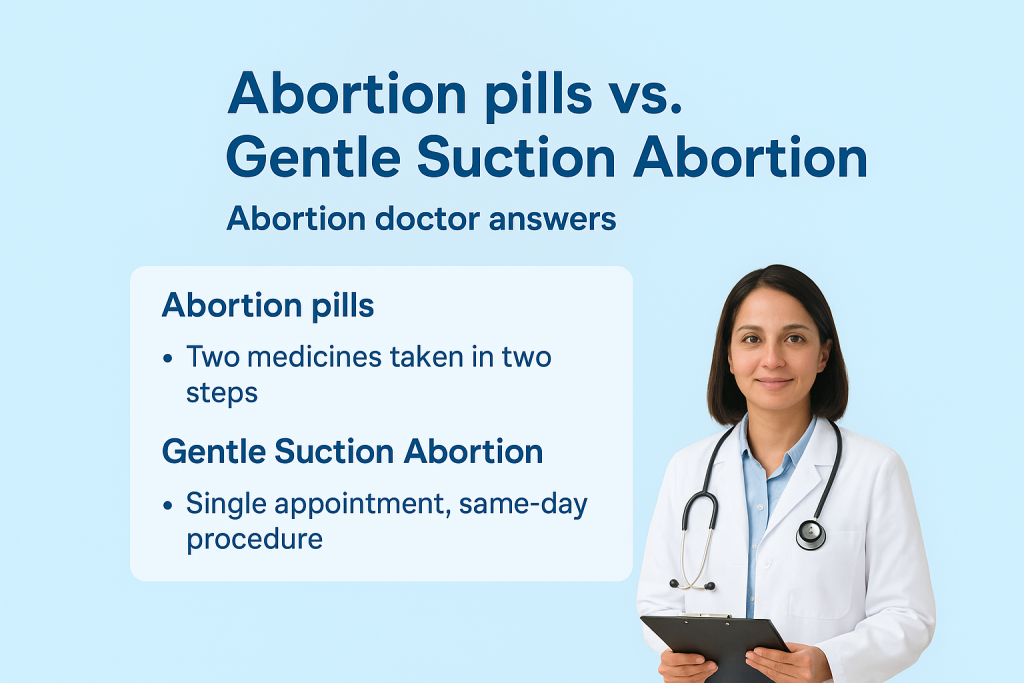
Contents of This Post:
- Abortion Pills and Common Questions
- When Do Abortion Pills Start Working?
- What to Expect After Taking Abortion Pills
- Risks and Limitations of Abortion Pills
- A Safer and Better Alternative: Gentle Suction Abortion
Deciding to end a pregnancy is never an easy choice, and it often comes with many questions. One of the most common questions women ask is, “When do abortion pills start working?” Abortion pills, or MTP kits like Unwanted Kit, may seem like a convenient option at first. But the reality is that the process can be uncertain, painful, and emotionally draining, with risks of incomplete abortion, heavy bleeding, infection and others.
The good news is that you don’t have to go through that stress. Today, there are safer, quicker, and more reliable alternatives—like Gentle Suction Abortion—which can be completed in a single appointment with same-day recovery. In this post, we’ll answer your questions about abortion pills, explain how they work, and help you understand why many women choose suction abortion as a better, safer option for their health and peace of mind.
Abortion Pills and Common Questions:
When someone faces an unplanned pregnancy, questions come fast—and they deserve clear, practical answers. Below we list the real questions women ask most about abortion pills (mifepristone + misoprostol) with straightforward answers right from the abortion doctor in Bangalore.
Q. When do abortion pills start working?
Ans. Most people take mifepristone first and misoprostol after (usually 24–48 hours later). Mifepristone blocks the hormone progesterone so the pregnancy can’t continue; misoprostol causes the uterus to contract and expel the pregnancy tissue. Many people begin cramping within a few hours of misoprostol and usually start bleeding within 2–4 hours, though bleeding can sometimes begin later.
Q. How soon will I bleed, and how heavy will it be?
Ans. Expect bleeding and cramping after the misoprostol dose. Most people have their heaviest bleeding and worst cramps on the day they take misoprostol; they often pass clots. Bleeding then usually decreases over days to weeks, but the pattern varies. If bleeding becomes extremely heavy (soaking many pads quickly), seek care.
Q. How effective are abortion pills? Will they definitely work?
Ans. Medication abortion is effective for most early pregnancies, but it is not 100% guaranteed. Effectiveness depends on how far along the pregnancy is and whether you followed the correct dosing. Some people need a follow-up surgical procedure if the medical method does not complete the abortion. Clinical guidance typically supports use up to about 6 weeks of gestation.
Q. What does a “successful” pill-based abortion feel like?
Ans. A successful medical abortion usually includes: cramping that becomes intense and then eases, passing of tissue or large clots, and bleeding that eventually lightens over time. You may feel tired, crampy, or nauseous for a short period. Most people return to their normal activities within a day or two, but emotional reactions are common and valid.
Q. What are the normal side effects? When should I worry?
Ans. Normal side effects: cramping, bleeding, nausea, diarrhoea, chills, and low-grade fever. Worrisome signs: very heavy bleeding (soaking two full-size pads in one hour for two hours in a row), fever over 38°C (100.4°F) lasting more than 24 hours, severe unrelieved pain, foul-smelling discharge, or continued heavy bleeding beyond a few weeks. If any of these happen, contact the abortion clinic right away.
Q. How do I know the pills worked — and how is that checked?
Ans. You and your provider may confirm success by symptoms improving, a follow-up pelvic exam, or a pregnancy test/ultrasound as advised. Some clinics recommend a follow-up visit or a lab test to confirm that the pregnancy is no longer present. If you still have pregnancy symptoms or a positive test after the expected recovery period, you need prompt evaluation.
Q. What is an incomplete abortion, and what are its signs?
Ans. An incomplete abortion means some pregnancy tissue remains in the uterus. Signs include prolonged or heavy bleeding, ongoing severe cramps, fever, or continued positive pregnancy signs. An incomplete abortion requires medical attention — sometimes additional medication, often a surgical procedure to remove remaining tissue.
Q. Can the abortion pill be “reversed” after taking Mifepristone?
Ans. Some clinics and advocates discuss “abortion pill reversal,” but major medical bodies warn that evidence is limited and the approach is not well-supported by high-quality studies. If you change your mind, contact a qualified clinician immediately to discuss options. The safest step is prompt medical guidance rather than unverified protocols.
Q. Is it safe to take abortion pills at home, and where can I get them?
Ans. In many places, clinicians safely prescribe medication abortions for home use with clear instructions and follow-up plans. Availability and legality depend on local laws and regulations. Always get pills from a trusted abortion hospital, a registered MTP centre near you. Abortion pills in Bangalore are available at all registered abortion clinics since abortion in India is legal for up to 20 weeks in most cases, for both married and unmarried women.
Whereas, in countries like the UAE, Kuwait, Oman, Qatar, Sri Lanka, Maldives, Bahrain, Indonesia, Philippines, you may not get abortion pills easily due to the restricted abortion rules of these countries. Many women in these regions prefer travelling to Bangalore, India for a safe, quick, legal, confidential, painless and early recovery suction abortion at Bangalore Genesis Hospital.
Q. What if I take pills but nothing seems to happen?
Ans. Yes, one of the most Googled questions regarding Unwanted Kit is “What if I do not bleed after taking Unwanted Kit”, and the related search term ‘Unwanted Kit bleeding time’. To answer in brief, sometimes bleeding and cramps start later than expected, especially in very early pregnancies.
If you don’t have bleeding after a reasonable window (often 24–72 hours after misoprostol) or your symptoms don’t match what your provider warned you about, contact a clinic. You may need further evaluation and possibly a surgical procedure.
Don’t wait, as this is not normal. So, reach out to the provider as soon as possible, especially if you have skipped the important ultrasound before taking abortion pills. Since ectopic pregnancies are not so rare, it can also be a case of ectopic pregnancy. The risk is real and fatal. So, don’t wait. Seek attention immediately.
Q. How will this affect my future fertility or health?
Ans. When performed properly and with follow-up care for complications, medication abortion does not harm long-term fertility, especially if you take them after a pre-abortion consultation and diagnostic tests. The biggest risk comes from untreated complications (infection, heavy bleeding). Getting care promptly if something goes wrong protects future health.
Although abortion pills usually do not impact future fertility, unsafe abortions or DIY attempts can cause chronic infections like Pelvic Inflammatory Disease (PID), which often becomes a barrier to normal conception and healthy pregnancy. Then, ectopic pregnancy rupture in cases of ectopic pregnancies can also impact one’s ability to conceive or carry the pregnancy, depending on the amount of damage.
When Do Abortion Pills Start Working?
Many women expect abortion pills to work immediately, but the process takes time. The pills involve two different medicines—mifepristone and misoprostol—and each plays a different role and in different time windows.
Mifepristone is the first step. You take it under medical guidance. It blocks the hormone progesterone, which your body needs to continue the pregnancy. Without progesterone, the pregnancy cannot grow further. Most women do not feel major changes right after taking Mifepristone, though some may notice light spotting.
Misoprostol is the second step, usually taken 24 to 48 hours later. This medicine causes the uterus to contract and expel the pregnancy tissue. Cramps usually begin within a few hours, followed by bleeding. For many women, the bleeding starts within 2 to 4 hours, but for others, it may take longer—sometimes up to 24 hours.
The entire process may last several hours to a few days. Some women expel the pregnancy tissue within 6 hours after misoprostol, while others continue to bleed for days before the process completes. This uncertainty often causes stress, because you cannot predict exactly when the abortion will finish or whether it will be completed without medical help.
Doctors usually advise a follow-up after one to two weeks. This step is important because abortion pills do not always clear the uterus completely. If tissue remains, you may face heavy bleeding, infection, or the need for a surgical procedure to finish the abortion.
While pills can work, they leave women waiting, worrying, and often in pain. That’s why many women choose Gentle Suction Abortion instead. Unlike pills, suction works in a single appointment, ends the pregnancy immediately, and lets you return home the same day with peace of mind.
What to Expect After Taking Abortion Pills?
Knowing what happens after taking abortion pills can reduce anxiety. Many women worry because the experience feels unpredictable. Here’s what you can expect step by step:
1. Physical Changes After Taking Abortion Pills
After you take mifepristone, you may not notice much right away. Some women experience mild nausea or spotting, but most changes happen after you take misoprostol. Once misoprostol starts working, you will feel cramping in your lower abdomen. The cramps may feel stronger than menstrual cramps and may come in waves. Within a few hours, you will likely begin to bleed.
The bleeding often starts light but soon becomes heavier. You may pass blood clots, and in many cases, you will also pass pregnancy tissue. This usually happens within the first 6–12 hours after taking misoprostol, but the timing varies.
2. Possible Side Effects of Abortion Pills
Along with bleeding and cramps, you may experience nausea, diarrhoea, fever, chills, or a headache. These side effects usually last for a short time but can feel uncomfortable. Painkillers prescribed by a doctor can ease the cramps, and drinking fluids can help you manage other symptoms.
3. How Long Does Bleeding Last?
Heavy bleeding usually lasts for a few hours, followed by lighter bleeding or spotting. Many women bleed for one to two weeks. However, some continue spotting for even longer. The amount and duration differ from woman to woman, so it is not always possible to predict exactly how it will unfold.
4. Emotional Reactions
The waiting period can feel stressful. Many women feel anxious until they are sure the process has worked. Some also experience mood swings or emotional lows during recovery. These feelings are natural, and support from trusted people or a counsellor can make recovery easier.
5. Signs the Pills May Not Have Worked
Sometimes, abortion pills do not complete the abortion. Warning signs include:
- No bleeding at all after misoprostol;
- Ongoing heavy bleeding or severe abdominal pain;
- Fever or foul-smelling discharge;
- Continued pregnancy symptoms like nausea or breast tenderness
If you notice these signs, you must contact a doctor quickly. You may need medical care to prevent complications.

6. The Need for Follow-Up
Doctors often recommend a follow-up visit or an ultrasound about two weeks later. This check confirms that the abortion is complete and your uterus is clear. Skipping follow-up increases the risk of complications going unnoticed.
Risks and Limitations of Abortion Pills:
Abortion pills may sound simple, but they come with challenges that many women don’t expect. Understanding these risks can help you make a safer and more confident decision.
Incomplete Abortion
One of the biggest risks is that the pills may not remove all pregnancy tissue. This situation is called an incomplete abortion. It can leave you with ongoing bleeding, severe cramps, or infection. In such cases, you may need a surgical procedure to complete the process, which defeats the idea of avoiding a clinic in the first place.
Heavy Bleeding and Pain
Misoprostol causes the uterus to contract strongly, and this can lead to very painful cramps. Some women describe the pain as much worse than menstrual cramps. Along with pain, bleeding may become very heavy. If you soak two or more large pads for an hour or several hours, it is a medical emergency.
Risk of Infection
If tissue remains inside the uterus or if bacteria enter during the process, you may develop an infection. Signs include fever, chills, foul-smelling discharge, and persistent abdominal pain. An untreated infection can seriously harm your health and even threaten your life.
Uncertainty and Emotional Stress
Unlike a clinic procedure, abortion pills leave you waiting for your body to respond. You may not know if the abortion is complete until days later. The uncertainty, combined with pain and bleeding, often causes emotional strain. Many women report feeling anxious until a doctor confirms that the process is over.
Limited Use
Abortion pills only work in the early weeks of pregnancy. After a certain point (usually up to 6–7 weeks), doctors no longer recommend them because the chances of failure increase. Beyond that stage, you will need a surgical method.
Not Always Safe at Home
Some women buy MTP Kit or abortion tablets from a pharmacy without medical supervision. This practice is unsafe. Firstly, wrong dosage, fake pills, or lack of follow-up can lead to serious complications. Secondly, without medical guidance, you may not realise when the process has gone wrong until it becomes an emergency.
Because of these risks, many women prefer a safer and more predictable option: Gentle Suction Abortion. It works quickly, with higher success rates, and gives you peace of mind in a single visit.
A Safer and Better Alternative: Gentle Suction Abortion:
While abortion pills may seem like the easier option, many women find that the process is long, painful, and uncertain. That’s why doctors often recommend Gentle Suction Abortion for early pregnancies. It is one of the safest, quickest, and most reliable methods available at Bangalore Genesis Hospital.
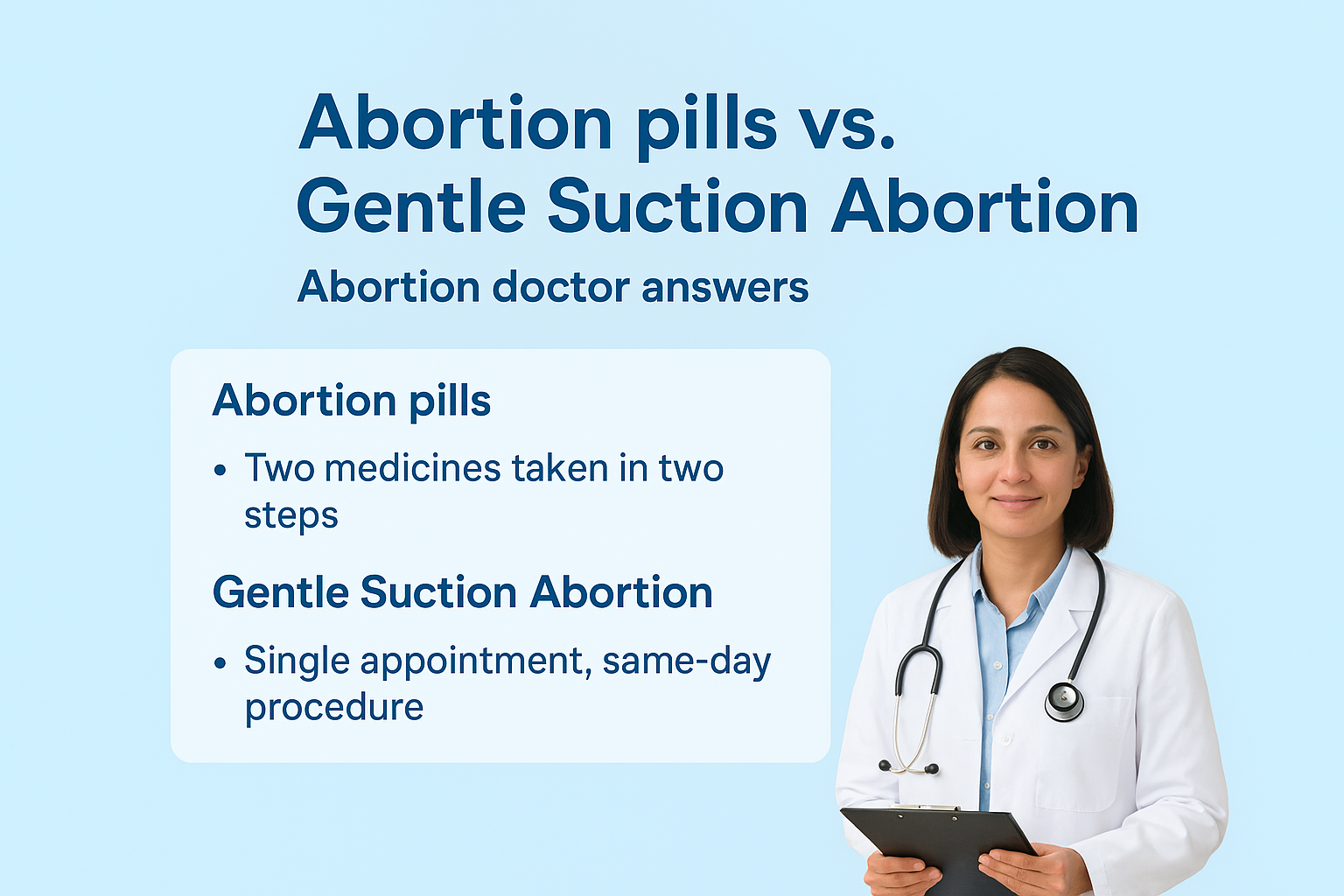
Single Appointment Procedure
Unlike abortion pills, which may take days to work and often require a follow-up, suction abortion completes the process in one visit. You meet the doctor, undergo the procedure, and go home the same day. There is no prolonged waiting, guessing, or worrying about whether the pregnancy has ended. Most patients do not even require follow-up. That’s why people travel all the way from cities like Abu Dhabi, Dubai, Muscat, Colombo, Male to Bangalore for a quick weekend abortion.
Bangalore Genesis Hospital also caters to patients from nearby places like Koramangala, Indiranagar, Frazer Town and others. They also return with peace of mind the same day, without having to return for follow-up in most cases.
Quick, Painless, and Efficient
The procedure usually takes just 3–10 minutes. With local anaesthesia and gentle techniques, you feel little to no pain. The doctor removes the pregnancy tissue through a soft suction device. Once the procedure is over, it is over—you don’t have to wait for your body to respond like with pills.
Same-Day Discharge and Early Recovery
You rest for a short time at the clinic, and once the doctor confirms that you feel fine, you can leave. Most women return to their normal routine within a day or two. Light spotting may occur for a few days, but recovery is generally smooth and fast.
Higher Success Rate Than Pills
Abortion pills fail in a notable percentage of cases, especially if taken later than the recommended window. Gentle Suction Abortion, on the other hand, has a success rate of more than 99% when performed by a trained doctor. This high reliability gives women peace of mind.
Reduced Risks and Complications
Because the doctor directly removes the pregnancy tissue, there is little to no chance of incomplete abortion. The risk of heavy bleeding or infection is also much lower compared to pills. Women leave the clinic knowing the process is complete.

Confidential and Supportive Care
Many women worry about privacy and judgment when they seek abortion care. At a trusted hospital, Gentle Suction Abortion is performed with strict confidentiality. Doctors and staff treat women with respect, compassion, and sensitivity, ensuring they feel supported throughout.

For women who want safety, speed, and certainty, Gentle Suction Abortion offers clear advantages over abortion pills. It protects your health while giving you peace of mind in the shortest possible time.

When facing an unplanned pregnancy, every woman deserves care that is safe, legal, and respectful. Abortion pills may appear convenient, but they often bring uncertainty, pain, and the risk of incomplete abortion. Gentle Suction Abortion, on the other hand, gives you clarity and comfort. It is quick, nearly painless, highly effective, and completed in a single visit with same-day recovery.
At our abortion in Bangalore hospital in India, we provide women with safe, legal, and confidential abortion care. Our experienced doctors use modern techniques to ensure your health and privacy remain protected at every step. Whether you are from India or travelling from abroad, you can count on compassionate, judgment-free support.
Your decision matters. Choosing a method that values your health, time, and peace of mind can make all the difference. If you are considering your options, know that you do not have to go through this journey alone—safe and trusted help is available.
Contact us for an abortion in Bangalore.
Related Posts:
- What Guides Safe Abortion? Parameters Defining Abortion Care
- What’s in a Name? Exploring Different Abortion Pill Names
- “Is Same-Day Abortion Possible Without Hospital Stay?”
- Abortion in Bangalore: Single vs Multiple Appointments
- Abortion Pill Name and Options: Which One Is Best for You?
Quick Links:
- What Your Abortion Doctor Wishes You Knew: Unfiltered Truths From the Doctor’s Desk
- Can Pineapple Cause Abortion? How much Pineapple to Eat in Pregnancy?
- Can Abortion Cause Adenomyosis? Truth Between the Lines
- Your Body, Your Health: Are You HPV Aware?
- Abortion and Relationships: How to Discuss Your Decision with Partners, Family, and Friends?
