
Contents of This Post:
- The Power of Choice: Understanding Medical Abortion
- The Dynamic Duo: Decoding Mifepristone and Misoprostol
- A Symphony of Action: How These Pills Work Together?
- Navigating the Landscape: What to Expect in India, the Middle East, and Southeast Asia
- Beyond the Name: Empowering Your Decision with Knowledge
Navigating an unplanned pregnancy can feel overwhelming, can’t it? You’re likely searching for answers, perhaps feeling a mix of emotions, and trying to understand all your options. If you’ve been looking into medical abortion, you’ve probably come across terms like “abortion pill” and wondered, “What exactly are these medications? What are their names?”
You’re not alone in these questions. Many people, especially those seeking safe abortion services, want clear, reliable information about medical abortion. It’s about knowing what’s available and how it works. This post cuts through the confusion, demystifying the common names of these important medications. Besides, we’ll explain what they do in simple terms. Furthermore, we’ll share insights to help you feel informed and confident about your choices, right here, right now.
The Power of Choice: Understanding Medical Abortion
We can understand if you’ve just found out you’re pregnant while you didn’t want to be. Maybe it wasn’t planned. A whirlwind of thoughts and feelings rushes through you. Panic? Confusion? A deep sense of uncertainty? You’re not alone. Many individuals in the world face this exact moment every single day. They ask, “What are my options?” They seek clarity. However, what’s also important is their safety. They need to look for a path forward.
One powerful path is medical abortion that uses medication to end an early pregnancy. Think of it as a private, non-surgical option. You take pills, usually in two steps, and your body does the work. It feels more like a natural miscarriage for many. There are no surgical instruments. You don’t need general anaesthesia. This means a less invasive experience for you.
Why do people choose it? For some, it offers privacy. Many prefer managing the process in their own home or a comfortable, familiar setting. It can also feel more discreet. Firstly, you avoid a surgical procedure. Secondly, you avoid a hospital setting. Many women feel that this method empowers them. It puts the control in their hands. Understanding these options brings peace of mind. It allows them to make an informed decision for their own body, their own future.
Knowing what medical abortion truly entails is the first step. It helps you navigate this important journey with confidence. Then, it also helps them learn better alternatives if abortion pills are not for them.
The Dynamic Duo: Decoding Mifepristone and Misoprostol
You’ve heard the term “abortion pill,” but what are these medications, exactly? Think of it not as a single pill, but usually as a two-part treatment. Two specific medications work together. They form a dynamic duo. Their names are Mifepristone and Misoprostol.
Let’s break them down.
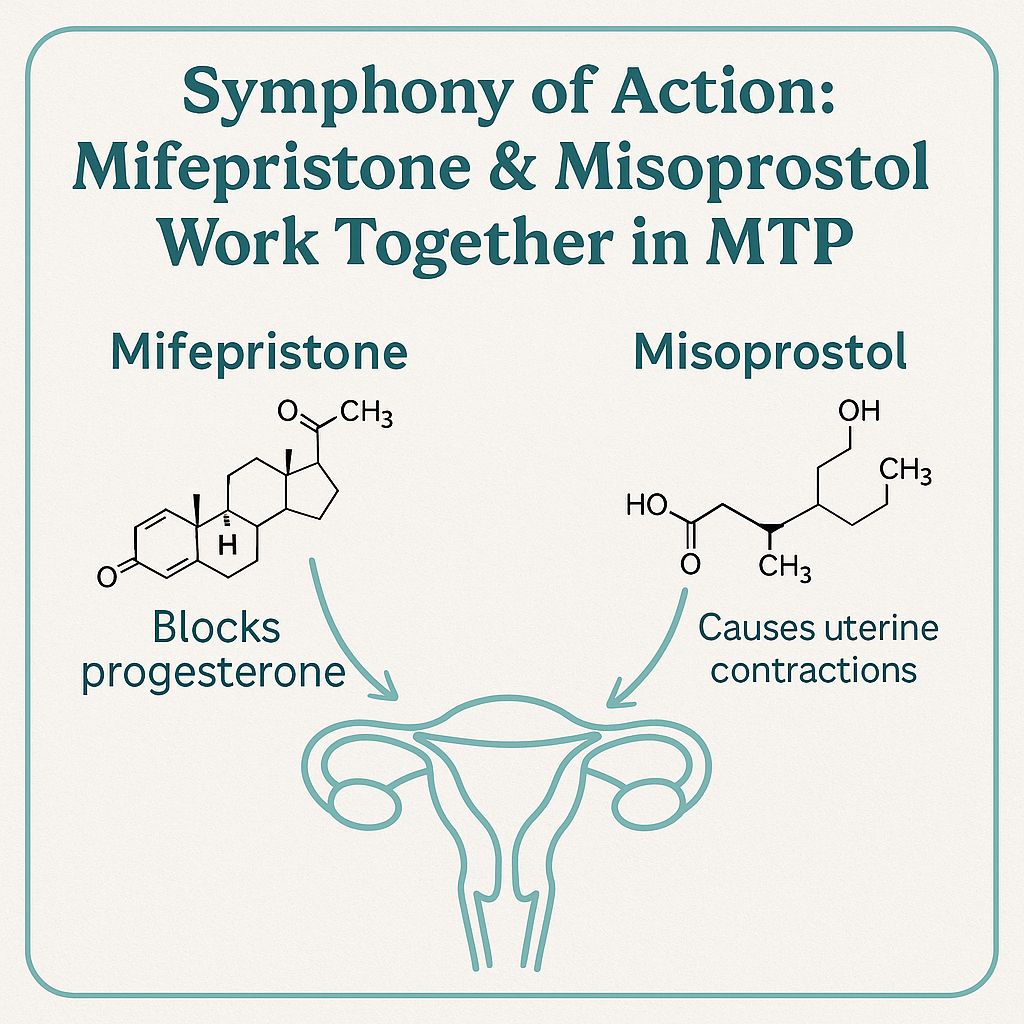
First, there’s Mifepristone. This is often called the “anti-progesterone” pill. It’s usually the first tablet you take. Mifepristone’s job is very specific. It blocks a hormone called progesterone. Progesterone is essential for pregnancy to continue, and is also known as the pregnancy hormone as it helps the pregnancy grow and develop inside your uterus. By blocking it, Mifepristone stops the pregnancy from progressing. It prepares your uterus for the next step.
You might hear brand names too. In India and parts of Southeast Asia, for instance, you might encounter names like MTP Kit, Unwanted Kit, Mifegest, or Mifebort. These are simply different companies’ versions of Mifepristone, often packaged with Misoprostol. While there are some other brands containing Mifepristone only, like Mifeprex, Korlym, RU-486, Mifegyne, etc, but they do not work solely to bring an abortion. You need both medicines for an effective pregnancy termination. Relying on any one can decrease the possibility of a successful abortion.
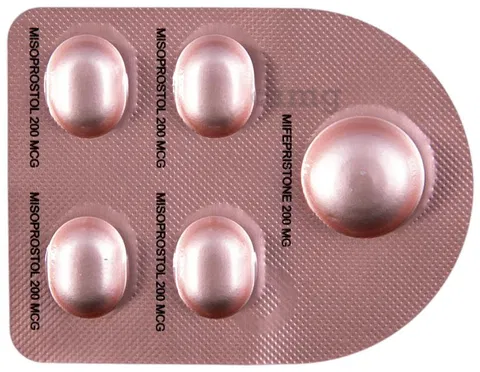
Then comes Misoprostol. This is typically taken a day or two after Mifepristone. Misoprostol has a different, but equally important, role. Firstly, it causes your uterus to contract. Second, it helps the cervix soften and open. These contractions gently expel the pregnancy tissue. Misoprostol is used for various medical purposes, not just abortion. You might see it under brand names like Cytolog, Misoprost, Cytotec or others, depending on your region.
Knowing these names can make a difference. It gives you a sense of control. It helps you understand exactly what you are taking. For many, just saying “Mifepristone” and “Misoprostol” instead of “the abortion pill” makes the process feel clearer, more medical, less shrouded in mystery. One individual shared,
“Learning the actual names made me feel less scared. It was like I knew my tools.”
Did You Know?
Mifepristone was first approved for medical use in France way back in 1988. It later gained approval in the United Kingdom, Sweden, and eventually many other countries around the world, making safe medical abortion accessible to millions.
A Symphony of Action: How These Pills Work Together?
So, you know about Mifepristone. You also know about Misoprostol. Now, how do they combine? Think of them as a team. They perform a two-step dance. And each step has a vital role.
Mifepristone initiates the abortion process.
First, Mifepristone steps onto the stage. You take this pill first. Its mission? To change the environment inside your uterus. As we discussed, it blocks progesterone. This hormone keeps the uterine lining thick and also supports pregnancy.
But what will happen when Mifepristone blocks its action? Blocking here means taking the place in your body where progesterone is supposed to sit and respond. Now, in the presence of Mifepristone, no place will be available for progesterone to sit (bind with the binding site on the protein medically). As a result, the supposed action will not take place. So, the uterine lining begins to break down, and the pregnancy can no longer grow. It’s like gently turning off the power supply.
Then, your body gets ready for the next phase. This part of the process usually doesn’t involve strong sensations. You might feel nothing at all. Some people notice very light spotting, while most women do not report any measurable change they have experienced.
Misoprostol progresses the job.
Then, Misoprostol joins the act when you take these pills 24 to 48 hours after Mifepristone. This timing is important, and only the abortion doctor can analyse your medical condition and decide the best time that works for you. Misoprostol causes your uterus to contract. These are like period cramps, but often stronger and can come with more pain than your periods. It also helps your cervix soften and open allowing the pregnancy tissue to pass. It’s similar to how your body experiences a natural miscarriage. The contractions help empty the uterus.
However, this part can feel intense. You will experience bleeding. You will likely pass clots and tissue. This is normal. It means the medication is working. But most women complain of heavy bleeding for the first few hours with intense cramping and pain. This phase of the abortion happens in the comfort of your home or a homestay, if you plan a confidential abortion away from home.
A patient once described it simply:
“Mifepristone was quiet, almost nothing. Then Misoprostol came, and it was like my body knew exactly what to do. It was intense, yes, but also very clear. However, the pain was miserable in the first few hours. I hope I would have opted for a painless and quick in-clinic abortion rather than abortion pills.
Thank God, after a few days, bleeding stopped and the abortion was complete. But this kept me anxious for a week, as if abortion was successful or not. My doctor told me that since I was only 5 weeks pregnant, I had a complete abortion with pills. And with an increase in the pregnancy age, chances of incomplete abortion increase, which would have required me to undergo a surgical procedure even after taking abortion pills.”
The process usually takes a few hours after taking Misoprostol. Most people complete the main expulsion within 4-6 hours. Some may experience bleeding and cramping for longer. Knowing what to expect helps. It allows you to prepare. You can manage your pain. You can also prepare for the emotional aspect.
Fact & Effectiveness:
Medical abortion is effective when used correctly and within the recommended gestational limits. Globally, studies show a success rate of 92-95% for early pregnancies. This means it fully ends the pregnancy without further intervention in most of the patients. But there is a considerable number of women who still experience incomplete abortion with pills.
Another important fact is that every year, unsafe or illegal abortions lead to the deaths of approximately 70,000 women worldwide, according to data from the World Health Organisation. And self-administration of any MTP Kit or Unwanted Kit is also an illegal and unsafe abortion method.
Hence, abortion pills are safe but only when the doctor checks for the patient’s eligibility by ruling out ectopic pregnancy, ensuring an early pregnancy and checking for the patient’s general well-being. Self-administration of abortion pills carries certain complications like heavy bleeding, ectopic pregnancy rupture, incomplete abortion, etc.
Navigating the Landscape: What to Expect in India, the Middle East, and Southeast Asia?
You’re seeking information. So, you also need to know about local realities. The accessibility and legal framework for medical abortion vary significantly across the globe. This is a crucial point because what applies in one country and to its citizens might not apply in another and to foreigners.
Abortion in India:
In India, for example, the Medical Termination of Pregnancy (MTP) Act allows for safe and legal abortion under specific conditions. Access is generally better in urban areas like Bangalore. But rural access can still be a challenge due to the availability of different abortion methods suitable for different pregnancy stages, and depending on the patient’s medical conditions. However, you can find medical abortion pills widely available through registered practitioners. They are often sold as “MTP Kits” containing both Mifepristone and Misoprostol. However, always ensure you consult a qualified doctor. Do not self-medicate.
Abortion in the Middle East Countries:
The Middle East presents a much more complex picture with generally stricter abortion laws. They often align with religious and cultural norms, making it difficult for women to access legal abortions for unwanted pregnancies. In many countries, like the UAE, Qatar, Kuwait, Oman, Bahrain and others, abortion is severely restricted. Besides, it might only be permitted to save the woman’s life and that too under restrictions and with evidence.
So, access to medical abortion pills, even for legal indications, can be very limited. Additionally, they may not be openly available. Seeking information or services might require significant discretion. It is vital to understand your country’s specific laws.
Since most women do not have an open abortion option available in these countries, many women travel to Bangalore, India, for safe, legal and confidential abortion services. Indian abortion law permits legal abortions even for foreign women, just like for Indian natives. Furthermore, India allows abortions up to 20 weeks in most cases to all women, married or unmarried or single. Luckily, the same rules apply to expats and foreign nationals as well when they seek an abortion in Bangalore, India.
Another important thing for you to know while seeking an abortion in India is that you do not need anyone else’s permission or consent for an abortion. Firstly, not your parents. Secondly, not your spouse. Finally, no one besides yourself, provided you are an adult.
Abortion in Southeast Asian Countries:
Southeast Asia also shows a mixed bag. Countries like Singapore and Vietnam have relatively liberal abortion laws. So, medical abortion there is readily available through regulated healthcare systems. In contrast, countries like the Philippines have very restrictive laws. Abortion remains largely illegal there. Thailand has recently reformed its laws, expanding access. Indonesia, Mauritius, Sri Lanka and Malaysia also have restrictive frameworks. This means the availability of medical abortion pills varies greatly. It depends entirely on which country you are in.
But yes, women from these countries, too, can obtain a safe, legal and confidential abortion in Bangalore. So, a safe abortion is just a flight away for all women in the world.
This patchwork of laws means your first step, always, is to equip yourself with as much information as possible while seeking a safe abortion.
Consider Aarav’s situation (name changed for privacy). He was supporting his partner in a country with very restrictive laws. They felt lost. They researched online only to find conflicting information. Finally, they sought help from a trusted women’s health clinic. The doctor explained their limited legal options for abortion in the Philippines. She also discreetly guided them towards safe, confidential resources.
It wasn’t easy, but finding that legitimate contact made all the difference. It ensured their safety. In their quest, they also came across illegal suppliers of abortion pills. But, thankfully, they chose safety above the cost of abortion; they could have paid with lost health or life by an unsafe abortion method.
Understanding Access:
Globally, roughly 45% of all abortions are unsafe, and a staggering 97% of unsafe abortions occur in developing countries. This highlights the immense importance of safe, legal, and accessible medical abortion options. While progress has been made in regions like India, challenges remain in ensuring informed and safe access across diverse socio-economic landscapes. Seeking care from a qualified provider is always the safest route.
Beyond the Name: Empowering Your Decision with Knowledge:
You have information about Mifepristone and Misoprostol. That’s a great start. But a truly informed decision goes deeper. It includes preparing for the process itself. Additionally, it means knowing when to seek help. So, it involves understanding all your choices.
Medical Supervision is Your Lifeline While Undergoing An Abortion.
Never try to self-medicate. It’s too risky. Always consult a qualified healthcare provider. This is non-negotiable. A doctor will confirm your pregnancy, determine its stage and check for any contraindications. They ensure medical abortion is safe for you. They provide vital instructions. Additionally, they offer support if complications arise. This professional guidance protects your health.
What to Expect During the Process of Medical Abortion?
You will experience bleeding. This is often heavier than a period. You will have cramps. These can range from mild to strong to very strong. Prepare for these sensations. Use a hot water bottle. Take the pain medication only recommended by your doctor. You might pass blood clots. You might see tissue. This is normal. It shows the medication is working. Some people also experience nausea, vomiting, or diarrhoea. Rest is crucial. Have a comfortable space ready. Ensure someone trustworthy can be with you, if possible. They can offer comfort. They can help if you need anything.
Knowing When to Seek Help.
Your doctor will provide specific warning signs. Pay close attention to them. Watch for very heavy bleeding. This means soaking more than two sanitary pads an hour for two consecutive hours. Look for severe pain that doesn’t improve with medication. Watch for a fever lasting more than a day. Notice any foul-smelling discharge. These are signs you need immediate medical attention. Do not hesitate. Your health is paramount.
The Importance of Follow-Up Care.
A post-abortion check-up is critical. Your doctor will schedule this. It confirms the abortion is complete by checking for any remaining tissue. In addition, it ensures you are healing well. It also offers a chance to discuss future contraception. This follow-up ensures your complete recovery. It supports your long-term health.
Your Choices Extend Beyond Pills.
Understanding medical abortion is powerful. But it’s also important to know that it’s not the only option. For some, a medical abortion might not be suitable. This could be due to gestational age. It could be due to specific health conditions. Or perhaps personal preference.
You might find that short, in-clinic procedures are a better fit. These include options like suction abortion, also known as vacuum aspiration. These are typically very quick. They are often less painful. They are highly efficient. A doctor performs them in a clinic setting. They offer immediate resolution. For some, the predictability and immediacy of a clinic procedure bring greater peace of mind. It’s a different path. It’s equally safe and more effective alternative choice available to you. Additionally, you may find suction abortion offers much more confidence and ease than a medical abortion. It is painless, quick, more efficient and gets completed before you leave the clinic.

Ultimately, this journey is about you. It is about your well-being. It is about making an informed decision. You have the right to all the information just you have the right to comprehensive care. Trust your instincts. Seek qualified medical advice. You are empowered. You are in control.
Schedule an abortion in Bangalore appointment.
Related Posts:
- How abortion bleeding look like: What abortion doctor says?
- Unwanted kit bleeding time: What you should know?
- “Is Same-Day Abortion Possible Without Hospital Stay?”
- Abortion and Relationships: How to Discuss Your Decision with Partners, Family, and Friends?
- How to Take Care of Yourself After an Abortion?
Quick Links:
- Can Pineapple Cause Abortion? How much Pineapple to Eat in Pregnancy?
- Can Abortion Cause Adenomyosis? Truth Between the Lines
- Your Body, Your Health: Are You HPV Aware?
- Can Abortion Cause Endometriosis? Facts& Risks; Why Safe Abortion Matters?
- “Can Abortion Cause Death? Examining the Evidence”
