
Medically Reviewed by Dr Mamta (MBBS, MD)
Contents of This Post:
- What Exactly Is a Female Condom?
- Why Don’t More Women Know About Female Condoms?
- How Do Female Condoms Prevent Pregnancy?
- Advantages of Female Condoms That Many Women Don’t Know About
- Female Condoms: Questions Women Often Ask (FAQ Section)
- Common Mistakes That Can Make a Female Condom Fail
- What If You Become Pregnant Despite Using a Female Condom?
- Safe, Legal and Confidential Abortion Care in Bangalore
Most Women Know About Condoms. But Have You Heard of Female Condoms?
When it comes to preventing an unplanned pregnancy, most conversations revolve around birth control pills, male condoms, emergency contraceptive pills or intrauterine devices (IUDs) like Copper-T. However, there is another option that surprisingly remains out of the spotlight—the female condom.
Many women spend years relying on methods they are familiar with, simply because they never knew that a female-controlled condom even exists. In fact, some discover it only after experiencing condom failure, dealing with a latex allergy, or searching for a contraceptive method that gives them greater control over their reproductive choices.
Although medically approved, female condoms, hormone-free contraception that can prevent unintended pregnancy when used correctly, they are not as widely available as male condoms. They also offer protection against sexually transmitted infections (STIs), making them one of the few contraceptive methods that serve both purposes.
If you are wondering whether female condoms really work, how effective they are, whether they are comfortable to use, or if they are a better option than male condoms, you’re not alone. These are some of the most common questions women ask online, yet clear and practical answers are often difficult to find.
This guide explains everything you need to know about female condoms—from how they work and their real-world effectiveness to their advantages, limitations and what to do if a condom fails.
What Exactly Is a Female Condom?
A female condom is a soft, flexible pouch that sits inside the vagina during sexual intercourse. Unlike a male condom, which fits over the penis, a female condom lines the vaginal canal and creates a protective barrier that prevents sperm from reaching the uterus. As a result, it helps reduce the chances of pregnancy while also lowering the risk of many sexually transmitted infections.
Most female condoms today use nitrile, a strong synthetic material suitable for people with latex allergies. Manufacturers pre-lubricate female condoms and design them for single use.
A female condom has two flexible rings that serve different purposes:
The user places the inner ring (closed end) into the vagina, and it helps keep the female condom securely in place near the cervix.
The outer ring remains outside the vaginal opening and partially covers the external genital area, providing an additional protective barrier during intercourse.
Many women find it convenient to insert a female condom before sexual activity. This means you do not have to interrupt intimacy to put it in place, and there is no need to wait until the male partner has an erection.
Unlike hormonal contraceptives, female condoms work purely as a barrier method. They do not interfere with your natural hormones, menstrual cycle, future fertility or ovulation. Instead, they simply prevent sperm from entering the reproductive tract, making them a straightforward, hormone-free option for women who want effective contraception without taking daily medication.
Did You Know?
People sometimes call the female condom an internal condom because it sits inside the vagina. Medical literature increasingly prefers this name because it better reflects how they work.
Why does this matters?
One of the biggest advantages of female condoms is something that often goes unnoticed—they place contraception directly in the hands of women. If couples find it difficult to discuss contraception with a partner, using an additional barrier method offers greater confidence and control over reproductive health.
Besides helping prevent an unintended pregnancy, female condoms also reduce the risk of many sexually transmitted infections (STIs), making them one of the few contraceptive methods that offer dual protection. Another advantage that often goes unnoticed is the reassurance they provide against exposure to pre-ejaculate (precum). You can insert a female condom before sexual activity begins, which provides protection from the very first moment of penetration.
Most people put on a male condom after the penis becomes erect. In events of partial or brief penetration, pre-ejaculate may come into contact with the vagina. Although pre-ejaculate does not always contain sperm, it can in some situations, which is why many women become anxious about the possibility of pregnancy after unprotected or partially protected intercourse. By being in place beforehand, a female condom helps minimise this concern and gives couples greater confidence from the start of intimacy.
Why Don’t More Women Know About Female Condoms?
Considering the wide range of contraceptive options available today, it is surprising that many women have never seen or even heard of a female condom. The reason isn’t that the method is new or ineffective. Instead, several practical and social factors have kept it out of mainstream conversations.
For decades, public awareness campaigns have focused primarily on male condoms. Schools, advertisements and healthcare discussions have traditionally presented them as the default barrier method. As a result, many women simply grow up without learning that an internal condom is also an option.
Availability also plays a role. Pharmacies and supermarkets do not stock female condoms, unlike male condoms. Many women have to search specifically for them, and in some areas, they may only be available through selected pharmacies or online platforms.
Social attitudes add another layer. People in many cultures still see contraception as a man’s responsibility when it comes to condoms. Women may hesitate to ask about female condoms because they worry about embarrassment, judgment or simply because they have never heard from anyone using them.
Even during routine gynecology visits, discussions often revolve around birth control pills, intrauterine devices (IUDs), implants or injections. Unless a woman specifically asks about barrier methods, female condoms may never come up during the conversation.
Fortunately, this is slowly changing. As more women seek contraceptive methods that suit their lifestyle, body and personal preferences, female condoms are beginning to receive the attention they have long deserved.
How Do Female Condoms Prevent Pregnancy?
Pregnancy begins when a sperm fertilizes an egg. A female condom works by preventing sperm from reaching the egg in the first place.
Once inserted correctly, the condom forms a protective lining inside the vagina. During intercourse, semen collects inside the pouch instead of entering the cervix. Because sperm cannot travel into the uterus and fallopian tubes, fertilization cannot occur.
Think of it as creating a physical barrier rather than changing how your body functions. Unlike hormonal contraceptives, female condoms do not prevent ovulation or alter your menstrual cycle. They simply stop sperm from reaching their destination.
Besides reducing the risk of pregnancy, female condoms also help lower the risk of many sexually transmitted infections (STIs) by limiting direct contact with body fluids and genital skin during intercourse. However, like all barrier methods, they cannot eliminate the risk completely.
How Effective Are Female Condoms?
Women often ask, ‘Can I really rely on a female condom?’ You can rely on it if you use it correctly and consistently.
How you use it determines its effectiveness, as with nearly every contraceptive method.
With perfect use, you insert the female condom correctly every time and use it throughout intercourse, making it about 95% effective at preventing pregnancy. In other words, about 5 out of every 100 women using the method for a year may become pregnant.
However, real life is rarely perfect. With typical use, which reflects everyday situations where people may make mistakes or use the condom inconsistently, effectiveness is around 79%. This means about 21 out of 100 women may experience an unintended pregnancy over the course of a year.
The difference between these two figures highlights an important point: the method itself is not usually the problem. Most failures happen because of incorrect use rather than because the condom stops working.
Some common reasons include:
- Inserting the condom incorrectly.
- The penis accidentally entering outside the condom instead of inside it.
- The condom slipping during intercourse.
- Reusing a condom instead of using a new one each time.
- Damage caused while opening the package or during use.
For women trying a female condom for the first time, a little practice can make a significant difference. Reading the instructions carefully and becoming familiar with insertion before relying on it for contraception can improve both confidence and effectiveness.
Doctor’s Insight:
Every contraceptive method has a “perfect use” and a “typical use” effectiveness rate. The gap between these numbers reflects human error—not a flaw in the method itself. Understanding this difference helps set realistic expectations and encourages correct, consistent use.
Advantages of Female Condoms That Many Women Don’t Know About
People often compare female condoms with male condoms. However, many of their biggest advantages have little to do with comparison. Instead, they offer flexibility and convenience that suit certain women and couples better than other contraceptive methods.1.
1. They Give Women Greater Control Over Contraception.
One of the biggest reasons some women choose female condoms is that they can take charge of contraception themselves. While discussing protection with a partner is always ideal, real-life situations are not always straightforward. A female condom allows a woman to prepare in advance without depending entirely on her partner to use a male condom correctly.
This added control can be especially reassuring for women who want a reliable barrier method without taking hormonal contraceptives.
2. They Can Be Inserted Before Sexual Activity.
People can insert a female condom well in advance, whereas they usually wear a male condom just before intercourse. This allows intimacy to feel more natural without stopping at the last moment to put on protection.
For many couples, this small difference reduces anxiety and makes the experience feel less interrupted.
3. A Good Option for People with Latex Allergy
Many female condoms are made from nitrile rather than natural rubber latex. As a result, they are a suitable option for women or their partners who experience itching, irritation or allergic reactions with latex condoms.
If latex sensitivity has discouraged you from using condoms in the past, a female condom may be worth discussing with your gynecologist.
4. No Hormones Means No Hormonal Side Effects
Some women prefer to avoid hormonal contraceptives because of personal preference, medical reasons or concerns about side effects.
Since a female condom acts only as a physical barrier, it does not interfere with your body’s hormones. It will not affect your ovulation, menstrual cycle or future fertility.
However, if you are looking for contraception that does not require planning before every act of intercourse, your doctor may recommend other long-acting options based on your individual needs.
5. It May Feel More Natural for Some Couples
Every couple experiences intimacy differently. While some people prefer male condoms, others find female condoms more comfortable because the outer ring remains outside the vaginal opening and the inner pouch is designed to move naturally during intercourse.
Comfort varies from person to person. Therefore, trying the method a few times is often the best way to decide whether it suits you.
6. It Doesn’t Have to Be Used Every Day
Unlike birth control pills, which require regular daily use, a female condom is used only when needed. There is no daily schedule to remember and no ongoing medication involved.
For women who have infrequent sexual activity or simply prefer an on-demand contraceptive option, this can be a practical advantage.
Doctor’s Insight: The Best Contraceptive Is the One You Can Use Correctly
There is no single contraceptive method that is perfect for every woman. Age, lifestyle, medical history, relationship status and personal preferences all influence which option feels right. A method that works well for one person may not suit another.
Instead of asking, “Which contraceptive is the best?”, a more helpful question is, “Which contraceptive fits my life and my health?” Having more options—including female condoms—allows women to make informed decisions that they are more likely to use correctly and consistently.
Female Condoms: Questions Women Often Ask (FAQ Section)
Knowing how a female condom works is one thing. Feeling comfortable enough to use one is another. Because these condoms are less familiar, women often have very practical questions about what they feel like, whether they can move around, and whether something can go wrong during intercourse.
Here are some of the questions that commonly come up.
Can a female condom get lost inside the vagina?
No. A female condom cannot travel through the cervix into the uterus. The vagina is a closed canal, and the condom remains within it. Its outer ring also stays outside the vaginal opening, which helps keep the condom accessible.
If the condom does slip completely inside the vagina, you can usually remove it gently with your fingers. If you cannot remove it comfortably, seek medical advice rather than trying to retrieve it with an object.
Can my partner feel the female condom?
Possibly. Some couples notice the outer ring or the movement of the condom during intercourse, while others barely notice it. The sensation can also vary depending on the position and the amount of lubrication.
If it feels uncomfortable, stop and check that the condom is positioned correctly. A little adjustment can make a significant difference.
Does a female condom make a strange or noisy sound that can be a distraction?
It can sometimes make a rustling or squeaking sound during movement. This usually relates to friction between the condom and the vaginal walls or between the condom and the penis.
Adding a suitable lubricant can often reduce friction and make the experience quieter and more comfortable. Always check the manufacturer’s instructions regarding lubricant compatibility.
Can the female condom slip out during sex?
It can, particularly if it is not inserted correctly or if the penis enters alongside the condom rather than inside it.
The outer ring should remain outside the vagina during intercourse. If the condom slips, twists or moves significantly out of position, stop intercourse and replace it with a new one if you wish to continue.
Can the penis accidentally enter beside the condom?
Yes, and this is one of the mistakes worth knowing about before using one.
If the penis enters between the condom and the vaginal wall rather than inside the pouch, the condom cannot provide its intended protection. In such an event, stop, remove the condom and use a new one before continuing.
If semen may have entered the vagina, consider speaking with a healthcare professional promptly about whether emergency contraception (morning-after pill: emergency contraceptive pill) is appropriate.
Can I use a female condom and a male condom together?
No. Using both at the same time does not provide double protection. Instead, the friction between the two condoms can increase the chance of tearing or slipping.
Choose one condom type and use it correctly rather than combining them.
Can I use a female condom during my period?
Yes. A female condom can generally be used during menstruation. However, it is still important to follow the product’s instructions and use a fresh condom for every act of intercourse.
Can I use lubricant with a female condom?
Many female condoms are designed to work with lubricants, and some come pre-lubricated. However, compatibility depends on the specific product and its material.
Therefore, check the manufacturer’s instructions before adding a lubricant rather than assuming that every lubricant is suitable.
Can I reuse a female condom?
No. Female condoms are designed for single use. After intercourse, remove and discard the condom and use a new one the next time you have sex.
Can a female condom protect me completely from STIs?
No condom provides complete protection against every stilt. Female condoms can reduce the risk of many sexually transmitted infections by providing a barrier against exposure to infected genital fluids and tissues. However, infections spread through skin-to-skin contact involving areas not covered by the condom may still be transmitted.
This is why condoms should be viewed as an important risk-reduction tool, not a guarantee.
One More Thing: Practice Can Make a Difference
If a female condom looks unfamiliar the first time you see one, that is completely understandable. It works differently from the male condom most people have grown up seeing.
Taking time to read the manufacturer’s instructions and becoming familiar with how the inner ring and pouch fit can make insertion easier. There is no need to rush. If you experience persistent pain, difficulty inserting the condom or repeated slipping, speak with a gynecologist about whether another contraceptive method may suit you better.
Common Mistakes That Can Make a Female Condom Fail
A female condom is designed to provide a physical barrier between semen and the vagina. However, like any barrier method, correct use matters. A condom can fail even when the material itself is intact if it is inserted incorrectly, moves out of position or is used inconsistently.
The good news is that most common mistakes are avoidable.
Putting it in after intercourse has already started
The condom needs to be in place before penetration. Inserting it after intercourse has begun leaves a period during which the vagina may already have been exposed to semen or pre-ejaculate.
If you want to use a female condom, make sure it is correctly positioned before any genital penetration.
Not checking which way the inner ring should go
The closed end contains the inner ring, which helps guide the condom into the vagina. If you are unfamiliar with the product, rushing the insertion can make it difficult to position correctly.
Take a moment to read the instructions supplied with the specific brand. Different products can have slightly different instructions.
Allowing the condom to twist
The pouch should sit comfortably inside the vagina without becoming twisted. A twisted condom may not provide proper coverage and can also feel uncomfortable.
After insertion, check that the pouch has opened properly and that the outer ring remains outside the vaginal opening.
Not guiding the penis into the condom
This is an easily overlooked point.
During penetration, the penis needs to enter inside the pouch, not between the condom and the vaginal wall. If it enters alongside the condom, the barrier is bypassed.
If you notice this happening, stop intercourse and reposition or replace the condom before continuing.
Using a damaged or expired condom
Before opening the package, check the expiry date and make sure the wrapper is intact. Do not use a condom if the packaging is damaged or if the condom appears torn, unusually dry or otherwise compromised.
Also, avoid opening the packet with scissors, teeth or anything sharp that could damage the condom.
Reusing the same condom
One sexual act requires one new condom. Even if the condom looks perfectly intact afterwards, do not wash it and use it again.
Discard it after use and choose a fresh one for another act of intercourse.
Using a male and female condom together
It may seem logical that two condoms would offer twice the protection. They don’t.
Using a male condom and a female condom simultaneously can create friction between the two barriers, increasing the possibility of tearing or slipping. Use one type of condom at a time and use it correctly.
Assuming that a condom eliminates pregnancy risk completely
A condom can substantially reduce the likelihood of pregnancy, but no contraceptive method provides a guarantee.
If a female condom breaks, slips, is incorrectly positioned, or semen spills into the vagina, don’t simply wait and worry. Act promptly. Depending on when the exposure occurred and your circumstances, emergency contraception may be an option.
What If the Female Condom Breaks, Slips or Is Used Incorrectly?
This is where knowing what to do next matters more than blaming yourself.
If you think the condom has failed, try to determine whether semen may have entered the vagina. Then speak to a healthcare professional or pharmacist as soon as possible about emergency contraception. The sooner appropriate emergency contraception is used, the better.
If your period does not arrive when expected, take a pregnancy test. If you are unsure when your period is due, a healthcare professional can guide you on when testing would be appropriate.
And if a pregnancy does occur, remember this: contraceptive failure does not mean you have done something wrong. No method is 100% effective, and an unintended pregnancy can happen even when someone has taken precautions.
That brings us to an important question many women may be afraid to ask: What are your options if a condom fails and you become pregnant?
What If You Become Pregnant Despite Using a Female Condom?
Sometimes, contraception fails. You may have used a condom correctly and consistently, yet still find yourself facing a delayed period or a positive pregnancy test. If that happens, the first thing to remember is simple: don’t panic and don’t blame yourself.
A condom failure does not automatically mean that you will become pregnant. If the condom broke, slipped or was used incorrectly, emergency contraception may help reduce the chance of pregnancy, depending on how much time has passed and which option is medically appropriate for you. It is different from an abortion and does not end an established pregnancy.
If your period is late, take a pregnancy test at the appropriate time. If the result is positive and the pregnancy is unintended, speak with a qualified gynecologist rather than trying to manage the situation on your own.
You have options, and getting accurate information early can help you make a decision based on your health, circumstances and personal wishes.
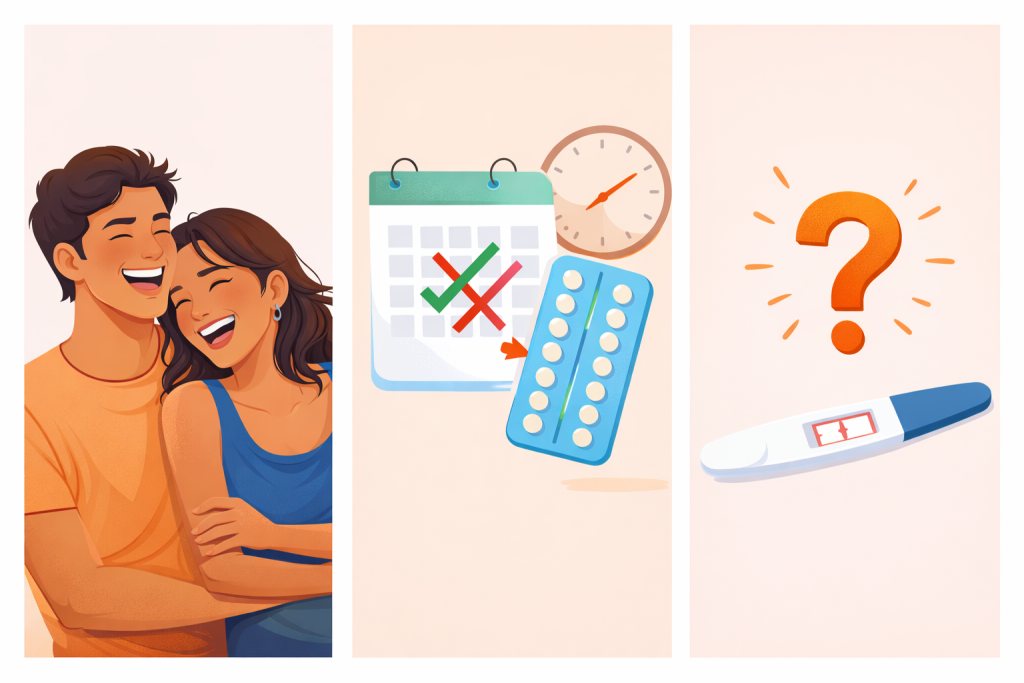
An Unintended Pregnancy Does Not Mean You Have Lost Your Choices
An unintended pregnancy can bring fear, confusion or even a sense of isolation. You may worry about what your partner or family will think. Besides, you may worry about privacy, safety or whether you will be judged for your decision.
You deserve factual information and respectful medical care regardless of how the pregnancy occurred.
In India, abortion is legally permitted for married as well as unmarried women under specified conditions under the Medical Termination of Pregnancy (MTP) Act and its amendments. The eligibility, method and gestational limits depend on the individual circumstances and medical assessment. Therefore, if you are considering an abortion, consult a registered medical professional rather than relying on information from social media, unverified websites or self-medication.
Why Should You Seek Care Early?
If you are considering an abortion, don’t postpone medical consultation because you feel embarrassed or uncertain.
An early consultation allows the doctor to:
- Confirm the pregnancy and estimate the gestational age and rule out ectopic pregnancy.
- Assess your general health and any relevant medical factors.
- Explain the available options based on how far the pregnancy has progressed.
- Discuss the benefits, risks and expected recovery.
- Answer questions about privacy, safety and what to expect during the process.
Most importantly, you do not have to justify an unintended pregnancy to receive compassionate healthcare.
Safe, Legal and Confidential Abortion Care in Bangalore
If you are in Bangalore and facing an unplanned pregnancy, our hospital provides safe, legal and confidential abortion care at a registered MTP centre.
We provide abortion services up to 20 weeks of pregnancy, subject to applicable legal requirements and individual medical assessment. The appropriate method depends on the gestational age and your clinical circumstances.
Our approach focuses on more than the procedure itself. We understand that reproductive healthcare can be deeply personal, which is why consultations are handled with privacy, dignity and without judgement.
Whether you are married or unmarried, whether the pregnancy resulted from contraceptive failure or an unexpected situation, you deserve the same standard of respectful medical care.
If you are unsure about your options, you can begin with a confidential consultation. You do not have to decide before you understand your choices.
Female Condoms: An Option Worth Knowing About
Female condoms may not receive the same attention as pills, IUDs or conventional condoms, but that does not make them irrelevant. They offer women another way to approach contraception—one that can be used when needed, does not involve hormones and can also reduce the risk of many sexually transmitted infections.
More importantly, knowing about female condoms means having one more choice.
No contraceptive method is perfect. What matters is understanding how a method works, using it correctly and knowing what to do if something goes wrong.
And if contraception fails and an unintended pregnancy occurs, remember that you are not without options. Timely, medically supervised care can help you understand those options and make a decision that is right for you—safely, legally and with your dignity and privacy respected.
If a pregnancy occurs and you do not wish to continue it, abortion may be legally available depending on your gestational age and individual circumstances. A registered MTP provider can assess your situation and explain the options available to you.
Your reproductive choices deserve information, privacy and respect. Whether you are exploring contraception, worried about a condom failure or dealing with an unintended pregnancy, you do not have to navigate the situation alone.
If you need confidential guidance about an unintended pregnancy or abortion in Bangalore, our registered MTP centre is available to help you understand your options and receive appropriate medical care—with safety, dignity and privacy at the centre of the process.
Related Posts:
- Can You Have Abortion While Being Treated for Thyroid Dysfunction?
- Light Bleeding After Unwanted Kit can be Terrifying. We Know
- PCOS is Now PMOS: Breaking the “Rasauli” Stigma & Navigating Unplanned Pregnancy
- Late Period? Understanding the ‘Why’ Behind & ‘What Next’?
- Can You Get Pregnant With PCOS? What if it’s an Unwanted Pregnancy?
Quick Links:
- Motherhood Is a Choice: Respecting Every Woman’s Right to Choose
- How Much Rest is Necessary After an Abortion?
- If You Want a Same-Day Abortion, Unwanted Kit is Not For You
- How Soon Can You Resume Your Routine After an Abortion?
- Understanding What Your Menstrual Cycle Speaks & When it Seeks Attention
