
Here Is Why That Could Be the Costliest Decision of Your Life.
Medically Reviewed by Dr. Mamta (MBBS, MD)
Contents of This Post:
- Why So Many Women Skip the Clinic and Go Straight to the Pharmacy
- What Is Truly Going Inside, You May Not Actually be Aware of?
- The Other Things an Ultrasound Quietly Checks
- “But Doctor, Why Do I Need a Blood Test Too?”
- This Is Not Only About Unwanted Pregnancies
- On the Question of Abortion Cost: Is the Doctor Protecting You or Profiting from You?
- On the Question of Privacy: You Have More Options Than You Think
- Going In Alone Is Fine. Going In Uninformed Is Not.
- Bangalore Genesis Hospital: Safe, Legal, Confidential Abortion Care in a Single Appointment
Whether you used Preganews or you are guessing it with a missed period, you are considering a probable pregnancy. But it is not the news you are hoping for. Your mind may straight jump onto solutions — and the internet may give you one almost immediately.
A pharmacy nearby. A trusted abortion pill name. Something that goes by the MTP Kit or abortion kit, as simple as an Unwanted Kit. That too at a price that felt manageable. No appointments at abortion clinics or MTP centres. No questions. To add to your relief, no one to face across a desk.
It felt efficient. Private. In your control.
But here is what no one told you in that moment: before you swallow that first pill, there is one step that stands between you and a genuinely safe outcome. It costs far less than the consequences of skipping it. It takes less than fifteen minutes. And it could, quite literally, save your life.
That step is an ultrasound.
This post is not to frighten you. It is not to judge the choice you are considering. It exists because the risks of skipping a pre-abortion ultrasound are real, they are serious, and far too many women find out about them only after something goes wrong. If you are reading this before making your decision, you are in exactly the right place.
Why So Many Women Skip the Clinic and Go Straight to the Pharmacy
Let us be honest about why this happens, because understanding the reason is the only way to truly address it.
For some women, the barrier is money. A clinic visit, a consultation fee, a scan (ultrasound) — it all adds up. And when you are already in a stressful situation, the pharmacy option looks like a way to keep costs down. For others, the barrier is privacy. Walking into a clinic means facing another person. It means paperwork. It means the possibility — however unlikely — that someone you know might see you. On the other hand, the pharmacy feels anonymous, transactional, and clean.
For some unmarried women, there is a layer of fear beneath all of it — fear of judgment, fear of being lectured, fear of questions they do not want to answer. And so they avoid the clinic and buy abortion pills over the counter without a prescription. And the whole thing begins at home, alone, without a single medical professional involved.
This is understandable. Completely, humanly understandable.
And it is also genuinely dangerous — not because abortion itself is dangerous when done correctly. But because doing it without knowing what is actually happening inside your body introduces risks that no pill on earth can manage on its own.
What Is Truly Going Inside, You May Not Actually be Aware of?
When you discover you are pregnant, what you know is the result on a test strip. What you do not automatically know is where the pregnancy is located. Also, you do not know how far along it has grown. And whether your body has any underlying condition that changes the entire picture.
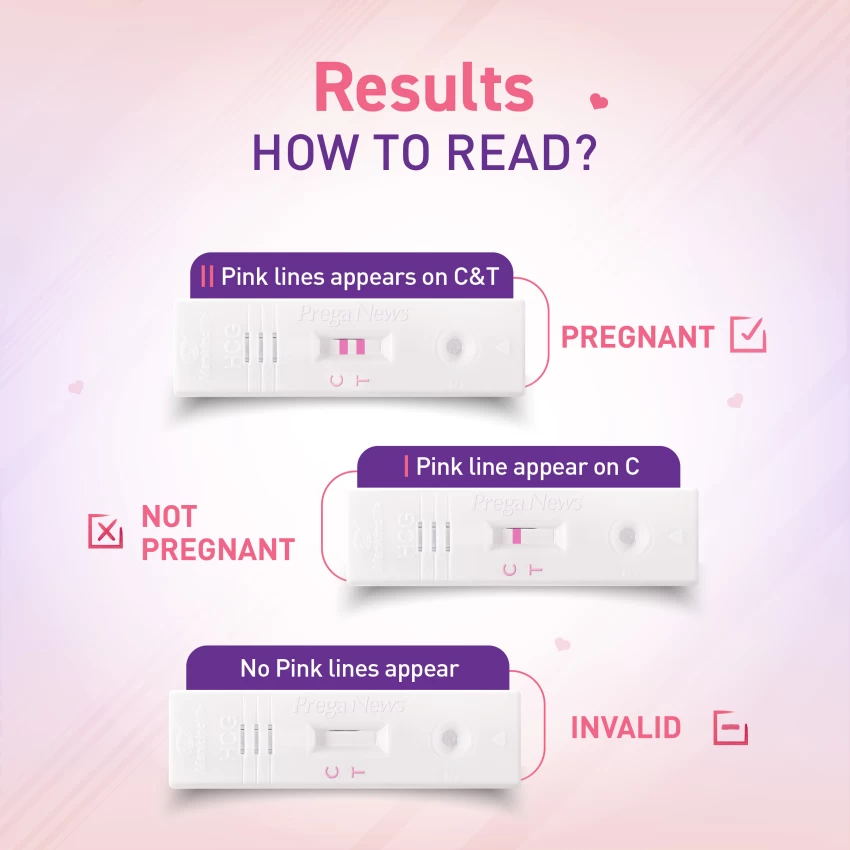
These are not minor technical details. These principles form the foundation of every safe abortion decision.
A pregnancy can develop in the right place — inside the uterus, where it belongs. But it can also develop in entirely the wrong place. It can grow in one of the fallopian tubes. Occasionally, on an ovary, or even in the abdominal cavity. And here is the critical point: a home pregnancy test cannot tell you which of these is true. Nor can your symptoms. Nor can the number of weeks you think you are. Only an ultrasound can confirm where this pregnancy actually is.
Ectopic Pregnancy: The Risk That Turns a Pill Into a Danger
An ectopic pregnancy is a pregnancy that is developing outside the uterus, yet it is non-viable and cannot continue to grow like a normal pregnancy. A fallopian tube houses the most common site for a growing pregnancy, a narrow, delicate channel unsuited to it.

In simple terms, think of it this way: the fallopian tube is a passageway, not a room. A pregnancy trying to grow inside it is like trying to inflate a balloon inside a drinking straw. The structure cannot stretch to accommodate it. As the pregnancy grows, the tube stretches. And, if left undetected, it eventually ruptures — causing severe internal bleeding that is a medical emergency requiring immediate surgery.
Here is what makes this particularly critical in the context of abortion pills: they do not treat an ectopic pregnancy. The pills terminate a pregnancy inside the uterus. Using abortion pills will not resolve an ectopic pregnancy. The medication will not reach it, will not remove it, and will not protect you from the rupture that could follow. Meanwhile, you may experience what feels like a normal medication response — some bleeding, some cramping — and believe the process has worked.
It has not. The ectopic pregnancy continues. The clock is ticking.
Ectopic pregnancy affects approximately 1 in every 50 pregnancies — which is more common than most people realize. Certain factors increase the risk, including previous pelvic infections like chronic Pelvic Inflammatory Disease (PID), prior surgeries, endometriosis, or a history of ectopic pregnancy. But it can also occur in women with none of these factors and no prior warning signs.
A simple ultrasound performed before you take any medication identifies an ectopic pregnancy and sends you immediately to the right care. Without that ultrasound, the ectopic pregnancy remains invisible — until it is not.
This is not a rare edge case. This is a real risk that exists for every woman in early pregnancy, and it is the single most urgent reason why an ultrasound before abortion is non-negotiable.
How Far Along Are You, Really?
The second thing an ultrasound confirms is gestational age — how many weeks pregnant you actually are.
This matters more than most people realize, and here is why.
Health authorities approve abortion pills for use up to a gestational limit of 6-8 weeks. Beyond that window, the pills become significantly less effective, and the risk of incomplete abortion rises sharply.
Clinicians calculate gestational age from the first day of your last menstrual period — not from conception or from the date your test came back positive. Many women miscalculate. Irregular menstrual cycles, stress, hormonal fluctuations — all of these can make the math unreliable. A woman who is certain she is seven weeks pregnant may, in fact, be eleven or twelve weeks along.
If she takes abortion pills at twelve weeks believing she is at seven, the medication is unlikely to work completely. Bleeding may convince her that the process is over, even though the pregnancy termination is incomplete. Medical professionals call this an incomplete abortion, and it carries serious risks: infection, prolonged bleeding, and the eventual need for a surgical procedure—the very thing she was trying to avoid in the first place.
An ultrasound gives you the accurate gestational age in minutes. It informs your doctor which abortion method suits your pregnancy stage, ensuring what you take or undergo matches that stage. This is not guesswork. It is science, applied carefully to your individual situation.
The Other Things an Ultrasound Quietly Checks
In addition to ectopic pregnancy and gestational age, a pre-abortion ultrasound reviews several other factors that can directly influence the abortion management. Clinicians rarely inform most women about these factors, since they assume a scan confirms only pregnancy.
Multiple pregnancies
While twins or higher-order multiples are not common, they do occur, and they affect gestational volume and how the body responds to certain abortion methods.
Uterine structure
Some women are born with a differently shaped uterus — a condition called a uterine anomaly. This does not always cause problems in everyday life, but it can affect how safely certain procedures are performed. Your doctor needs to know.
Molar pregnancy
This is a rare condition in which abnormal tissue grows in the uterus instead of a normal embryo. The pregnancy test returns positive. The symptoms mimic a regular early pregnancy. But a molar pregnancy is not a viable pregnancy, and it requires specific medical treatment that is completely different from standard abortion care. Taking abortion pills for a molar pregnancy will not resolve it and can complicate treatment. Only an ultrasound can detect this.
Intrauterine device (IUD) presence
Some women conceive while an IUD (Copper-T) is in place. An ultrasound confirms the position of the device, which must be addressed before any abortion procedure.
None of these is a common finding. But all of them change the clinical picture significantly. And none of them is discoverable without a scan.
“But Doctor, Why Do I Need a Blood Test Too?”
This question is completely fair, and it deserves a clear, honest answer.
When a doctor asks for blood tests alongside an ultrasound before an abortion, she is not padding your bill. She is completing a safety checklist that global medical standards require for exactly this procedure.
The most important blood marker checked is your blood group and Rh factor. Here is why it matters: if your blood group is Rh-negative. It is the case for a portion of women and often unknown to them. Also, the fetal blood carries Rh-positive factors. So, your immune system can react by producing antibodies against those fetal blood cells. This sensitization can seriously affect future pregnancies, potentially putting future babies at risk.
To prevent this, Rh-negative women receive an injection called anti-D immunoglobulin after an abortion. It is a simple, well-established protective measure — but it is only possible if your blood group is known. Without that blood test, your Rh status is unknown, and the injection is never given. So, future pregnancies may carry entirely preventable consequences.
The second important check is hemoglobin levels — a measure of whether you are anemic. Anemia affects how your body manages blood loss, which is relevant to any abortion procedure. A woman with severely low hemoglobin may need additional care or supplementation before a procedure, and this can only be identified through a blood test.
Other routine markers check basic organ function and clotting capacity, ensuring that you are medically stable going into the procedure.
Every single one of these tests exists for one reason: your safety. They are the doctor’s way of making sure nothing surprises her in the middle of your care — and nothing surprises you in the days that follow.
This Is Not Only About Unwanted Pregnancies
Everything discussed in this post applies with equal urgency to women who are continuing a wanted pregnancy.
If you have just discovered you are pregnant and are beginning prenatal care, an early ultrasound is the first clinical confirmation of a healthy, viable, uterine pregnancy. It rules out ectopic pregnancy. It confirms a heartbeat. Besides, it establishes an accurate due date. It gives your doctor the starting point from which all prenatal care is planned.
A woman hoping for a baby deserves the same protection from ectopic pregnancy risk as a woman who is not. The ultrasound does not ask about your intentions. It simply tells the truth about what is happening. Additionally, it gives every woman the information she needs to be safe, regardless of what she decides next.

On the Question of Cost of Abortion: Is the Doctor Protecting You or Profiting from You?
This is a doubt many women carry quietly, and it is worth addressing directly.
When a doctor recommends an ultrasound and blood tests before an abortion, it can feel like the costs are being layered on unnecessarily. Especially when a pharmacy pill seems to sidestep all of it for a fraction of the price.
Here is the clinical reality: these tests are the global standard of care for abortion management. They are recommended by the World Health Organization (WHO), the Federation of Obstetric and Gynecological Societies of India (FOGSI), and every major medical body that sets safe abortion guidelines. A doctor who skips them is not being kind to your wallet — she is cutting corners with your safety.
And the cost comparison changes dramatically when you consider what happens if something goes wrong.
The treatment cost for a ruptured ectopic pregnancy — emergency surgery, hospital admission, blood transfusion — is not comparable to the cost of a scan.
Similarly, the treatment cost for a septic incomplete abortion — IV antibiotics, possible surgery, extended hospitalization — dwarfs the price of a clinic visit many times over. The physical cost — permanent organ damage, scarring that affects fertility, the loss of a fallopian tube — cannot be measured in money at all.
A pre-abortion ultrasound and blood panel are not expenses. They are an investment in a safe outcome. And at a well-run clinic, they are built into the overall care pathway so there are no surprises.
On the Question of Privacy: You Have More Options Than You Think
The other reason women bypass abortion clinics is privacy — and this concern is entirely legitimate. Not everyone has a support system. Not everyone wants to be seen. Also, not everyone is in a position to explain herself to family or a partner.
What many women do not know is that confidential abortion services exist precisely for this reason.
Under Indian law, abortion is a legal right for all women; for adults with their sole consent. The Medical Termination of Pregnancy Act gives you the right to make this decision independently — no partner’s consent, no family approval, no explanation to anyone. And a good clinic will honor your privacy completely. Your visit, your medical records, and your identity are protected. You will not run into a waiting room full of familiar faces. Nor will you leave with a printout that announces your procedure. You are simply a patient receiving medical care — and your right to confidentiality is absolute.
The pharmacy option might feel anonymous. But it is, in fact, far less safe — and the consequences of something going wrong are very public: an emergency room visit, an ambulance call, a crisis that cannot be hidden. The truly private option is one where everything is managed correctly and completely, within a clinical setting, the first time.
Going In Alone Is Fine. Going In Uninformed Is Not.
Whether you have a partner by your side, a trusted friend in the waiting room, or absolutely no one — your experience at a good clinic is defined by the quality of the care you receive, not the number of people who accompany you.
What you genuinely cannot bring with you — and cannot replicate with an internet search or a pharmacist’s nod — is the clinical knowledge that a pre-abortion ultrasound and the right diagnostic tests provide. That knowledge is what makes the difference between an abortion that is safe and complete and one that is not.
If cost is the concern, ask the clinic directly about transparent pricing. If privacy is the concern, ask about their confidentiality protocols before you make the appointment. A genuinely patient-centred clinic will answer both questions without hesitation.
But please — do not skip the scan.
Bangalore Genesis Hospital: Safe, Legal, Confidential Abortion Care in a Single Appointment
For women in Bangalore and those travelling from across India, Bangalore Genesis Hospital (BGH) offers a thoughtfully designed, all-inclusive abortion care experience that addresses both safety and privacy under one roof.
BGH is a trusted facility where women can access safe, legal, and completely confidential abortion services — without compromise, without judgment, and without having to navigate a complicated multi-day process.
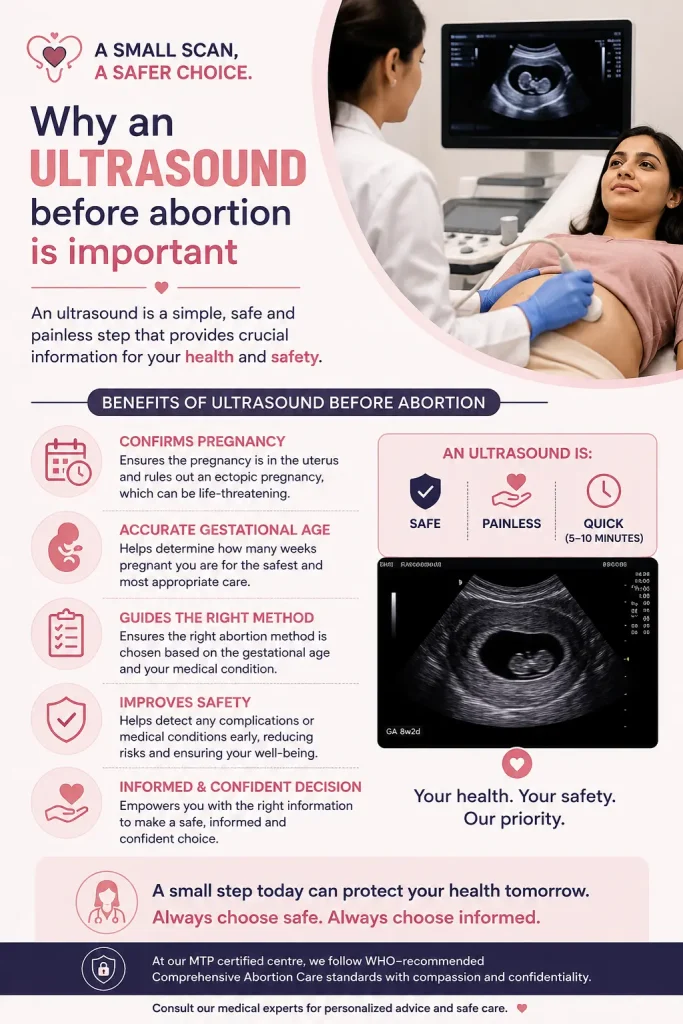
What to Expect?
From the moment you arrive, your experience is structured around you: diagnostic tests including ultrasound and relevant blood work, a comprehensive consultation with experienced gynecologists, the procedure itself, and a period of post-procedure recovery under clinical observation — all managed within a single appointment, spread across a few carefully managed hours.
There are no unnecessary waiting periods. No reason to return the next day. No fragmented care across multiple visits. Everything happens in one place, in one appointment, with one team that is dedicated entirely to your comfort and safety.
BGH’s painless abortion approach uses advanced techniques that significantly reduce intraoperative and post-procedure discomfort, allowing women to recover more smoothly and return to their daily routines at the earliest. This is not a compromise between safety and comfort — it is both, together.
For abortion team at Bangalore Genesis Hospital, the ultrasound performed before any procedure is not a routine box to tick. It is the clinical foundation of your entire care plan. It tells your doctors exactly where the pregnancy is, how far along it is, and which approach is right for you specifically — not for an average patient, but for you. The blood tests that accompany it ensure that every precaution is in place before the procedure begins and every risk is accounted for.
All of this happens in a facility where your privacy is treated as non-negotiable. Your records are yours. Your visit is yours. Finally, your decision is yours.
At Bangalore Genesis Hospital, the goal is simple: that every woman who walks in leaves with the abortion completed safely, her health protected, and her dignity fully intact.
Because taking care of your health and keeping it private are not two different things. At BGH, they are the same.
Schedule an abortion in Bangalore appointment at the best abortion hospital.
To schedule a confidential consultation or learn more about safe abortion services at Bangalore Genesis Hospital, reach out to the BGH care team. Your privacy is guaranteed from the first call.
Related Posts:
- Which diagnostic tests should you get before an abortion?
- Can You Have Abortion While Being Treated for Thyroid Dysfunction?
- Light Bleeding After Unwanted Kit can be Terrifying. We Know
- Late Period? Understanding the ‘Why’ Behind & ‘What Next’?
- Morning After Pill vs. Unwanted Kit: Knowing Your Timeline and Your Rights
Quick Links:
- Female Condoms: The Birth Control Option More Women Should Know About
- PCOS is Now PMOS: Breaking the “Rasauli” Stigma & Navigating Unplanned Pregnancy
- Can You Get Pregnant With PCOS? What if it’s an Unwanted Pregnancy?
- Motherhood Is a Choice: Respecting Every Woman’s Right to Choose
- Motherhood Is a Choice: Respecting Every Woman’s Right to Choose
