
Medically Reviewed by Dr Mamta (MBBS, MD)
The surprising, science-backed link between your mouth, your hormones, and your reproductive health — and what it means for you
Contents of This Post:
- The Hormone-Mouth Highway: Pregnancy Gingivitis.
- Why This Matters Far More Than Aesthetics?
- The Biological Mechanism: How Your Gums Talk to Your Uterus.
- What Your Dentist Can Actually See?
- In such a situation, a practical guide on what you can do.
- Pregnancy Is News — Good or Not So Good.
- Bangalore Genesis Hospital: Safe, Legal, Confidential, and Completely Non-Judgmental Abortion Care Provider.
Picture this. You sit down in a dentist’s chair. You’re there for a routine cleaning. Or just visited due to a sudden tenderness in the gums. Suddenly, yYour dentist takes one look at your gums and asks, quietly: “Is there any chance you might be pregnant?”
You haven’t taken a test yet. So, you haven’t even been sure. But your mouth already told the story.
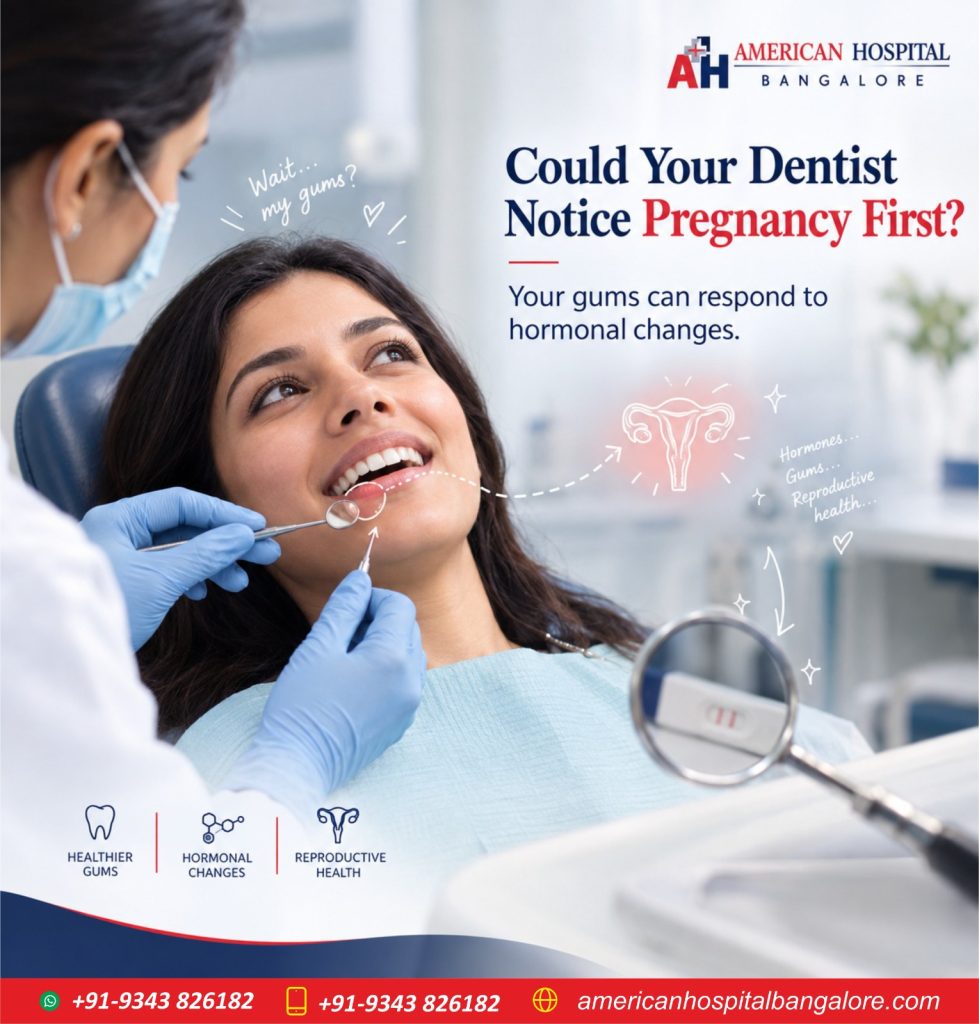
Certainly, this is not fiction. It happens. Dentists across the world — and increasingly, in India — notice the earliest signs of pregnancy in their patients’ gum tissue before those patients have any idea themselves. Bleeding gums that weren’t bleeding before. Swelling that appeared out of nowhere. Moreover, there is a sudden, pronounced tenderness that doesn’t match the patient’s usual oral hygiene history.
The connection between oral health and reproductive health runs deeper than most people imagine. It runs in both directions. Your hormones reshape your mouth. And your mouth, in turn, can influence your pregnancy outcomes in ways that are well-documented, clinically significant, and still too little discussed.
In this post, we explore the science behind this fascinating and important link — and explain why your gum health deserves far more attention than most of us give it during pregnancy and beyond.
The Hormone-Mouth Highway
Your body runs on hormones. Notably, this is not news. But what often surprises people is how many distant organs and tissues those hormones reach and reshape.
Your gums are one of them.
Estrogen and progesterone — the two primary female reproductive hormones — directly affect the blood vessels, connective tissue, and immune response of your gum tissue. When these hormones rise, as they do dramatically during pregnancy, they trigger a cascade of changes in the mouth. So, blood flow to the gums increases. Now, the gum tissue becomes more sensitive and responsive to bacterial plaque—the immune system’s response to the bacteria naturally present in the mouth shifts. And suddenly, perfectly healthy gums begin to swell, redden, and bleed with the slightest provocation.
This condition has a name: pregnancy gingivitis.
And it is extraordinarily common. Also, research shows that pregnancy gingivitis affects between 60% and 75% of all pregnancies.¹ That means if you are pregnant, there is a better-than-even chance that your gums are telling someone the story before your pregnancy test does.
Pregnancy gingivitis typically develops between the second and eighth months of pregnancy, peaking in the second trimester when hormone levels are rising sharply. The symptoms are hard to miss once you know what to look for: gums that bleed when you brush or floss, gums that feel puffy or appear unusually red, bad breath that persists even after brushing, and tenderness that seems out of proportion to any plaque buildup you might have.
Your dentist knows what healthy gums look like in a regular patient. So, a sudden, unexplained shift in gum health in a woman of reproductive age — especially one without a prior history of gum disease — is a significant clinical signal. It is not a guarantee of pregnancy. But it is a prompt.
Why This Matters Far More Than Aesthetics
Bleeding gums may seem like a minor inconvenience, a bit embarrassing—but they can signal something more. Something to deal with after the pregnancy is over. Many women dismiss it for exactly that reason.
That is a mistake with real consequences.
When gum disease progresses from mild inflammation (gingivitis) to the more serious stage of periodontitis — where infection reaches the bone supporting the teeth — the situation changes from a dental issue to a systemic one. It is likely for bacteria from infected gum tissue to enter the bloodstream. They travel. And in a pregnant woman, they can travel somewhere extremely consequential: to the uterus.
And that’s exactly where the research becomes genuinely alarming but also can help prevent certain complications with an early diagnosis and treatment.
In addition, a systematic review and meta-analysis published in 2024 analyzed 35 studies involving over 2.5 million women. Its findings were unambiguous. The analysis found a moderate but consistent association between periodontitis and low birth weight, with an odds ratio of 2.48 — meaning that women with periodontitis were roughly two and a half times more likely to deliver a low birth weight baby than women without it.² The association between periodontitis and preterm birth also showed a meaningful connection, with an odds ratio of 1.87.²
Next, a separate review found that periodontitis develops in approximately 11% of pregnant women and independently links to severe complications including preterm birth, low birth weight, and gestational diabetes.³
Then, a 2024 study went further, finding that pregnant individuals with periodontitis were up to 60% more likely to give birth prematurely and up to 70% more likely to deliver babies with low birth weight.⁴
Now, let that sit for a moment. Up to 60% more likely to deliver prematurely — because of gum disease.
The Biological Mechanism: How Your Gums Talk to Your Uterus
To understand why gum disease affects pregnancy outcomes, you need to understand the biological pathway. It is not mysterious. It is, in fact, quite logical once you see it.
Inflamed periodontal tissue produces large quantities of pro-inflammatory chemicals. These include interleukin-1 beta (IL-1β), interleukin-6 (IL-6), tumor necrosis factor alpha (TNF-α), and prostaglandin E2 (PGE2).⁵ Each of these molecules plays a role in regulating inflammation and immune response throughout the body.
Here is the problem: prostaglandins are also the chemicals that trigger uterine contractions and initiate labour.
Now, when bacteria from infected gum tissue enter the bloodstream — a process called bacteraemia — they carry with them these same pro-inflammatory signals. Research suggests two mechanisms by which this affects pregnancy. First, the bacteria themselves can cross the placental barrier, colonizing placental tissue and triggering a local inflammatory response that the body interprets as a signal to begin labour. Second, the systemic increase in prostaglandins and inflammatory cytokines driven by periodontal infection can directly stimulate uterine contractions earlier than intended.⁵
This is why the periodontitis-preterm birth connection makes biological sense. Gum disease is not simply an oral infection. In a pregnant woman, it can function as a systemic inflammatory trigger — with consequences measured in weeks of gestation and grams of birth weight.
The evidence from India adds another dimension.
A six-month study conducted at a tertiary care hospital in India found a range of oral manifestations in pregnant women, including gingival hyperplasia, enamel erosion, halitosis, and periodontitis.⁶ This study also noted that oral bacteria could colonize the umbilical cord, amplifying cytokine production during the second trimester. The implication is clear: the mouth and the pregnancy are not separate systems. They are connected through the bloodstream, through hormones, and through the immune system that governs both.
What Your Dentist Can Actually See
A trained dentist examines your mouth with a level of detail that most people underestimate. They do not just look at the patient’s teeth. They also measure periodontal pocket depth. Furthermore, they assess the texture, color, and reactivity of gum tissue. Additionally, they note bone density patterns on X-rays and observe changes over time.
What does early pregnancy look like in the mouth?
The first and most obvious sign is a sudden, pronounced increase in gum bleeding. A patient who came in six months ago with textbook-healthy gums now bleeds on the slightest probing. No change in diet, no new medications, no visible increase in plaque. The change is hormonal.
The gum tissue itself looks different. It appears more vascular — richer in color, slightly puffy, and more sensitive than expected. This reflects the increased blood flow that estrogen and progesterone drive to soft tissue.
In some cases, a specific lump or growth called a pregnancy epulis — also known as a pyogenic granuloma — forms on the gum tissue. These are completely benign, hormone-driven overgrowths of gum tissue that appear almost exclusively in pregnant women. A dentist who spots one has a very strong clinical reason to ask.
Now, nausea adds another layer. Morning sickness, usual with an early pregnancy exposes the teeth to repeated acid erosion, which erodes enamel in a specific, recognizable pattern. A dentist who sees fresh enamel erosion on the palatal surface of the upper front teeth — and links it to the patient’s other oral changes — can put together the picture.
None of this means your dentist is a pregnancy test. They are not going to diagnose you. But they are positioned to notice changes that you yourself may not have connected to reproductive health. A thoughtful dentist will ask the right questions.
What You Should Do — A Practical Guide
Understanding the link between oral health and reproductive health is genuinely useful only if it leads to action. Here is what the science suggests you should do.
Firstly, if you are pregnant — or think you might be:
Visit a dentist early in your pregnancy. Dental care during pregnancy is not only safe — it is recommended by gynecologists, obstetricians, and dental bodies worldwide. Also, left unmanaged, pregnancy gingivitis can progress to periodontitis. And as the research makes clear, that progression carries risk not just for your teeth but for your baby.
So, do not assume that bleeding gums are simply something to tolerate until delivery. Tell your dentist you are pregnant. Also, ask for a periodontal assessment. Professional cleaning during pregnancy is safe and can significantly reduce your risk of progression to more serious gum disease.
Secondly, if you are approaching or experiencing menopause:
Make oral health a priority — not a footnote. Tell your dentist about menopausal symptoms. Bring up dry mouth, burning sensations, tooth sensitivity, or any change in your oral comfort. These are not trivial. They reflect real hormonal changes that have clinical management options. And remember, pregnancy is possible even during perimenopause. It is not something to be ashamed of, but be practical and address the underlying condition.
Also, ask about bone density screening. Dentists can observe changes in mandibular bone density on panoramic radiographs and flag early signs of bone loss that may warrant a referral for systemic osteoporosis assessment. Your dentist may see it before your GP does.
Maintain rigorous oral hygiene throughout perimenopause. Use a fluoride toothpaste. Consider a prescription-strength fluoride if your dentist recommends it for dry-mouth-related decay risk. Stay hydrated. Furthermore, prioritize calcium and vitamin D in your diet and supplementation. These are not alternative wellness suggestions — they are evidence-based measures for a hormonally shifting oral environment.
Pregnancy Is News — Good or Not So Good
Finding out you are pregnant does not always feel the same way to everyone. For some women, it is exactly the news they have been hoping for. However, for others — perhaps the majority who discover an unplanned pregnancy — it arrives with a very different set of emotions.
Both responses are valid. Both deserve proper, professional care.
If you are pregnant and planning to continue the pregnancy, an ultrasound is non-negotiable. It confirms the gestational age. Besides, it confirms the location of the pregnancy — ruling out an ectopic pregnancy, which is a medical emergency. It guides every decision about your prenatal care from that point forward.
And if the news of pregnancy is not welcome — if you find yourself facing an unplanned situation and feeling uncertain, overwhelmed, or afraid — please know this: you have time to think. You have options. And you have access to safe, legal, professional abortion care.
Shortcut is not going to ease your situation. Rather, it’s a gamble with your life.
Do not rush or panic. And please, do not reach for unsafe shortcuts like self-administration of abortion pills or consuming unproven things to induce miscarriage like lots of raw papaya or pineapple. All of these only increase complications without easing frown lines.

Every week in India, women purchase abortion tablets from pharmacies without prescriptions, or from local chemists they trust — attempting to manage an unplanned pregnancy on their own.
Some of these purchases involve pills commonly sold under brand names like Unwanted Kit, MTP Kit, or other abortion pill combinations containing mifepristone and misoprostol. These medications are legitimate and effective — when prescribed by a doctor, dispensed at the correct dosage, taken at the right gestational age, and monitored by a qualified medical team.

However, without that professional oversight, everything changes.
Additionally, self-administering a medical abortion without a prescription or ultrasound confirmation risks incomplete abortion — a dangerous situation in which the pregnancy does not terminate completely, leading to infection, hemorrhage, and in severe cases, the need for emergency surgical intervention. A home pregnancy test like Preganews confirms pregnancy but tells you nothing about gestational age, location, or suitability for medical abortion. So, without an ultrasound, you are flying blind.
Furthermore, visiting unregistered practitioners — quacks — compounds the risk further. Instruments that are not sterilized, techniques that are not medically sound, and no capacity to manage complications make these encounters genuinely life-threatening.
The cost of abortion performed safely and legally at a registered clinic is not prohibitive. Rather, the cost — physical, emotional, and financial — of managing a botched or incomplete abortion is. So, make the right choice for yourself from the start.
Bangalore Genesis Hospital: Safe, Legal, Confidential, and Completely Non-Judgmental Abortion Care Provider
At Bangalore Genesis Hospital, we believe that every woman deserves reproductive care that is honest, professional, and completely free of judgment. Full stop.
We provide safe, legal, and confidential abortion services to all women — married or unmarried, from Bangalore or from anywhere else in India or the world. Neither do we ask questions that are not medically necessary nor do we make moral assessments. We are a medical facility, not a confessional, and the only thing we assess here is your health. So, you owe us no explanation — only your trust.
What makes Bangalore Genesis Hospital the right choice?
Same-day abortion with complete care.
From your consultation to your procedure to your recovery — all within a single appointment. You come in. You are cared for by experienced, qualified doctors and medical staff. Finally, you leave safely, the same day. No prolonged stays. Also, no complications from rushed or unsupervised procedures.
Suction abortion up to 12 weeks.
For early abortion, we perform gentle suction abortion — also known as manual vacuum aspiration. This is one of the safest, most effective, and quickest methods of early abortion available. Additionally, the procedure is brief and recovery is fast. Suction abortion performed under proper medical supervision at a registered early abortion clinic produces complete abortion with minimal risk.
Gentle D&E for abortion up to 20 weeks.
For pregnancies beyond 12 weeks, we perform Dilation and Evacuation (D&E) — a well-established surgical method performed by our senior gynecological team with full anesthesia support. Safe, complete, and professionally managed.
Ultrasound — always.
Before any procedure, we always confirm gestational age and rule out ectopic pregnancy with ultrasound. This is not optional. Rather, it is how responsible abortion care works.
Complete abortion, confirmed.
We confirm completion of the procedure before you leave. This is a standard we hold ourselves to because incomplete abortion is a complication — one that affects women who attempt self-managed abortion without professional guidance. At Bangalore Genesis Hospital, we ensure the job is done safely and completely.
Effective pain management.
Abortion procedures should not be traumatic experiences. So, we provide appropriate pain management throughout, because your comfort matters as much as your safety.
Transparent abortion costs — no hidden fees.
You receive a clear explanation of the cost of abortion before your procedure. We do not surprise you with additional charges. The cost of abortion at Bangalore Genesis Hospital is transparent, fair, and reflective of genuine clinical quality.
No risk of the complications that come from an Unwanted Kit or MTP Kit taken without supervision.
When you choose professional abortion care at a registered clinic, you sidestep every risk that comes with self-administered medical abortion or any form of inducing miscarriage unprofessionally— incomplete abortion, hemorrhage, undetected ectopic pregnancy, and infection. These risks are real. Our clinical environment eliminates them.
Abortion in Bangalore for international patients too.
Many women travel to Bangalore for abortion specifically because Indian abortion law is protective, our facilities meet international standards, and our team respects their privacy completely. Whether you come from another city or another country, you will find the same standard of care and the same commitment to your dignity here.
Hygienic premises, welcoming staff.
Our facility is clean, professionally maintained, and designed to feel as comfortable as a clinical space can feel. Our nursing and support staff are trained to be warm, reassuring, and non-judgmental. From the moment you walk in to the moment you walk out, you are treated as a patient who deserves the best care — nothing more, nothing less.

Your Mouth Knows Things Your Mind Hasn’t Caught Up With Yet
Your body is an integrated system. So, your our gums, your hormones, your reproductive health — they are all in conversation with each other. Sometimes, your dentist may be the first person to notice when that conversation shifts.
Pay attention to your oral health through every phase of your reproductive life. In pregnancy, it can protect your baby. In perimenopause and menopause, it can protect your teeth, your bones, and your quality of life. And at every stage — listen to what your body is telling you.
If you find yourself facing an unexpected pregnancy, come to us before you turn to any other option. Bangalore Genesis Hospital provides safe abortion in Bangalore with the discretion, dignity, and clinical excellence that every woman deserves.
To book a confidential abortion in Bangalore appointment, contact our helpline. All inquiries are completely private. All care is completely professional. And all women are welcome.
Related Posts:
- Female Condoms: The Birth Control Option More Women Should Know About
- Can You Have Abortion While Being Treated for Thyroid Dysfunction?
- Light Bleeding After Unwanted Kit can be Terrifying. We Know
- PCOS is Now PMOS: Breaking the “Rasauli” Stigma & Navigating Unplanned Pregnancy
- Late Period? Understanding the ‘Why’ Behind & ‘What Next’?
Quick Links:
- Can You Get Pregnant With PCOS? What if it’s an Unwanted Pregnancy?
- Morning After Pill vs. Unwanted Kit: Knowing Your Timeline and Your Rights
- Motherhood Is a Choice: Respecting Every Woman’s Right to Choose
- 6 Condom Myths That Lead to Surprise Pregnancies
- The ₹1.06 Lakh Protection: What Happens When Plan Goes Wrong
References
- Cleveland Clinic. Pregnancy Gingivitis. Last reviewed 2025. Citing: Gare J. et al. (2023). Prevalence, Severity of Extension, and Risk Factors of Gingivitis in a 3-Month Pregnant Population: A Multicenter Cross-Sectional Study. Journal of Clinical Medicine, 12(9), 3349. doi: 10.3390/jcm12093349
- Sbricoli L. et al. (2024). Linking Periodontitis to Adverse Pregnancy Outcomes: A Comprehensive Review and Meta-analysis. Current Oral Health Reports. doi: 10.1007/s40496-024-00371-6. [Analysis of 35 studies, 2,510,556 women. OR 2.48 for low birth weight; OR 1.87 for preterm birth]
- Vignolini L. et al. (2023). Periodontitis in Pregnant Women: A Possible Link to Adverse Pregnancy Outcomes. PMC. PMC10218064.
- Ameritas. (2024). Periodontal Disease Risks in Pregnancy. ameritas.com [Citing 2024 study: up to 60% increased risk of preterm birth; up to 70% increased risk of low birth weight with periodontitis]
- Chandrashekar B. R. et al. Periodontitis: A Risk for Delivery of Premature Labour and Low Birth Weight Infants. PMC. PMC3312699. [IL-1β, IL-6, PGE2, TNF-α as pathogenic mediators]
- Mohanty R. et al. (2023). A Six-Month Single-Center Study on Oral Manifestations during Pregnancy in Bhubaneswar, India. PMC. PMC10542924.
